Hi, I am Aria, welcome to my life!

5 Best Adaptive Footwear for Partial Foot Amputees That Fit Right
Shop the best adaptive footwear for partial foot amputees with a right-fit guide: semi-rigid or rigid post-op shoes, wide toe boxes, easy straps, toe fillers, and sizing tips for comfort, protection, and a better fit.


Choose a semi-rigid or rigid post-op shoe with a squared toe box, wide openings, and hook-and-loop straps. Start with the OTC Soft Top Medium for breathable poly-cotton control, Medline Semi-Rigid for cushioned rocker gait, DJO 79-81237 for rigid forefoot protection, and Darco Med-Surg for metatarsal offload. Add toe fillers when needed. Measure dressed volume, not bare stump; leave 1–1.5 cm clearance. If it pinches, rejects, or abrades, it’s a failure—and there’s more to sort out.
| OTC Post-Op Shoe Soft Top for Men & Women Medium | 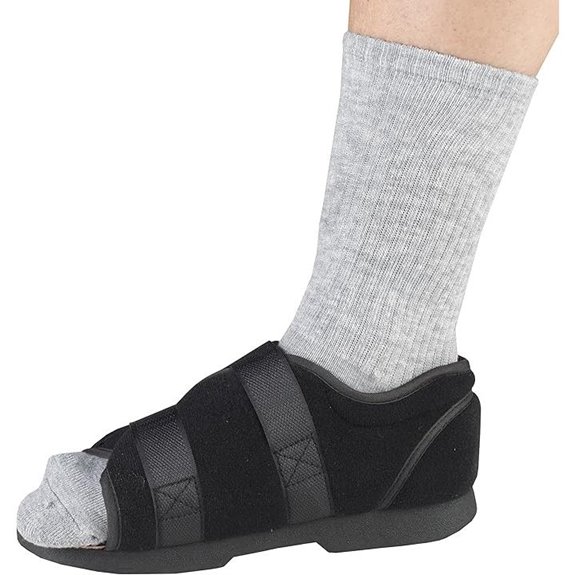 | Best Breathable Fit | Footwear Type: Soft-top post-op shoe | Intended Use: Post-op protection | Adjustable Fit: Adjustable straps | VIEW LATEST PRICE | Read Our Analysis |
| Medline Semi-Rigid Post-Op Shoes Women’s Size M |  | Best Gait Support | Footwear Type: Semi-rigid post-op shoe | Intended Use: Post-surgery recovery | Adjustable Fit: Loop-lock straps | VIEW LATEST PRICE | Read Our Analysis |
| 2 Pcs Amputee Shoe Toe Fillers Inserts | 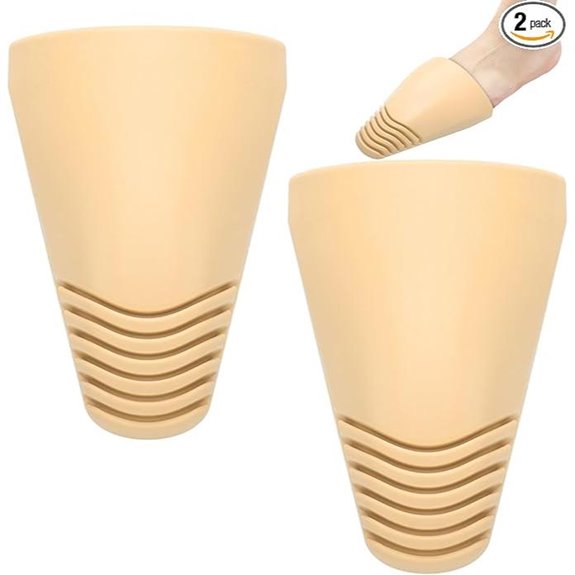 | Best Toe Filler | Footwear Type: Toe filler insert | Intended Use: Partial foot support | Adjustable Fit: Trim-to-fit | VIEW LATEST PRICE | Read Our Analysis |
| DJO Global 79-81237 Squared Toe Post-Op-Shoe Large | 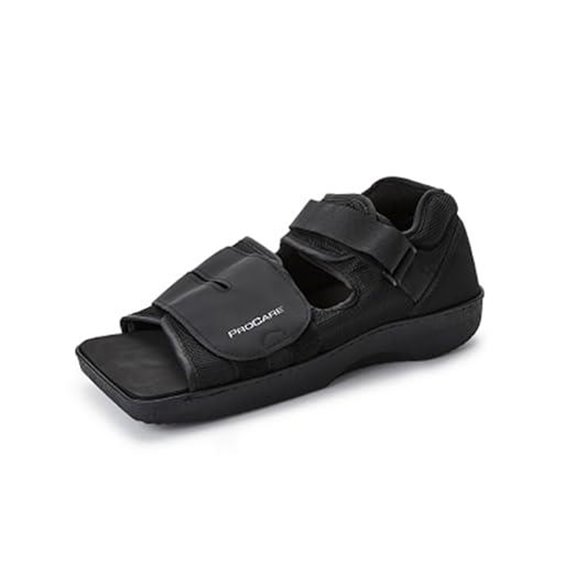 | Best Forefoot Protection | Footwear Type: Squared-toe post-op shoe | Intended Use: Forefoot trauma care | Adjustable Fit: High ankle strapping | VIEW LATEST PRICE | Read Our Analysis |
| Darco Med-Surg Post-Op Shoe Women’s Medium MQW2B |  | Best Metatarsal Support | Footwear Type: Med-surg post-op shoe | Intended Use: Post-op/injury care | Adjustable Fit: Roomy interior | VIEW LATEST PRICE | Read Our Analysis |
More Details on Our Top Picks
OTC Post-Op Shoe Soft Top for Men & Women Medium
Choose the OTC Post-Op Shoe, Soft Top, Medium when you need immediate post-surgical control without sacrificing ventilation. Its poly-cotton blend upper lets air move through the shoe, whereas the reinforced heel counter and padded heel collar lock down the rear foot and reduce slippage. The semi-rigid sole gives you protection after osteotomies, and adjustable straps handle bulky dressings without crushing them. Fit it by shoe size: men’s 6.5–8.5, women’s 7–8. Use either foot, left or right. Don’t improvise with loose footwear; instability invites failure.
- Footwear Type:Soft-top post-op shoe
- Intended Use:Post-op protection
- Adjustable Fit:Adjustable straps
- Foot Coverage:Left or right
- Support Sole:Semi-rigid sole
- Comfort Features:Padded collar
- Additional Feature:Poly-cotton blend upper
- Additional Feature:Reinforced heel counter
- Additional Feature:Padded heel collar
Medline Semi-Rigid Post-Op Shoes Women’s Size M
The Medline Semi-Rigid Post-Op Shoe in Women’s size M—fitting women’s 8–9—targets post-surgical and injury recovery where you need controlled foot placement, not unrestricted motion. Use it when stabilization matters. The semi-rigid build, nylon upper, and soft inner lining limit collapse whereas reducing abrasion. The molded heel collar blocks heel slip; the removable tongue makes entry easier. Secure both loop-lock straps tightly. Rely on the cushioned rocker sole, heel-and-toe pitch, and black, one-each format to support a more natural gait. Don’t improvise fit. Poor closure invites shear, instability, and wasted recovery.
- Footwear Type:Semi-rigid post-op shoe
- Intended Use:Post-surgery recovery
- Adjustable Fit:Loop-lock straps
- Foot Coverage:Single shoe
- Support Sole:Rocker sole
- Comfort Features:Soft lining
- Additional Feature:Nylon upper
- Additional Feature:Removable tongue
- Additional Feature:Two loop-lock straps
2 Pcs Amputee Shoe Toe Fillers Inserts
For users who need a fast, stable toe-loss fill that won’t collapse under daily loading, these 2 Pcs Amputee Shoe Toe Fillers Inserts deliver a practical baseline: beige PU foam, a non-slip face, and a trim-to-fit profile built for partial foot amputees who need immediate volume restoration inside ordinary footwear. You get two inserts, not one, and that matters when you rotate pairs or need a backup. The small size, about 5.3 x 3.5 x 1.5 inches, fits most shoes. Cut the front line, clean the foam, and use it in sneakers, dress shoes, or work footwear without compromising support.
- Footwear Type:Toe filler insert
- Intended Use:Partial foot support
- Adjustable Fit:Trim-to-fit
- Foot Coverage:Partial foot
- Support Sole:Foam insert
- Comfort Features:Cushioned foam
- Additional Feature:Beige PU foam
- Additional Feature:Cutting line for trimming
- Additional Feature:Non-slip surface
DJO Global 79-81237 Squared Toe Post-Op-Shoe Large
DJO Global’s Squared Toe Post-Op Shoe, model 79-81237, is the right tool when you need rigid forefoot protection after surgery or trauma, with enough volume to shield dressings and keep toes dry without crushing the operative site. Use the universal fit on either foot, male or female, and lock the high ankle strap down. The squared toe adds bumper clearance; the rigid rocker sole cuts forefoot load and eases gait. Choose Large for U.S. men 9.5–12 or women 10.5–13. Don’t stuff swollen tissue into cramped footwear. That’s how you compromise healing.
- Footwear Type:Squared-toe post-op shoe
- Intended Use:Forefoot trauma care
- Adjustable Fit:High ankle strapping
- Foot Coverage:Left or right
- Support Sole:Rigid rocker sole
- Comfort Features:Squared toe
- Additional Feature:Squared toe design
- Additional Feature:High ankle strapping
- Additional Feature:Rigid rocker sole
Darco Med-Surg Post-Op Shoe Women’s Medium MQW2B
Darco Med-Surg Post-Op Shoe, Women’s Medium MQW2B fits the patient who needs rigid post-operative protection without crowding a bandaged forefoot. Use it when you need a roomy interior and square toe box to shield injured toes and bulky dressings. The metashank sole offloads the metatarsal region, improving support during ambulation and reducing instability. Don’t force a tight fit; that invites pressure and shear. Secure the closure, check toe clearance, and confirm the foot sits flat. For surgery or trauma, this shoe delivers solid protection.
- Footwear Type:Med-surg post-op shoe
- Intended Use:Post-op/injury care
- Adjustable Fit:Roomy interior
- Foot Coverage:Left or right
- Support Sole:Metashank sole
- Comfort Features:Square-toe design
- Additional Feature:Square-toe design
- Additional Feature:Roomy interior
- Additional Feature:Metashank sole design
Factors to Consider When Choosing Adaptive Footwear for Partial Foot Amputees
You need residual foot support that locks the amputation site without creating shear, since a sloppy interface will collapse your gait mechanics and trigger pressure injury. Check toe box clearance, adjustable fit features, sole stability, and material breathability in one pass: room for distal swelling, closures that can be tightened or released on demand, a sole that won’t roll under load, and upper materials that move heat and dampness off the skin. Ignore fashion-grade shoes—they fail fast, trap fluid, and turn every step into a friction event.
Residual Foot Support
Stabilize the residual foot first. You need firm metatarsal and medial-lateral support to stop excessive pronation or supination, since uncontrolled motion tears skin and drives breakdown. Choose a semi-rigid or rigid sole, or an internal shank, to offload forefoot stress and hold alignment during toe-off; soft, collapsible platforms fail fast and invite ulceration. Demand a heel counter that grips, plus a molded or contoured footbed that cradles the calcaneus and plantar surface, spreading load and cutting shear. Use adjustable closures and customizable liners to lock in mediolateral fit and compression, so the foot won’t migrate or create hotspots. Keep the shoe deep enough for bulky residual tissue and fillers, but don’t chase excess volume. Balance comes from controlled support, not sloppy space.
Toe Box Clearance
Open up the toe box and measure it correctly. You need at least 1 to 1.5 cm of clearance beyond the residual limb or prosthetic toe filler; anything tighter crushes sensitive tissue and invites breakdown. Choose a squared or widened toe box, since it spreads load across the forefoot and leaves room for dressings, grafts, or stump contours without focal compression. Measure during standing and walking, not seated—forefoot volume can swell 5 to 10% dynamically, and lazy bench measurements lie. Use breathable, non-compressive materials at the toe box to cut shear and dampness. Verify the fit under motion. Stop pretending static room is enough. Breathability matters.
Adjustable Fit Features
One adjustable system matters less than the whole package, but partial foot footwear lives or dies on it. Use hook-and-loop or loop-lock straps; they widen for dressings, then cinch down as residual-limb volume changes. Demand removable tongues and adjustable panels so you can enter the shoe cleanly and place the limb without grinding pressure points. Choose models with forefoot, midfoot, and heel strap points; one strap won’t control rotation or slippage. Insist on a built-in heel counter with an adjustable collar or strap; it blocks posterior migration and keeps heel-to-sole alignment consistent. Set sizing by shoe size, then tune internal volume with modular inserts or toe fillers. If swelling rises and the fit can’t be reworked, the shoe’s wrong.
Sole Stability
Once the fit is set, lock attention onto the sole, since a partial-foot shoe that flexes in the wrong place will punish the residual limb with every step. Choose a semi-rigid or rigid rocker sole; it cuts forefoot pressure, smooths rollover, and lowers plantar stress on residual tissues. Demand a wide, flat base and a squared toe box, as mediolateral stability matters when you load the stance limb. Insist on a reinforced heel counter or metashank; it restrains rearfoot torque and midfoot shear. Balance stiffness with cushioning—too much rigidity shifts load proximally, too little lets the platform collapse. Finish with a low-profile, non-slip outsole and proper heel-to-toe pitch, or expect trips, wobble, and broken gait symmetry on rough ground.
Material Breathability
Breathability is not a luxury in partial-foot footwear; it’s a dampness-control system. Choose natural-fiber uppers or mesh poly-cotton blends, since air circulation cuts heat buildup and humidity in your residual limb. Demand quantified performance: higher MVTR or air-permeability ratings mean faster sweat vapor escape and less maceration. Don’t accept vague “cooling” claims. If your distal skin runs fragile, trapped dampness will break it down fast. Use breathable construction with removable liners or perforated inserts; they move airflow to pressure-sensitive zones without weakening support. In hot climates or during high-output activity, specify easy-clean, quick-drying interiors. Hygiene matters. Odor follows retained dampness, and neglected fabrics become breeding grounds. Buy materials that dry fast, ventilate well, and hold up under repeated washing.
Dressings Accommodation
Airflow only solves part of the problem; if you can’t fit the dressing, the shoe is wrong. Measure your dressed limb, not the bare stump. Use that number, then add room for swelling and later shrinkage. Demand wide openings, removable tongues, or multiple straps so bulky postoperative dressings and prosthetic socks slide in without compression. Choose squared or deep toe boxes; you need several millimeters, often centimeters, of extra volume to spare grafts, sutures, and residual-limb edges from pressure. Select semi-rigid or rigid soles to block shear and compressive loading while preserving internal space for padding. Insist on sweat-evacuating linings and breathable uppers; maceration ruins dressings and skin. If the closure can’t adjust as edema falls, reject it. Bad fit is mechanical failure, not inconvenience.
Frequently Asked Questions
How Do I Measure My Residual Foot for Adaptive Footwear?
Measure your residual foot as you stand, if possible, from heel to longest toe tip and across the widest part. You’ll want both length and width, plus circumference, to compare with adaptive footwear sizing guides.
Can Adaptive Shoes Be Worn With Custom Prosthetic Inserts?
Yes, you can wear adaptive shoes with custom prosthetic inserts if they fit well and your clinician approves. You’ll want enough depth, stability, and room to avoid pressure points, slipping, or irritation.
How Often Should Adaptive Footwear Be Replaced?
You should replace adaptive footwear every 6 to 12 months, or sooner if you notice worn soles, reduced support, or fit changes. You’ll protect comfort, stability, and skin health by checking them regularly.
Are Adaptive Shoes Suitable for Everyday Walking?
Yes, you can wear adaptive shoes for everyday walking if they fit well, support your gait, and feel comfortable. You should check for pressure points, stability, and durability, especially during longer walks.
Can I Use Adaptive Footwear for Both Indoor and Outdoor Use?
Yes, you can use adaptive footwear indoors and outdoors if you choose durable soles, secure closures, and proper support. You’ll want to check traction, fit, and weather resistance before relying on them everywhere.


