Hi, I am Aria, welcome to my life!

11 Best Adaptive Knives for Below-Elbow Amputees That Help
Discover the best adaptive knives for below-elbow amputees, including H.E.L.P. Magic Slicing Knife, Sammons Preston, Peta Easi-Grip, and more. See the top one-handed cutting tools, key grip features, and how to choose the right fit for safer, easier slicing.

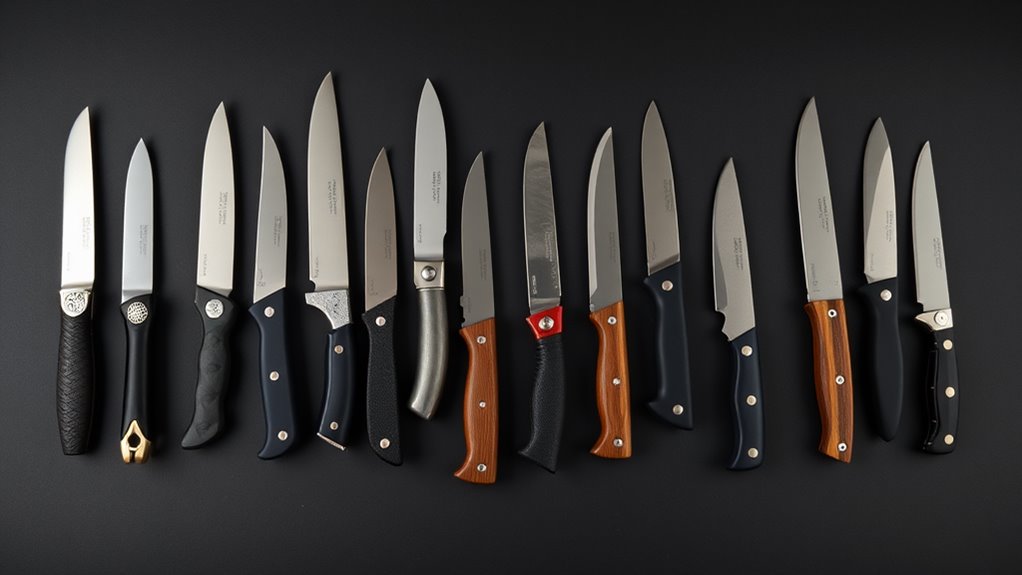
For below-elbow amputees, choose H.E.L.P. Magic Slicing Knife, Sammons Preston Weighted Serrated Knife, Peta Easi-Grip Carving Knife, Single Handed Cutting Board, Rehabilitation Advantage Adjustable Weighted Knife, Wright Stuff T-Grip Rocker Knife, Checkered Chef Salad Chopper, and North Coast Medical Big-Grip T-Handle Rocker Knife. Use right-angle, T-grip, or rocker blades, 3 – 7.5-inch serrated steel, and 1 – 1.5-inch textured handles. These cut torque, reduce pinch demand, and stabilize one-handed work; keep going for the fitting details.
| H.E.L.P. Magic Slicing Knife – Right Hand | 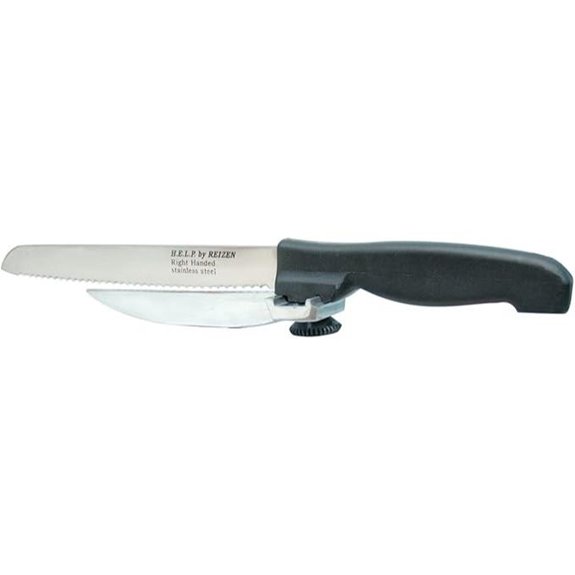 | Right-Hand Aid | Knife Type: Slicing knife | Handle Style: Ergonomic right-hand | Blade Material: Stainless steel | VIEW LATEST PRICE | Read Our Analysis |
| Sammons Preston Weighted Serrated Knife Adaptive Utensil | 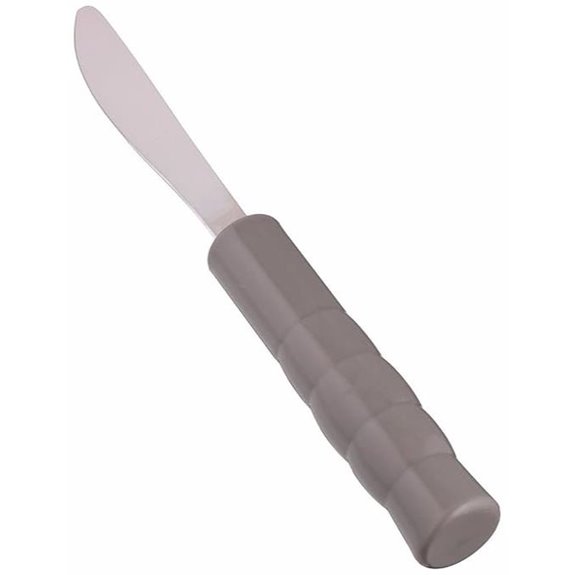 | Best Weighted Pick | Knife Type: Serrated adaptive knife | Handle Style: Thick ridged handle | Blade Material: Serrated steel | VIEW LATEST PRICE | Read Our Analysis |
| Peta Easi-Grip Carving Knife with Right Angle Handle | 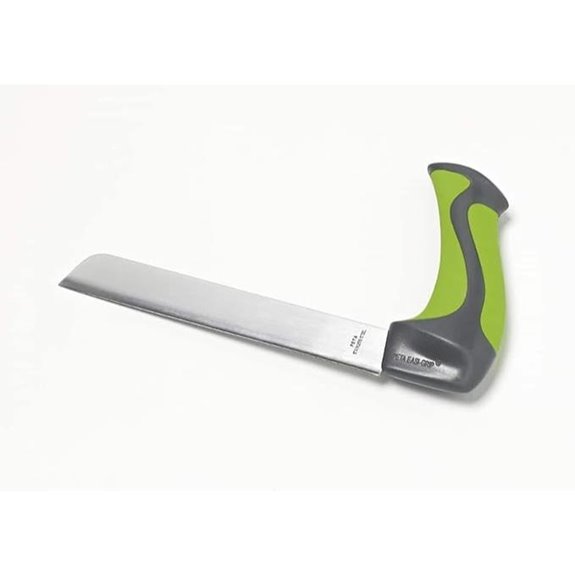 | Best Ergonomic | Knife Type: Carving knife | Handle Style: Right-angle handle | Blade Material: Stainless steel | VIEW LATEST PRICE | Read Our Analysis |
| Rehabilitation Advantage Adjustable Weighted Knife with Washer Center | 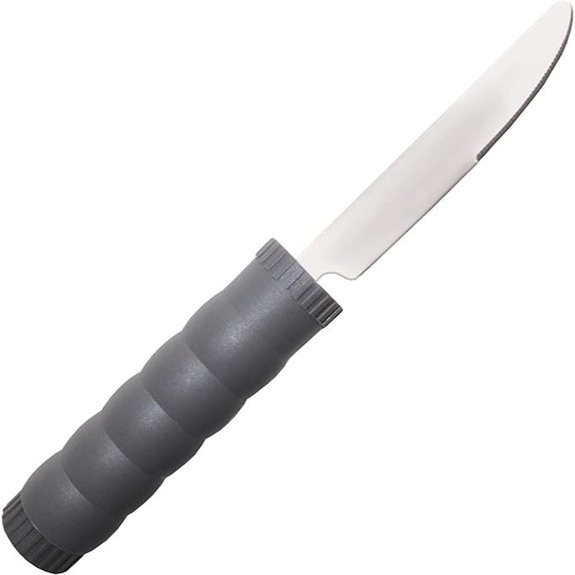 | Adjustable Weight | Knife Type: Adjustable weighted knife | Handle Style: Built-up ridged handle | Blade Material: Stainless steel | VIEW LATEST PRICE | Read Our Analysis |
| Sammons Preston Rocker Knife with Plastic Handle | 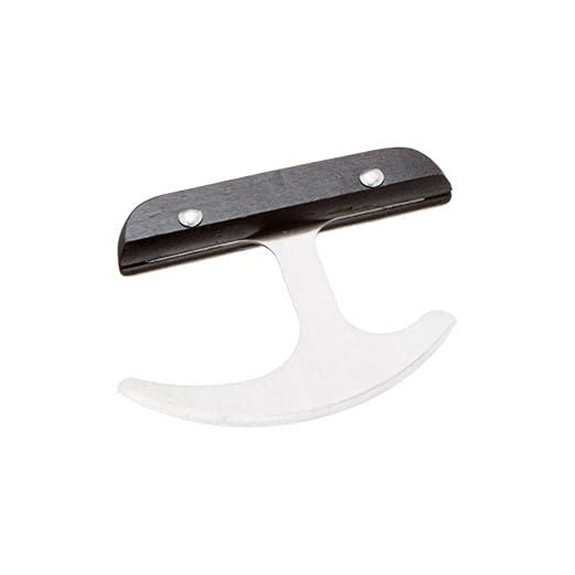 | Best Rocker Knife | Knife Type: Rocker knife | Handle Style: Curved plastic handle | Blade Material: Stainless steel | VIEW LATEST PRICE | Read Our Analysis |
| Rehabilitation Advantage Stainless Steel Rocker Knife |  | Stainless Steel Pick | Knife Type: Rocker knife | Handle Style: Stainless steel handle | Blade Material: Stainless steel | VIEW LATEST PRICE | Read Our Analysis |
| Rehabilitation Advantage TGrip with Plastic Blue Handle Rocker Knife | 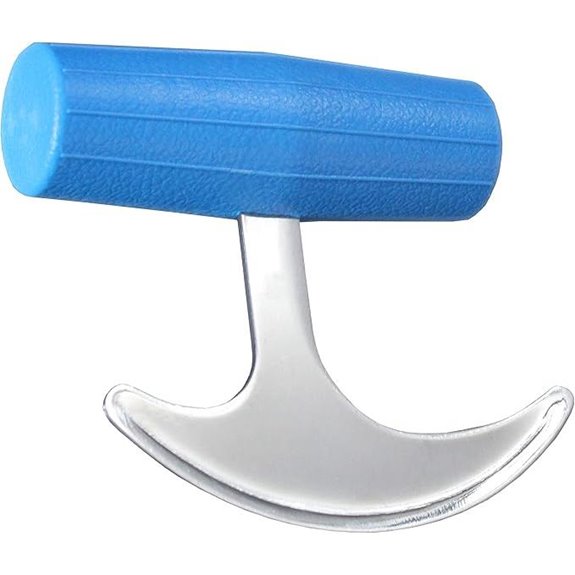 | Best T-Handle | Knife Type: T-grip rocker knife | Handle Style: Horizontal T-handle | Blade Material: Stainless steel | VIEW LATEST PRICE | Read Our Analysis |
| Rehabilitation Advantage Weighted Rocker Knife with Wide Rubber Handle | 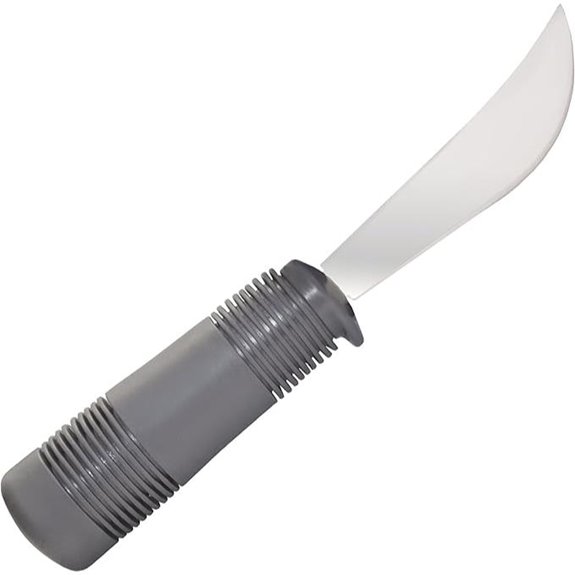 | Most Secure Grip | Knife Type: Weighted rocker knife | Handle Style: Wide rubber handle | Blade Material: Stainless steel | VIEW LATEST PRICE | Read Our Analysis |
| The Wright Stuff T-Grip Rocker Knife for Less Grip Strength | 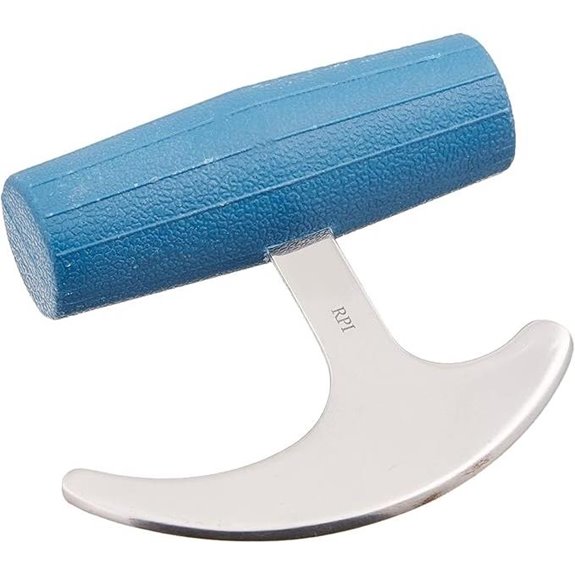 | Best for Weak Grip | Knife Type: T-grip rocker knife | Handle Style: T-grip handle | Blade Material: Stainless steel | VIEW LATEST PRICE | Read Our Analysis |
| Checkered Chef Salad Chopper with Cover | 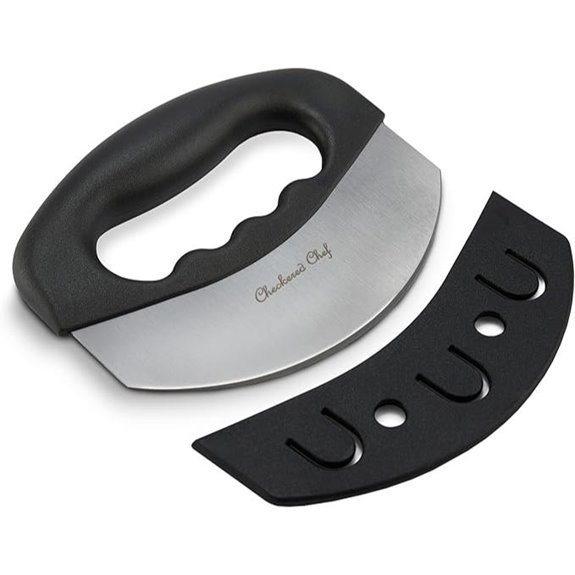 | Best Chopper | Knife Type: Salad chopper | Handle Style: Stainless steel handle | Blade Material: Stainless steel | VIEW LATEST PRICE | Read Our Analysis |
| North Coast Medical Big-Grip T-Handle Rocker Knife | 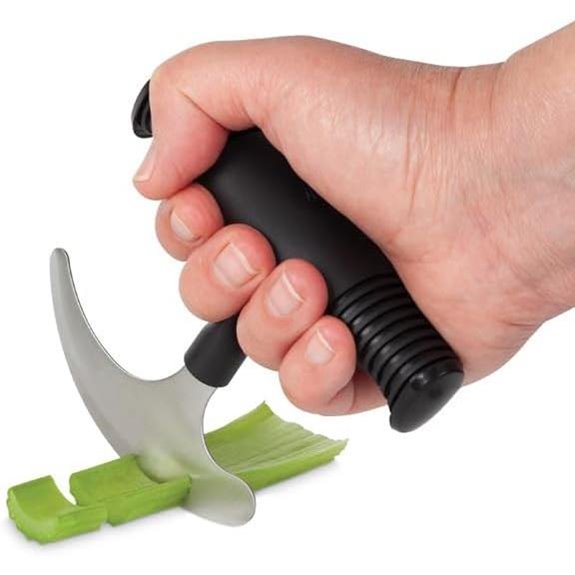 | Best Built-Up Handle | Knife Type: Rocker knife | Handle Style: Built-up T-handle | Blade Material: Stainless steel | VIEW LATEST PRICE | Read Our Analysis |
More Details on Our Top Picks
H.E.L.P. Magic Slicing Knife – Right Hand
The H.E.L.P. Magic Slicing Knife – Right Hand gives you a purpose-built dexterity aid for safer, easier slicing. Use the ergonomic right-hand handle; it improves grip and control when your hand function’s limited. The 7-1/2-inch serrated stainless steel blade cuts with less force, and the adjustable guide keeps slices consistent during reducing slip risk. At 13 inches overall, it gives you reach without excess bulk. Keep your fingers clear. Let the guide work. Stop improvising with ordinary knives; they invite failure and injury.
- Knife Type:Slicing knife
- Handle Style:Ergonomic right-hand
- Blade Material:Stainless steel
- Rocking Use:Slice control
- Dishwasher Safe:Not specified
- Assistive Design:Dexterity aid
- Additional Feature:Right-hand ergonomic handle
- Additional Feature:7-1/2-inch blade
- Additional Feature:Adjustable slice guide
Sammons Preston Weighted Serrated Knife Adaptive Utensil
Sammons Preston’s Weighted Serrated Knife gives you a purpose-built cutting tool when tremor, arthritis, or weak grip makes standard flatware fail. Use the 8 oz integrated weight to dampen shake and improve control. Grip the 1-inch-diameter, 4.5-inch-long plastic handle; its ridged surface resists slip. The serrated blade cuts efficiently. Hold steady. Eat independently. The utensil’s BPA-free, phthalate-free, latex-free construction suits daily use in nursing homes, assisted living, or home care, and dishwasher safety to 180º simplifies cleanup after meals.
- Knife Type:Serrated adaptive knife
- Handle Style:Thick ridged handle
- Blade Material:Serrated steel
- Rocking Use:Adaptive cutting
- Dishwasher Safe:Yes
- Assistive Design:Tremor support
- Additional Feature:8-ounce integrated weight
- Additional Feature:1-inch diameter handle
- Additional Feature:BPA-free materials
Peta Easi-Grip Carving Knife with Right Angle Handle
For below-elbow amputees who need a stable, low-strain carving tool, the Peta Easi-Grip Carving Knife with Right Angle Handle is the correct pick. Use the stainless steel bread carving blade; it cuts cleanly and stays light. The 90-degree handle aligns your wrist in a neutral plane, so you avoid torque and fatigue. Its Easi-grip profile gives you controlled pressure during slicing, and the non-slip finish keeps your hold secure when grip strength drops. Toss it in the dishwasher. Don’t force awkward angles; that’s how you lose control and strain the forearm.
- Knife Type:Carving knife
- Handle Style:Right-angle handle
- Blade Material:Stainless steel
- Rocking Use:Controlled carving
- Dishwasher Safe:Yes
- Assistive Design:Ergonomic aid
- Additional Feature:90-degree handle angle
- Additional Feature:Non-slip finish
- Additional Feature:Lightweight construction
Rehabilitation Advantage Adjustable Weighted Knife with Washer Center
Rehabilitation Advantage’s Adjustable Weighted Knife with Washer Center serves users who need controlled cutting without relying on a firm pinch grip, especially those with arthritis, hand tremors, Parkinson’s disease, or other dexterity-limiting conditions. You get a high-quality stainless steel blade, plus a built-up plastic handle with ridges and a 1.5-inch diameter for better contact. Adjust the weight from 2 to 8 ounces by adding or removing internal washers. Match the load to your control profile. Dishwasher-safe to 180°F, it cleans fast. Use it when grip failure makes standard cutlery unsafe.
- Knife Type:Adjustable weighted knife
- Handle Style:Built-up ridged handle
- Blade Material:Stainless steel
- Rocking Use:Adjustable control
- Dishwasher Safe:Yes
- Assistive Design:Weighted aid
- Additional Feature:Adjustable 2-8 ounces
- Additional Feature:Washer-based weighting
- Additional Feature:1.5-inch handle
Sammons Preston Rocker Knife with Plastic Handle
The Sammons Preston Rocker Knife with Plastic Handle suits a user who can anchor the handle in one hand but cannot tolerate sustained wrist deviation or forceful bilateral cutting. Use the 4-inch curved plastic handle and 3.5-inch single-edged stainless steel blade to slice, chop, and cut meat or tough foods. The rocking motion shifts force into the blade arc, reducing strain. At 1.76 ounces, it stays light; the T-shaped grip aids limited hand strength. Wash it in the dishwasher up to 220º. Keep the carrying case separate. Model 53314, built for clinics, home care, and one-handed use.
- Knife Type:Rocker knife
- Handle Style:Curved plastic handle
- Blade Material:Stainless steel
- Rocking Use:Rocking motion
- Dishwasher Safe:Yes
- Assistive Design:Weak-hand aid
- Additional Feature:3.5-inch blade
- Additional Feature:4-inch curved handle
- Additional Feature:Carrying case sold separately
Rehabilitation Advantage Stainless Steel Rocker Knife
For adults with limited grip, tremor, or unilateral hand control, the Rehabilitation Advantage Stainless Steel Rocker Knife is often the correct field choice since its 8-inch stainless-steel body and 4-inch curved, rounded blade convert a basic cutting task into a controlled rocking stroke that does not demand a firm pinch or conventional slicing mechanics. Use the ambidextrous solid handle, keep pressure vertical, and let the rounded edge do the work. It’s reusable, dishwasher safe to 180 degrees, and weighs only 0.2 pounds. Do not force a slice; this tool’s value is control, not brute cutting speed.
- Knife Type:Rocker knife
- Handle Style:Stainless steel handle
- Blade Material:Stainless steel
- Rocking Use:Rocking motion
- Dishwasher Safe:Yes
- Assistive Design:Limited-control aid
- Additional Feature:8-inch overall length
- Additional Feature:4-inch curved blade
- Additional Feature:Ambidextrous stainless grip
Rehabilitation Advantage TGrip with Plastic Blue Handle Rocker Knife
TGrip rocker knives with the plastic blue horizontal handle are the correct choice when you need controlled cutting with limited wrist rotation, weak grip, or poor finger isolation – especially in below-elbow amputees who must drive the blade with forearm position rather than a full-hand pinch. You get a high-quality stainless steel blade, smooth-edge construction, and a horizontal rubber T-handle that accepts overhand or underhand control. Rock, don’t slice. Use the ergonomic form to reduce finger demand and accidental cuts. Clean it easily, then run it through the dishwasher up to 180 degrees. Durable. Direct. Reliable.
- Knife Type:T-grip rocker knife
- Handle Style:Horizontal T-handle
- Blade Material:Stainless steel
- Rocking Use:Rocking motion
- Dishwasher Safe:Yes
- Assistive Design:Grip aid
- Additional Feature:Blue T-handle
- Additional Feature:Overhand or underhand grip
- Additional Feature:Smooth-edge construction
Rehabilitation Advantage Weighted Rocker Knife with Wide Rubber Handle
Rehabilitation Advantage’s Weighted Rocker Knife with Wide Rubber Handle suits users who need controlled, one-handed cutting without the mechanics of a conventional slice. Use the rocking motion; don’t force a sawing stroke. The stainless steel blade stays smooth-edged, and the permanently attached rubber handle resists separation under load. Its wide, textured grip adds weight, limits slip, and improves control when arthritis, tremors, Parkinson’s, or weak dexterity compromise steadiness. You can clean it in the dishwasher. Make every cut deliberate. Keep pressure centered. The design supports independent eating as reducing accidental cuts and handling risk.
- Knife Type:Weighted rocker knife
- Handle Style:Wide rubber handle
- Blade Material:Stainless steel
- Rocking Use:Rocking motion
- Dishwasher Safe:Yes
- Assistive Design:Weighted aid
- Additional Feature:Permanently attached handle
- Additional Feature:Wide textured rubber
- Additional Feature:Added handle weight
The Wright Stuff T-Grip Rocker Knife for Less Grip Strength
The Wright Stuff T-Grip Rocker Knife gives below-elbow amputees and other users with limited grip strength a workable cutting platform when conventional knife control fails. Use the 4.5-inch stainless-steel Wharncliffe blade with a back-and-forth rocking motion, not a slice. The T-grip rubber handle is 3-3/4 inches wide and 1-1/4 inch at the center, so you can stabilize it with less force. It weighs 4 ounces, runs ambidextrous, and ships with a less-sharp plain edge. Dishwasher safe; hand washing’s better. Reusable, rust resistant, and built for adult food prep.
- Knife Type:T-grip rocker knife
- Handle Style:T-grip handle
- Blade Material:Stainless steel
- Rocking Use:Rocking motion
- Dishwasher Safe:Yes
- Assistive Design:Low-grip aid
- Additional Feature:Wharncliffe blade shape
- Additional Feature:4.5-inch blade
- Additional Feature:Sharpenable edge
Checkered Chef Salad Chopper with Cover
Checkered Chef’s Salad Chopper Tool with Cover suits a below-elbow amputee who needs a stable, two-handed rocking motion rather than a conventional pinch grip: its 8-centimeter stainless-steel blade, stamped construction, and plain edge let you drive a mezzaluna arc through onion, cucumber, lettuce, herbs, nuts, and chocolate with controlled downward force and minimal wrist deviation. Load the bowl, set the rocker, and chop. The 6.9-inch tool weighs 0.39 pounds, so it tracks cleanly without drag. Use the protective sheath; it guards the blade and your fingers. Rinse it or run the dishwasher. Ignore flimsy slicers.
- Knife Type:Salad chopper
- Handle Style:Stainless steel handle
- Blade Material:Stainless steel
- Rocking Use:Rocking chopping
- Dishwasher Safe:Yes
- Assistive Design:Chopping aid
- Additional Feature:Protective blade sheath
- Additional Feature:8-centimeter blade
- Additional Feature:Stamped construction
North Coast Medical Big-Grip T-Handle Rocker Knife
North Coast Medical’s Big-Grip T-Handle Rocker Knife suits users who need mechanical advantage more than finesse: people with hand arthritis, neurological impairment, weak grasp, limited hand coordination, or generalized arm weakness. Grip the 1-3/8 in T-handle; its soft, built-up ribbing lets you hold it securely. Rock through food, don’t saw. The stainless-steel, 4-1/2 in blade has a safety edge, yet still cuts cleanly and can be sharpened. Use the protective cover for storage. It’s latex-free and dishwasher safe, so you can clean it without fuss or risk.
- Knife Type:Rocker knife
- Handle Style:Built-up T-handle
- Blade Material:Stainless steel
- Rocking Use:Rocking motion
- Dishwasher Safe:Yes
- Assistive Design:Built-up grip aid
- Additional Feature:1-3/8-inch T-handle
- Additional Feature:Flexible ribbing
- Additional Feature:Protective blade cover
Factors to Consider When Choosing Adaptive Knives for Below-Elbow Amputees
You choose an adaptive knife by matching the grip and handle design to your residual limb and socket interface – go for a secure, high-friction profile that won’t rotate under load, since poor coupling destroys one-handed control. Check blade shape and length next: a short, curved edge improves controlled cutting, whereas excess length, poor balance, or a dull profile increases torque, slips, and fatigue. Keep weight, stability, and safety features nonnegotiable – select a knife with enough mass for tracking, a stable center of gravity, and a guard or finger stop, or you’re inviting blade run-out and avoidable injury.
Grip And Handle Design
Start with the handle, since that’s where control is won or lost. Choose a built-up diameter around 1 to 1.5 inches, or a T-grip or right-angle profile, so you don’t rely on delicate finger closure and so grip forces spread across more surface. Demand textured, non-slip surfaces and ridging; smooth plastic fails when a socket or weak hand can’t generate friction. Align the handle with your wrist and forearm – right-angle geometries reduce pronation and supination, cutting strain. Use ambidextrous or hand-specific contours that seat a prosthetic attachment or residual-limb socket securely without excessive closure force. Add mass only when it’s adjustable and still manageable; weighted handles can damp tremor, but overbuilt tools punish weak residual-limb strength.
One-Handed Cutting Control
For one-handed cutting, lock in a knife that lets the user drive the blade with the residual limb or prosthesis in a secure overhand, underhand, or T-grip; anything that forces delicate finger closure is a failure mode, not a feature. Demand handle diameters around 1 to 1.5 inches, ribbed or textured surfaces, and enough mass to damp tremor and resist slippage. Choose rocking or short-stroke cutters, with curved or 3.5 – 4.5-inch straight blades, so you can push and pivot without two-handed stabilization. Set the balance point near the handle; if it sits forward, torque climbs and control collapses. Reject light, skinny, polished handles outright. They shed friction, amplify wobble, and turn a simple cut into a compensatory mess you don’t need.
Blade Shape And Length
Blade shape and length decide whether a one-handed cut stays controlled or turns into a torque problem. Use short blades, 3 – 5 inches, to cut leverage and wrist or socket torque. Choose curved or rocker profiles when you need back-and-forth strokes; they reduce wrist rotation and grip demand. If you need a straight serrated edge, keep it moderate, about 4 – 7.5 inches, so it bites with less downward force, but expect more lateral control. Reject long, straight chef blades. Demand blunt or safety edges and a flatter profile when you’re slicing with a hook or adaptive handle; they cut food, not skin. Keep blade-to-handle balance close to center. That geometry improves maneuverability and limits shoulder and residual-limb fatigue during repetitive cutting.
Weight And Stability
Choose mass deliberately. You want a handle in the 4 – 8 ounce range, about 110 – 225 g, since that mass adds control without burning out your shoulder or residual limb during meal prep. Use heft to your advantage: a heavier, well-distributed handle drops the center of mass and damps tremor, so rocking cuts and guided slices stay steadier. Don’t chase weight past 12 ounces, roughly 340 g; torque climbs, precision falls, and strain follows. Prefer wide, textured grips that concentrate mass near the hand, since they resist rotation and keep your cutting angle consistent. If you can, select adjustable or modular weighting. That lets you tune stability against endurance as your technique improves. Anything else is amateurish overkill.
Safety Features
Guard the cutting edge first. Choose adaptive knives with guarded or recessed blades, plus adjustable guides or covers, so you don’t expose fingers to the edge. Reject long slicing strokes; use rocking or back-and-forth cuts, since short travel keeps control tight and lowers injury risk. Demand wide, textured, or T-shaped handles that lock into your grip or prosthetic socket without rotation; slick handles fail under torque. Add stabilizing hardware – suction bases, spikes, or built-up supports – to pin food in place and cut the force you need. Prefer rigid, well-fitted constructions with blade sheaths for transport, as exposed steel in a bag is a cut waiting to happen. Buy designs that reduce contact, reduce slip, and keep the task mechanical, not precarious.
Cleaning And Maintenance
Once you’ve picked a knife that won’t slip, the next failure point is hygiene: use models built from dishwasher-safe stainless steel and high-heat plastics so they tolerate washing at roughly 180 – 220°F without warping, softening, or degrading at the handle interface. Choose smooth, sealed handles or permanently attached components; exposed joints and cavities trap food, wick dampness, and breed bacteria. If the knife uses removable weights or washers, disassemble it after washing and dry every part completely, or corrosion and mold will take hold in the cavity. Favor corrosion-resistant stainless steel blades, and rinse them immediately after acidic foods to prevent pitting and discoloration. Inspect edge geometry and handle seams regularly for cracks or loosening, then sharpen or replace blades as directed. Obey the manufacturer’s temperature limits.
User-Specific Adaptation
When you fit an adaptive knife for a below-elbow amputee, start with the interface, not the blade: verify that the socket or terminal device can mount or hold the knife securely, whether the user needs a T-handle, a horizontal grip, or a rocker attachment, and reject any setup that introduces excessive torque at the residual limb. Match the grip geometry to wrist range of motion and cutting path; vertical, right-angle, T-grip, and horizontal layouts each change shoulder and trunk compensation. Use built-up handles, 1 – 1.5 in, with ridged or textured surfaces when fine motor control is limited. Choose rocking for lower lateral shear, slicing only when lateral control is firm. Add or remove mass in small increments to steady tremor and improve proprioception, but never overload the prosthetic joint.
Frequently Asked Questions
Can Adaptive Knives Work for Both Left and Right Below-Elbow Amputees?
Yes, you can use adaptive knives on either side if you choose an ambidextrous or adjustable design. You’ll need the right handle angle, grip, and mounting setup to match your residual limb and preferred control.
How Do I Safely Clean Adaptive Knives With Special Handles?
You clean them by removing detachable grips, washing blades with warm soapy water, rinsing well, and drying immediately. Avoid soaking special handles unless – unless the maker says it’s safe, and inspect parts regularly for damage.
Are Adaptive Knives Suitable for Cutting Tough Meats and Vegetables?
Yes, you can use adaptive knives for tough meats and vegetables if you choose a sturdy blade and grip. You’ll get safer, better control with proper technique, though extra effort may still be needed.
Do Adaptive Knives Fit Standard Kitchen Storage Drawers?
Yes, you can usually fit adaptive knives in standard drawers, but you’ll need enough depth and width. You should check handle size and blade guards, since some designs won’t slide in neatly.
Can Adaptive Knives Be Used One-Handed Without a Cutting Board?
Yes, you can use adaptive knives one-handed without a cutting board, but you’ll get better control with a stable surface. You’ll want a non-slip mat, a guard, and careful technique for safer, steadier cutting.