Hi, I am Aria, welcome to my life!

8 Best One-Handed Cutting Boards for Effortless Prep
One-handed cutting boards that stay put and make prep easier—discover the best adaptive, spike, and suction-grip boards for safer, faster chopping, spreading, and cleanup.

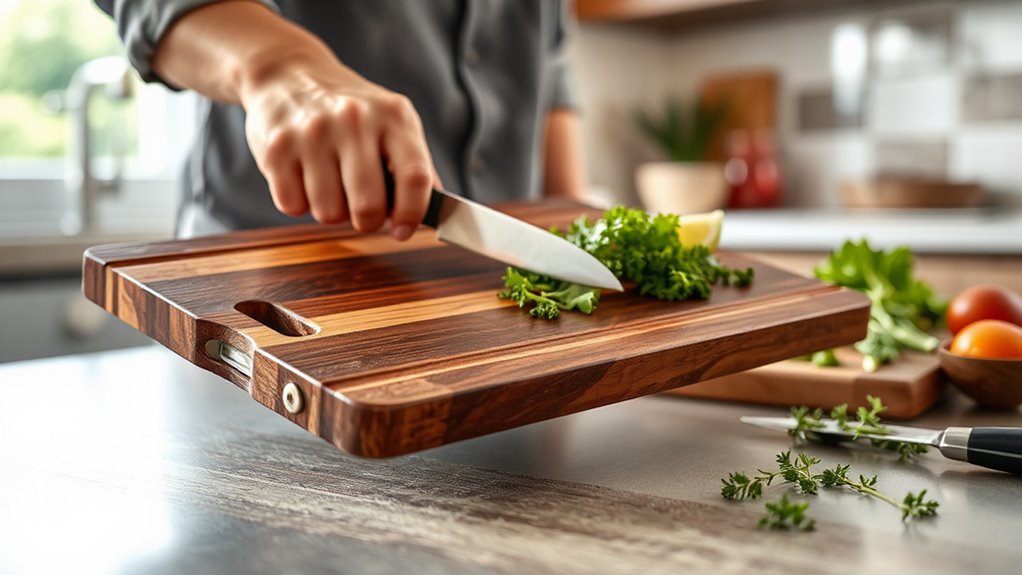
Choose boards that stay planted: the One-Handed Adaptive Cutting Board, Homecraft Spreading Board, Sammons Preston Hi-D, Etac Fix, and bamboo spike boards with four-point suction, friction feet, or rubber pads. Demand stainless spikes, raised corners, or clamp jaws; lateral slip is the failure mode. Pick HDPE or sealed bamboo for durability, dishwasher-safe cleanup, and sub-5-lb handling. Ignore flimsy trays. Match size to your reach, then keep going—you’ll see which models actually earn space on your counter.
| One-Handed Adaptive Cutting Board | 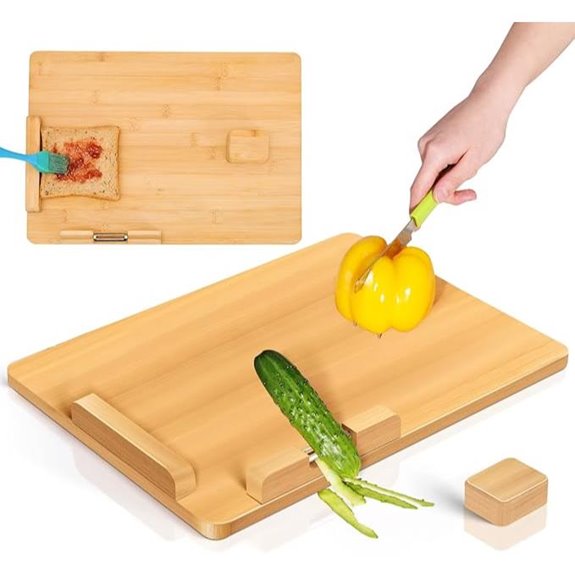 | Best for Stability | One-Handed Use: One-handed | Food Holders: Support board | Anti-Slip Base: Lightweight stability | VIEW LATEST PRICE | Read Our Analysis |
| Homecraft One-Handed Spreading Board for Adaptive Food Prep | 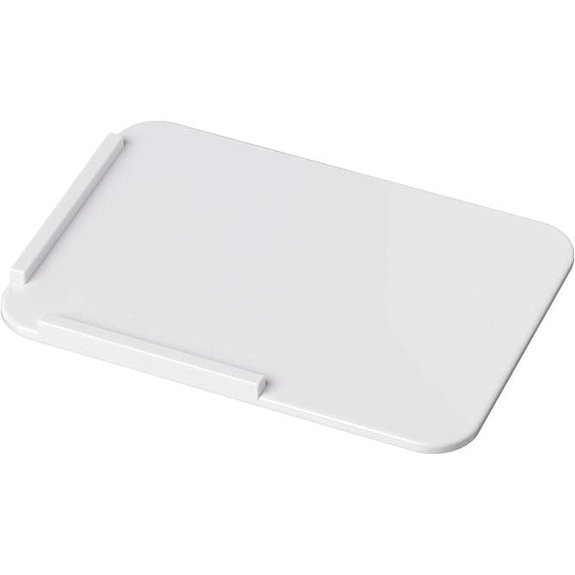 | Best Compact Pick | One-Handed Use: One-handed | Food Holders: Raised corner | Anti-Slip Base: Non-slip design | VIEW LATEST PRICE | Read Our Analysis |
| Sammons Preston Single-Handed Cutting Board with Suction Feet | 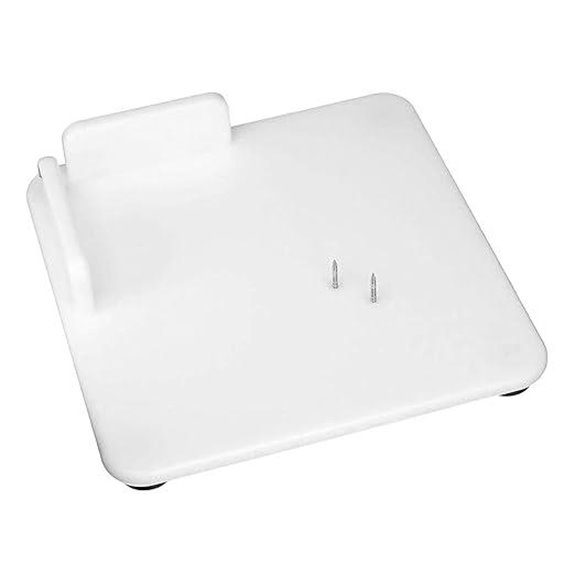 | Best for Grip | One-Handed Use: Single-handed | Food Holders: Aluminum nails | Anti-Slip Base: Suction feet | VIEW LATEST PRICE | Read Our Analysis |
| Etac Fix Adaptive Cutting Board with Suction Feet | 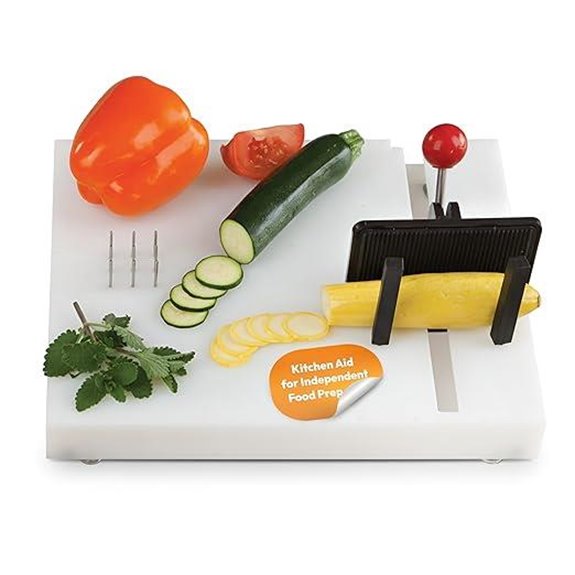 | Most Versatile | One-Handed Use: One-handed | Food Holders: Stainless spikes | Anti-Slip Base: Suction feet | VIEW LATEST PRICE | Read Our Analysis |
| Adaptive One-Handed Cutting Board with Steel Spikes | 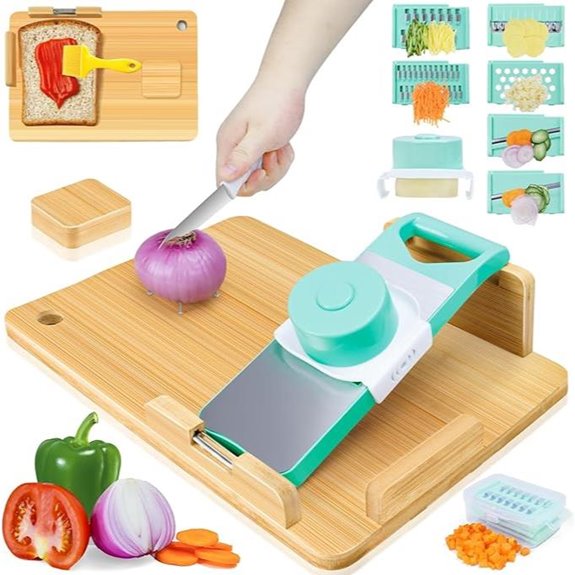 | Best Accessory Bundle | One-Handed Use: One-handed | Food Holders: Steel spikes | Anti-Slip Base: Silicone feet | VIEW LATEST PRICE | Read Our Analysis |
| Fanwer Adaptive One-Handed Cutting Board with Spikes |  | Best Eco-Friendly | One-Handed Use: Single-handed | Food Holders: Food spikes | Anti-Slip Base: Non-slip feet | VIEW LATEST PRICE | Read Our Analysis |
| Adaptive One-Handed Cutting Board with Accessories | 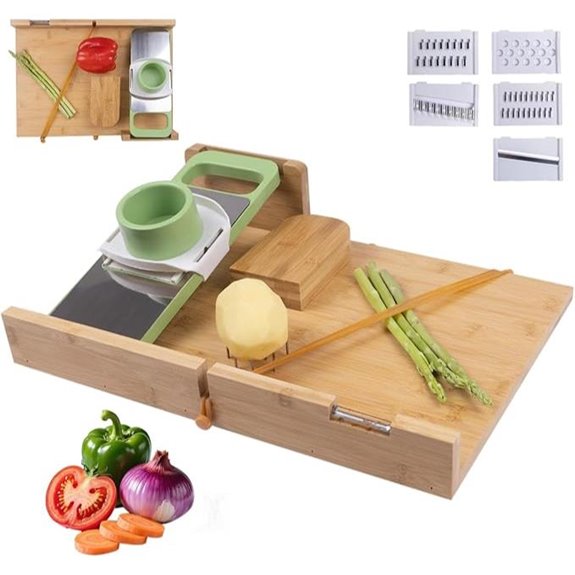 | Best for Extras | One-Handed Use: One-handed | Food Holders: Spikes/rubbers | Anti-Slip Base: Anti-slip bottom | VIEW LATEST PRICE | Read Our Analysis |
| One-Handed Adaptive Cutting Board with Bread Holder | 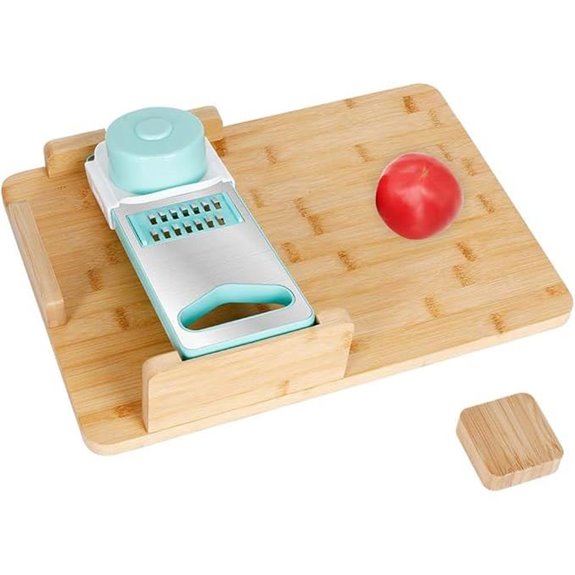 | Best All-in-One | One-Handed Use: One-handed | Food Holders: Fix spikes | Anti-Slip Base: One-hand stable | VIEW LATEST PRICE | Read Our Analysis |
More Details on Our Top Picks
One-Handed Adaptive Cutting Board
The One-Handed Adaptive Cutting Board is the correct choice when you need stable, single-handed food preparation after stroke, amputation, or any loss of grip strength, dexterity, or bilateral control. Use it for slicing bread, securing produce, and peeling without drift. Its lightweight wood body gives you tactile stability without excess load. Clamp, press, cut: that’s the sequence. You can pair it with other single-handed kitchen aids from the same adaptive line. Don’t improvise with unstable boards; slippage ruins control and invites injury. This tool restores independence by locking food in place and reducing the second-hand dependency that standard boards demand.
- One-Handed Use:One-handed
- Food Holders:Support board
- Anti-Slip Base:Lightweight stability
- Wood/Bamboo Build:Wood
- Extra Tools:Multi-use board
- Easy Cleaning:Lightweight
- Additional Feature:Lightweight construction
- Additional Feature:Multi-task prep board
- Additional Feature:Full adaptive tool line
Homecraft One-Handed Spreading Board for Adaptive Food Prep
Homecraft’s one-handed spreading board is the correct choice when you need independent food prep with one functional hand and no tolerance for instability. Use the L-shaped raised corner to pin bread, fruit, or vegetables; it blocks slip during spreading, slicing, and chopping. Add the stainless steel spikes when you need extra retention. The lightweight, one-piece plastic body measures 18 x 25.6 cm, stores easily, and cleans by hand washing. Its raised edge and non-slip form reduce coordination demands, making it fit for arthritis, stroke recovery, amputation, or hemiparesis. Use it in home kitchens or assisted living.
- One-Handed Use:One-handed
- Food Holders:Raised corner
- Anti-Slip Base:Non-slip design
- Wood/Bamboo Build:Plastic
- Extra Tools:Basic board
- Easy Cleaning:Hand wash
- Additional Feature:L-shaped raised corner
- Additional Feature:Optional stainless spikes
- Additional Feature:Compact portable size
Sammons Preston Single-Handed Cutting Board with Suction Feet
Sammons Preston’s Hi-D Paring Board gives you a true single-handed cutting platform when grip strength, balance, or bilateral coordination won’t let standard prep boards function. Use the 11-inch square high-density polyethylene board; it’s non-latex, durable, dishwasher safe, and easy to clean. Four suction cups anchor it to the countertop. Aluminum nails pierce produce, bread, or meat so you can cut, peel, and slice without chase-and-slip failures. Corner guards hold food in place during spreading. It’s built for limited mobility, elderly users, and anyone who needs controlled, one-handed meal prep.
- One-Handed Use:Single-handed
- Food Holders:Aluminum nails
- Anti-Slip Base:Suction feet
- Wood/Bamboo Build:HDPE plastic
- Extra Tools:Basic board
- Easy Cleaning:Dishwasher safe
- Additional Feature:Four suction cups
- Additional Feature:Aluminum food nails
- Additional Feature:11-inch square
Etac Fix Adaptive Cutting Board with Suction Feet
Built for one-handed food prep, the Etac Fix Adaptive Cutting Board with Suction Feet is the right choice when reduced hand strength, limited dexterity, or impaired mobility makes conventional cutting boards unstable and unsafe. Lock it down with friction feet and suction cups; the base won’t shift. Use the stainless steel spikes to pin produce, then clamp bowls, graters, or food with adjustable jaws. Need a flat workspace? Remove the spike plate. Cut, grate, peel, whisk—independently. Durable construction and dishwasher-safe materials keep cleanup simple. Stop fighting loose tools; secure your station and work with control every time.
- One-Handed Use:One-handed
- Food Holders:Stainless spikes
- Anti-Slip Base:Suction feet
- Wood/Bamboo Build:Durable materials
- Extra Tools:Adjustable jaws
- Easy Cleaning:Dishwasher safe
- Additional Feature:Adjustable food jaws
- Additional Feature:Removable spike plate
- Additional Feature:Supports graters/bowls
Adaptive One-Handed Cutting Board with Steel Spikes
For one-handed users who need real control at the board, the Adaptive One Handed Cutting Board gives you a fixed work surface that doesn’t skate, shift, or collapse under load. Use the four stainless steel spikes to anchor bread, fruit, cheese, or meat, then brace tools against the removable support fence. You get bamboo construction, 17 x 12.4 inches of working area, and non-slip silicone feet for stability. The six-blade chopper disassembles for cleaning. Keep it hand-washed only. At 4.7 pounds, it stays planted. Store it by the hanging loop.
- One-Handed Use:One-handed
- Food Holders:Steel spikes
- Anti-Slip Base:Silicone feet
- Wood/Bamboo Build:Bamboo
- Extra Tools:Peeler/chopper
- Easy Cleaning:Hand wash
- Additional Feature:Six-blade vegetable chopper
- Additional Feature:Removable support fence
- Additional Feature:Built-in hanging loop
Fanwer Adaptive One-Handed Cutting Board with Spikes
The Fanwer Adaptive One-Handed Cutting Board with Spikes is built for one-handed control when grip strength, finger dexterity, or bilateral coordination won’t hold the line—amputees, stroke survivors, disabled users, and anyone working with limited hand function get the most value here. Use the bamboo, 15.98L x 2W x 13.98Th board. Drive food onto the spikes, brace bread against the stops, and cut, chop, peel, or grate without chase or slippage. Non-slip feet anchor it. Hand wash only. This rectangular, eco-friendly unit, model stander, includes one grater and supports strict, single-handed prep.
- One-Handed Use:Single-handed
- Food Holders:Food spikes
- Anti-Slip Base:Non-slip feet
- Wood/Bamboo Build:Bamboo
- Extra Tools:Grater included
- Easy Cleaning:Hand wash
- Additional Feature:Bread stabilizing stops
- Additional Feature:Eco-friendly bamboo
- Additional Feature:Rectangular shape
Adaptive One-Handed Cutting Board with Accessories
Adaptive one-handed cutting boards suit unilateral operators who need a stable, multi-tool prep station, especially users with one hand disabled or both hands functionally limited. You get a wooden board, stainless steel spikes with a wooden cover, a one-handed peeler, and a grater with five replaceable blades. Lock food with rubber bands; spread sauces on the bread area. Use the anti-slip bottom to suppress sliding. The spikes hold produce, the peeler strips skins, and the blades handle varied grating. Clean it easily. Replace worn blades without delay. Don’t improvise with unstable boards; that’s how injuries happen.
- One-Handed Use:One-handed
- Food Holders:Spikes/rubbers
- Anti-Slip Base:Anti-slip bottom
- Wood/Bamboo Build:Wood
- Extra Tools:Peeler/grater
- Easy Cleaning:Easy clean
- Additional Feature:Five replaceable blades
- Additional Feature:Wooden spike cover
- Additional Feature:Rubber band accessories
One-Handed Adaptive Cutting Board with Bread Holder
One-handed bread-board systems like this one are built for users who can’t safely manage a conventional board—stroke survivors, people with limited finger mobility, hand disabilities, or anyone forced into single-hand food prep. Use the bread stops and fix spikes to lock loaves, sandwiches, or vegetables in place, then slice without drift. The bamboo board resists wear and stays food-safe. Deploy the one-handed peeler for controlled peeling. Swap the 6-in-1 stainless steel and ABS blades—six total—one-handed for shredding or grinding. Don’t improvise. Speed rises, effort drops, and your prep stays stable, fast, and precise.
- One-Handed Use:One-handed
- Food Holders:Fix spikes
- Anti-Slip Base:One-hand stable
- Wood/Bamboo Build:Bamboo
- Extra Tools:Peeler/cutter
- Easy Cleaning:One-hand clean
- Additional Feature:Left- or right-handed
- Additional Feature:Six-in-one cutter
- Additional Feature:Food-safe bamboo
Factors to Consider When Choosing One-Handed Cutting Boards for Arm Amputees
Choose a one-handed cutting board that locks food in place with sharp spikes, clamps, or ridge systems, since if the produce shifts, your control collapses and the cut goes bad. Demand an anti-slip base—silicone feet, rubberized corners, or full-pad grip—plus a rigid body in hardwood, bamboo, or high-density polyethylene that won’t flex under load and is easy to wash without trapping debris. Ignore flimsy boards: if the surface stains, warps, or takes on dampness, it’s a sanitation failure and a durability failure.
One-Handed Stability
When you’re selecting a board for one-handed use, prioritize stability first: lateral slip is the failure mode that ruins control, so the board needs suction cups, rubber feet, or another high-friction base that locks it to the counter when you load it from one side. Choose heavier stock—hardwood or thick polymer, not ultralight plastic—because mass resists torque and dampens bounce. Favor a low profile and wide footprint; both drop the center of gravity and expand countertop contact, cutting wobble during chopping or peeling. If you need more security, use removable stabilizers: a fence, clamp, or spike plate matched to the task. Inspect the mounting points. Loose hardware is a liability, not a feature. Board movement, even a few millimeters, ruins repeatable cuts and invites injury.
Food Securing Features
For food securing, build in real mechanical restraint: stainless-steel spikes or pins should pierce soft items like bread and tomatoes so you’re not chasing the load with your free hand, whereas adjustable jaws, clamps, or removable spike plates let you trap bowls and irregular produce without improvising unsafe grips. Use raised corners, L-shaped stops, or bread holders to create a hard abutment; press loaves, slices, or cheese against them, then cut or spread. Demand multiple hold modes. Delicate fruit needs light pinning; dense squash needs clamping. Choose boards with textured contact surfaces and fixed gripping hardware, so the food stays indexed under the blade, not crushed or skewed. Skip makeshift towels and loose hands. They fail under load, and failure costs fingers.
Anti-Slip Base
A secure grip on the food means nothing if the board itself slides, skews, or lifts under load. Choose an anti-slip base with suction cups or high-friction rubber; both reduce lateral and rotational movement when you cut one-handed. Demand multiple contact points—four suction pads or a wide rubber perimeter—so the board won’t tip during pushing or sawing. Use wet-rated silicone or thermoplastic elastomer, as traction must hold during washing and with slippery produce. The base has to stay stationary under downward, lateral, and rocking forces; if it drifts, it fails. Prefer removable or replaceable non-slip pads. They let you clean, renew, and preserve anchoring performance without sacrificing hygiene. Ignore loose, smooth bottoms. They’re unsafe, full stop.
Material Durability
Choose materials that can take abuse and stay true. Pick hardwoods—bamboo or maple—when you need resistance to knife gouging and warping under repeated load. If dampness or heavy use dominates, use HDPE: it’s impact-resistant, non-porous, and dishwasher-safe, so it outlasts soft stock in wet conditions. Demand stainless steel for any spikes, edge reinforcements, or embedded hardware; anything else corrodes, loosens, and fails under one-handed advantage. Check mass and stiffness together: the board must not flex, yet it should stay under 5 lbs for safe repositioning. Reject flimsy slabs. Finally, choose repairable construction. Wood should accept sanding after deep cuts; composite boards should offer replaceable spike plates. Durability isn’t optional—it’s the difference between a board that works and one that quits.
Easy Cleaning
Cleaning has to be built into the board’s design, not treated as an afterthought. Choose high-density polyethylene or another non-porous plastic; both tolerate dishwasher cycles, hot water, and mild detergent without harboring residue. Demand smooth faces and sealed edges. Skip narrow slots, decorative grooves, and complex joints, since food particles and dampness lodge there and breed bacteria. If the board uses removable spike plates, grater inserts, or support fences, they must detach cleanly for separate washing and drying; anything fixed in place invites contamination. Verify the material won’t warp, stain, or hold odor after repeated sanitation. Properly sealed bamboo can work, but only if the maker specifies it. If you can’t machine-wash it or hand-wash it fast, it’s the wrong board.
Extra Tool Compatibility
Once sanitation is handled, inspect the board’s extra-tool interface with the same rigor. Demand standardized mounts: spikes, fences, grater slots, or clamp jaws that accept prosthetic hooks and adaptive utensils without improvised shims. Choose modular systems with removable spike plates, adjustable support fences, and multiple attachment points; one fixed fitting is a weak design. Verify that peelers, graters, and choppers can be swapped and controlled one-handed, with reachable levers and non-slip contact surfaces. Check stabilizers too—suction feet, friction pads, or clamp systems must hold whereas tools load the board. Reject brittle clips. Prefer snap-fit, screw, or magnet hardware rated for repeated removal, cleaning, and replacement without special tools. If the accessory can’t detach cleanly, you’ll fight contamination and downtime every time.
Size and Portability
When you split prep between countertop and lap, size becomes a mechanical constraint, not a preference. Choose a board that matches the space you actually use: about 12 x 11 inches for tight setups, up to 17 x 12 inches when you need more cutting real estate. Keep weight under 5 pounds if you’ll lift it often; anything heavier slows repositioning and storage. Target 0.5–1 inch thickness. That range gives you enough mass to resist tipping without turning transport into a chore. If you move between kitchen and dining areas, demand integrated handles or a hanging loop. On varied surfaces, smaller boards stay fully supported on your lap more reliably, whereas larger boards need dependable non-slip support. Ignore oversized slabs; they shift, snag, and fail.
Hand Strength Needs
Cut the demand on your hand first. Choose a board that grips the food, not your residual limb: spikes, raised edges, clamps, or a fixed bread stop reduce squeeze force during cutting. If your grip is weak, reject slick boards; use suction feet or a heavy non-slip base so you don’t have to pin the board down manually. Keep weight under 5 pounds only if the surface still locks in place. Plastic or bamboo work, but only with real anti-slip hardware. Add support fences or removable jaws when you need to push, slice, or brace with one hand. Favor wide work surfaces and corner guards; they cut wrist torque and peak force moments. Anything that slides, twists, or demands sustained squeezing is a bad tool.
Frequently Asked Questions
Are One-Handed Cutting Boards Dishwasher Safe?
Yes, you can often put one-handed cutting boards in the dishwasher, but you should check the material first. You’ll protect it better by hand-washing wood or bamboo boards, since dishwashers can warp or crack them.
Can These Boards Be Used With Left or Right Hand?
Yes, you can use them with either hand, though some designs feel easier in one direction. You’ll want to check the grip, blade slot, and angle, since those features affect comfort and control.
Do Adaptive Cutting Boards Work for Left-Handed Users?
Yes, you can use adaptive cutting boards left-handed if they’re ambidextrous or reversible. You’ll want a stable grip, accessible food guards, and a design that lets you secure ingredients comfortably with your left hand.
How Do I Clean Suction Feet on These Boards?
You clean suction feet by rinsing them with warm, soapy water, scrubbing gently, and drying them fully. Remove crumbs or grease first, and don’t use harsh cleaners that’ll weaken the grip.
Are Replacement Spikes or Accessories Available Separately?
Yes, you can often buy replacement spikes or accessories separately from the manufacturer or retailers. You should check the board’s brand, model, and parts page, then order compatible pieces to keep it working well.


