Hi, I am Aria, welcome to my life!

4 Best One-Handed Nail Clippers for Easy, Secure Trims
One-handed nail clippers made easy: compare secure, stable trims with guarded blades, stainless steel, and built-in catchers to find the safest fit for your hand.

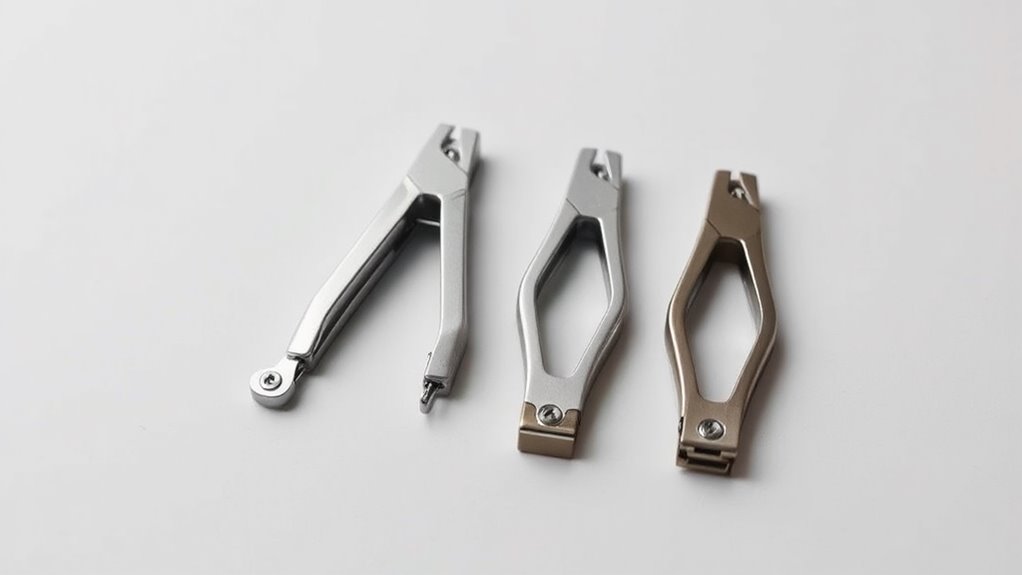
For one-handed trimming, you need controlled force, stable alignment, and guarded blades. Choose Ableware’s press-on clipper for a wide rubber-footed base, the One-Handed Nail Clipper Aid for seated standard-clipper use, or ClipDifferent Pro 2.0 for stainless-steel blades, a safety faceplate, and an integrated catcher. Use models that cut cleanly without helper bracing, with removable catchers, corrosion-resistant parts, and published warranty terms; vague claims fail. Keep going, and you’ll see which design fits your hand best.
| One-Handed Nail Clippers for Elderly or Disabled Users |  | Best for Independence | One-Handed Use: One-handed nail trimming | Accessibility: For elderly/disabled users | Independence: Supports self-grooming | VIEW LATEST PRICE | Read Our Analysis |
| Ableware Press-On One-Handed Nail Clipper |  | Best Stable Design | One-Handed Use: One-handed press operation | Accessibility: For seniors/rehab users | Independence: Promotes independence | VIEW LATEST PRICE | Read Our Analysis |
| One-Handed Nail Clipper Aid Assistive Device | 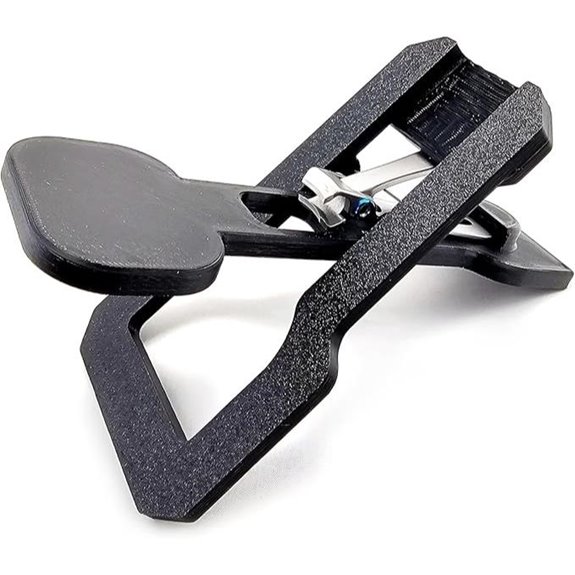 | Best for Grip Limits | One-Handed Use: One-handed assistive clipping | Accessibility: For limited mobility users | Independence: Enables independent nail care | VIEW LATEST PRICE | Read Our Analysis |
| ClipDifferent Pro 2.0 Electric Nail Clipper with Catcher |  | Safest Electric Pick | One-Handed Use: One-handed electric trimming | Accessibility: For low-mobility users | Independence: Reduces caregiver help | VIEW LATEST PRICE | Read Our Analysis |
More Details on Our Top Picks
One-Handed Nail Clippers for Elderly or Disabled Users
One-handed nail clippers are the correct tool when you need autonomous nail trimming in spite of elderly frailty, limb difference, one-sided weakness, or post-stroke impairment. Use the single-handed mechanism; it lets you trim fingernails and toenails with controlled force, precise alignment, and minimal exertion. Choose a model with a comfortable grip and a stable lever, or you’ll slip, waste motion, and risk jagged cuts. Keep it in your grooming kit and use it daily. You’ll preserve independence, reduce dependence on family or manicure services, and maintain clean, accurate nail care. Stop improvising with unsafe tools.
- One-Handed Use:One-handed nail trimming
- Accessibility:For elderly/disabled users
- Independence:Supports self-grooming
- Nail Type:Fingernails/toenails
- Ease of Use:Easy-grip design
- Safety:Precise trimming
- Additional Feature:Comfortable grip
- Additional Feature:Precise trimming
- Additional Feature:Versatile fingernail/toenail use
Ableware Press-On One-Handed Nail Clipper
If you struggle with tiny tools, choose the Ableware Press-On One-Handed Nail Clipper, a made-in-the-USA aid built for senior, disability, and rehabilitation use. Press down with one hand; the wide, long base adds mechanical advantage, whereas rubber feet resist slip and keep the clipper planted. Use it when small implements defeat grip strength or coordination. Maddak, the manufacturer, engineers ADL equipment to support independence and dignity. You get a one-year limited warranty. Don’t fumble with standard clippers; this design cuts that failure mode cleanly and directly, with stable mechanics and minimal hand demand.
- One-Handed Use:One-handed press operation
- Accessibility:For seniors/rehab users
- Independence:Promotes independence
- Nail Type:Fingernails/toenails
- Ease of Use:Gentle press
- Safety:Stable base
- Additional Feature:Extra-wide base
- Additional Feature:Extra-long base
- Additional Feature:Rubber feet stability
One-Handed Nail Clipper Aid Assistive Device
Built for users who can’t manage standard two-handed clippers, this one-handed nail clipper aid gives you controlled nail care with a single hand, which makes it the correct choice for stroke survivors, arthritis patients, older adults, and anyone with reduced grip strength or limited range of motion. Use the sturdy assistive frame, seat the included clipper, and trim with the sharp edge designed for thin or thick nails. You get independent grooming, fewer slips, and simpler maintenance. The package includes 1 assistive device, 1 nail clipper, and 1 instruction card. Stop forcing two-handed tools.
- One-Handed Use:One-handed assistive clipping
- Accessibility:For limited mobility users
- Independence:Enables independent nail care
- Nail Type:Thin/thick nails
- Ease of Use:Simple operation
- Safety:Sturdy build
- Additional Feature:Sturdy construction
- Additional Feature:Sharp clipping edge
- Additional Feature:Includes instruction card
ClipDifferent Pro 2.0 Electric Nail Clipper with Catcher
ClipDifferent Pro 2.0 gives you controlled trimming where standard cutters fail: its patented safety faceplate and nail slot shield skin, whereas the stainless-steel blades move in a continuous up-and-down cycle behind that barrier, shaving off only a sliver per pass. Use it one-handed. The surgical-grade blades never need sharpening or replacement, and they leave nails smooth—no filing. Its rechargeable high-capacity battery recharges fast and delivers months of use. The integrated catcher traps clippings and dust, preventing scatter. Built for limited dexterity, vision loss, limb difference, or low mobility, it restores independence and reduces caregiver dependence for fingernail care.
- One-Handed Use:One-handed electric trimming
- Accessibility:For low-mobility users
- Independence:Reduces caregiver help
- Nail Type:Fingernails
- Ease of Use:Easy trimming
- Safety:Safety faceplate
- Additional Feature:Surgical-grade blades
- Additional Feature:Rechargeable battery
- Additional Feature:Built-in catcher
Factors to Consider When Choosing One-Handed Nail Clippers for Upper Limb Amputees
You need one-handed operation that you can control without torque loss, a grip that stays stable under wet or weak-contact conditions, and a mechanism that matches your nail type—thin, brittle, thick, or curved—because poor alignment turns a simple cut into a split or crush. Prioritize safety and precision: hardened stainless blades, a guarded cutting path, and a stop that prevents over-travel matter when you’re trimming near the skin. Cleanability is non-negotiable; choose a design with minimal crevices and a catcher or removable parts, or debris will pack into the pivot and degrade every cut.
One-Handed Operation
A proper one-handed nail clipper must let you position, stabilize, and cut with the same hand—no second-hand bracing, no helper, no improvisation. Choose a design that supports both push and pull input, since limited wrist rotation or one-direction force can make a fixed actuator useless. Demand a control path with low to moderate squeeze force and short travel; if it requires a vice grip or deep wrist flexion, reject it. The tool must additionally hold itself steady with a wide base, clamp, or high-friction contact so you can align the nail without chasing the clipper across the table. Confirm safe edge placement with tactile or visual guides. If you can’t keep skin clear during cutting one-handed, the design fails.
Grip And Stability
Prioritize grip geometry and base stability first. Choose clippers with an enlarged, contoured handle or attachment point that spreads load across your prosthetic or residual limb, cutting slippage and pressure points. Demand a wide, non-slip base or rubberized surface; friction matters when you’re clipping on a table, tray, or liner. If the tool won’t anchor or lock securely, reject it. You need external stability when your other hand isn’t available. Check the mechanism, too: press, rocker, and long-handle mechanical advantage reduce transmitted force and give you controlled cuts. Match shape and weight balance to your prosthetic connection and range of motion, or you’ll torque the socket and trigger discomfort. Bad balance isn’t a nuisance; it’s a failure mode.
Nail Type Compatibility
For nail type compatibility, match the clipper to the actual work it must do: thin fingernails, thick toenails, and anything in between. Check the cutting edge and mechanism first; many one-handed tools only suit soft, thin nails, not dense toenails or thickened fungal growth. Verify the listed maximum nail thickness, and read the manufacturer’s approved nail types. Curved, flat, or ingrown-prone nails demand a guarded, gradual-cutting action that won’t snag or split. Demand sharp, durable blades, especially on hardened or callused plates, since dull steel forces extra pressure and leaves ragged cuts. Choose a model that produces a smooth edge, not one that dumps more work on your other hand with filing. Artificial nails, medically altered nails, and heavy nail plate thickening all expose weak designs fast.
Safety And Precision
When you choose a one-handed nail clipper for upper limb amputees, start with the cutting interface itself: use a guarded or recessed edge, such as a faceplate or nail slot, so the blade stays separated from the fingertip and can’t nip skin during the stroke. Demand a scissor-like or slotted mechanism that removes only a thin sliver per pass; broad bites invite jagged edges and skin catches. Choose high-contrast, tactile guides—raised ridges, indexed stops, or fixed slots—so you can align the nail without relying on perfect vision or fingertip control. Stabilization matters: wide non-slip bases, rubber feet, or integrated catchers must hold the tool immobile. Finally, insist on sharp, durable cutting surfaces that slice cleanly through thin or thick nails in one pass, not three.
Ease Of Cleaning
Ease of cleaning matters as much as cutting control, since a tool that traps keratin dust, skin oils, and dampness becomes a hygiene problem fast. Choose clippers with removable cutting heads or detachable catchers; you can then rinse or brush the debris, not work around it. Favor stainless steel or hard plastic, as both tolerate soaking, rinsing, and mild disinfectants without corroding or degrading. Demand smooth, sealed surfaces and minimal seams. They cut accumulation points and make alcohol or soapy water wipes effective. If the unit uses a catcher or chamber, inspect the opening or hinge: you need full clipping removal without tools. Confirm it accepts 70% isopropyl alcohol and avoids crevices that hold liquid, since stagnant wetness breeds bacteria and mold.
Durability And Warranty
Durability decides whether a one-handed nail clipper stays functional after repeated one-hand actuations or turns into scrap, so you need high-grade stainless steel or reinforced polymers, not soft alloys or brittle plastics that corrode, crack, or lose edge retention under load. Demand stainless springs, reinforced hinges, or sealed motors rated for thousands of cycles. Check the spec sheet: corrosion resistance, battery charge-discharge counts, and documented life testing. Ignore vague marketing. You need a clear 1- to 3-year warranty that covers defects in materials and workmanship, since premature failure isn’t your problem. Inspect serviceability too: replaceable blades, batteries, and catchers cut downtime and total cost. If parts can’t be serviced, walk away. Choose models with published cycle data and warranty terms. Without proof, you’re gambling with reliability, and that’s a bad trade.
Frequently Asked Questions
How Do I Safely Clean One-Handed Nail Clippers?
You can safely clean one-handed nail clippers by brushing off debris, wiping blades with rubbing alcohol, drying them completely, and oiling the hinge lightly. Don’t soak them, and store them closed after cleaning.
Are One-Handed Nail Clippers Suitable for Thick Toenails?
Yes, you can use one-handed nail clippers for thick toenails, but you’ll want a heavy-duty model with sharp blades and strong force. If they struggle, try trimming after soaking or see a podiatrist.
Can Children Use One-Handed Nail Clippers?
Yes, you can let children use one-handed nail clippers only with close adult supervision. You should choose a child-safe, small model, guide their grip, and clip slowly to avoid nicks, slips, and accidental cuts.
Do One-Handed Nail Clippers Work for Left-Handed Users?
Yes, you can use many one-handed nail clippers left-handed, but you’ll want to check the design. You’ll usually get better control if the lever, grip, and blade orientation feel comfortable for your hand.
How Often Should Replacement Blades Be Changed?
You should change replacement blades whenever they dull, chip, or tug, usually every few months with regular use. If you notice rough cuts or extra force, swap them sooner to keep trims safe and smooth.