Hi, I am Aria, welcome to my life!

3 Best Prosthetic Suspension Sleeves That Keep Runners Locked In
Discover the 3 best prosthetic suspension sleeves for runners to stop slippage, boost comfort, and stay locked in stride—find the right fit for your body and running style.

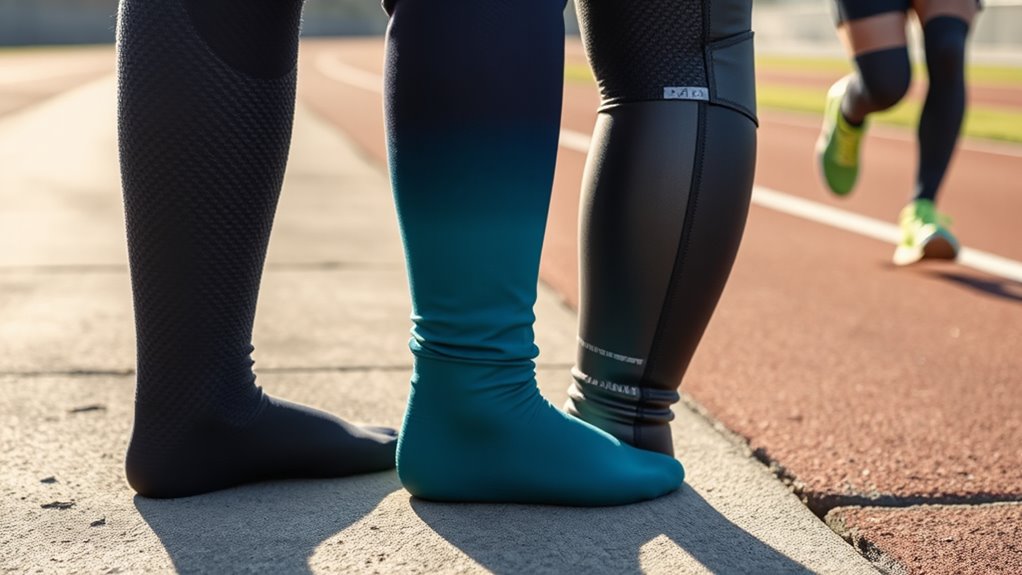
You lace up your running shoes, and your prosthetic leg fits snug against the socket.
That snugness matters more than most people understand. A sleeve that slips mid-stride steals your rhythm, your confidence, your joy.
Three particular sleeves have earned trust from runners who cannot afford to stop: one grips with silicone tape trapped inside polyester weave, another wraps surgical elastic in a contoured shape that knows your body’s curves, and a third hides micro-grooves in seamless black yarn that blocks sun while locking position.
Each solves slippage through different mechanics, and choosing wrong costs you miles, skin, peace of mind.
You need to know which matches your body, your run, your life.
| Geyoga Compression Leg and Arm Sleeves (2 Pairs) | 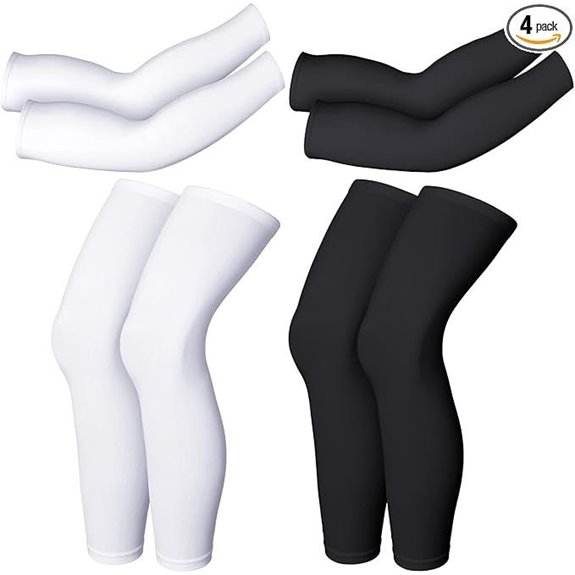 | Best Multi-Sport Bundle | Compression Level: Moderate compression for athletic support | Material: Polyester fiber / polyester ice silk | Size: Large | VIEW LATEST PRICE | Read Our Analysis |
| Sparthos Arm Compression Sleeves for Athletic Sports (Black-M) | 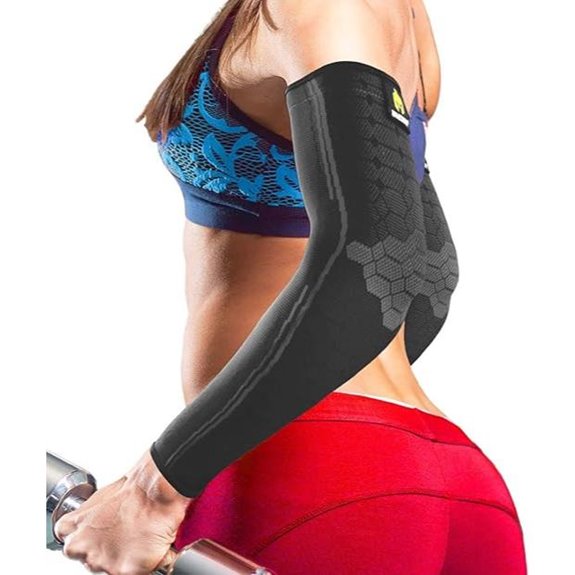 | Best for Active Recovery | Compression Level: Targeted compression for pain relief | Material: Seamless breathable yarn | Size: Medium | VIEW LATEST PRICE | Read Our Analysis |
| Truform Skin Guard Suspension Sleeve for Prosthetics (Large) | 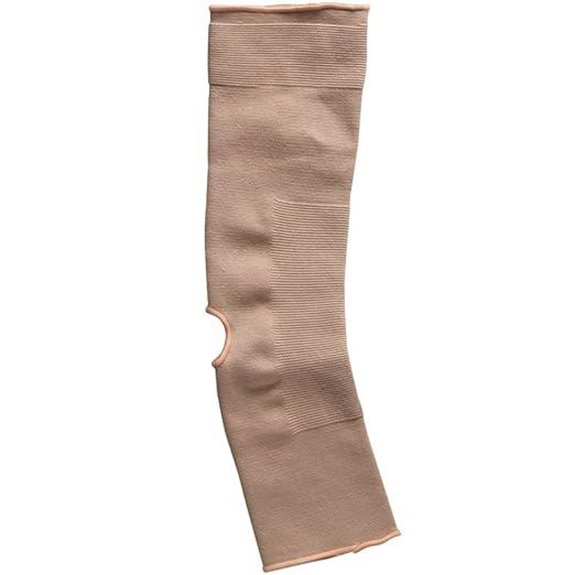 | Best Medical-Grade Fit | Compression Level: Medical-grade compression (20 in. length) | Material: Medical-grade elastic fabric | Size: Large (14.75-16.5 in. upper-leg circumference) | VIEW LATEST PRICE | Read Our Analysis |
More Details on Our Top Picks
Geyoga Compression Leg and Arm Sleeves (2 Pairs)
The Geyoga Compression Leg and Arm Sleeves come in a practical bundle, two pairs for your legs and two pairs for your arms, which means you’re getting full coverage without hunting for separate pieces.
You pull on the leg sleeves first, feeling the polyester fiber hug your calves with a soft, skin-friendly grip that breathes while you move. The silicone tape at the top keeps them from sliding down, like a gentle hand holding you steady.
The arm sleeves, made from polyester ice silk, cool your skin as you run, blocking UV rays that would otherwise burn you. You feel safer, knowing your knees won’t scrape and your arms won’t roast.
Together, they wick sweat fast, keeping you dry and comfortable through miles.
- Compression Level:Moderate compression for athletic support
- Material:Polyester fiber / polyester ice silk
- Size:Large
- Target User:Men, Women, Football players
- Primary Function:UV protection, cooling, sweat management, injury prevention
- Design Element:Non-slip silicone tape inner ring
- Additional Feature:Two pairs included
- Additional Feature:UV protection built‑in
- Additional Feature:Silicone non‑slip ring
Sparthos Arm Compression Sleeves for Athletic Sports (Black-M)
A stretchy black sleeve, about as long as your forearm, waits in your drawer when morning aches creep in.
You slip it on, feeling the hug of targeted compression—tightness that pushes blood through tired channels, easing tendonitis and joint pain by six o’clock shadow time.
The seamless yarn breathes, won’t roll or slip, and you forget it’s there while lifting, running, swinging a bat.
It hides what you want hidden, blocks harsh sun, and stays loyal through work, gym, evening rest.
A USA team stands behind your purchase, ready if hope falls short.
You keep moving. That’s the point.
- Compression Level:Targeted compression for pain relief
- Material:Seamless breathable yarn
- Size:Medium
- Target User:Men and women of all ages, athletes, workers
- Primary Function:Pain relief, recovery, improved circulation
- Design Element:Seamless construction, secure no-roll fit
- Additional Feature:Hides scars/tattoos
- Additional Feature:Seamless breathable yarn
- Additional Feature:USA based support
Truform Skin Guard Suspension Sleeve for Prosthetics (Large)
Need a sleeve that hugs your leg without slipping down?
The Truform Skin Guard Suspension Sleeve grips your skin with one-way stretch surgical elastic, meaning it pulls firmly in one direction to keep your socket anchored tight.
You’ll feel the contoured back pressing flat against your prosthetic, creating friction that prevents rotation when you sprint. The stitched anterior seam runs down your front, as the patellar contour cradles your kneecap like a formed seat.
This Large size fits thighs measuring 14.75 to 16.5 inches around, six inches above your stump. At 20 inches long, it extends 12 inches above your knee and 8 inches below, covering both above-knee and below-knee limbs.
The medical-grade fabric promotes blood flow, reducing that achy heaviness long runs can bring. An anterior opening lets you pull it on without struggle. You’re securing more than gear; you’re building reliability into every stride.
- Compression Level:Medical-grade compression (20 in. length)
- Material:Medical-grade elastic fabric
- Size:Large (14.75-16.5 in. upper-leg circumference)
- Target User:Above-knee and below-knee prosthesis users
- Primary Function:Prosthetic limb suspension, skin health, blood flow
- Design Element:Contoured patellar area, anterior opening, stitched seam
- Additional Feature:One‑way stretch elastic
- Additional Feature:Contoured patellar area
- Additional Feature:Anterior opening design
Factors to Consider When Choosing Prosthetic Suspension Sleeves for Running
You’ll want to look for a sleeve that breathes, meaning it lets air flow through so sweat doesn’t pool against your skin, since running makes you hot and wet fabric causes blisters and rashes. Check that the compression feels snug but not pinching, like a gentle hug that holds your limb steady without cutting off circulation, as too tight slows blood flow and too loose lets the socket slip. Make sure the grip pattern sticks without gluey residue, and that the seams won’t split after miles of pavement pounding, so you can bend and stride freely without fear.
Material Breathability and Moisture
Several thin layers of fabric sit between your skin and the hard shell of your prosthesis, and when you run, those layers work like a busy highway moving sweat away from your body.
You want fabrics that pull damp, called wicking, especially polyester blends that can carry up to one liter of sweat per hour away from you. Look for a water vapor transmission rate, or WVTR, of at least two grams per square meter in twenty-four hours—this number means air can pass through to keep you cool on long runs. Mesh panels with tiny holes boost airflow by thirty percent compared to solid fabric, so heat escapes instead of trapping against your skin. Silver or copper treatments stop bacteria from growing when dampness lingers. A stretch-knit build lets the sleeve expand to release heat without losing its hold on you.
Compression Level Suitability
When you slip a sleeve onto your residual limb, you’re wrapping it in a steady, gentle hug that needs to be tight enough to help, not so tight it hurts.
You need between 15 and 20 millimeters of mercury—that’s mmHg, a way doctors measure pressure—to keep your blood moving upward without squeezing too hard. If you run for fun, 10 to 15 mmHg usually does the job. If you race hard, reach for 20 to 30 mmHg; it steadies your limb and helps you feel where your leg is in space, which is proprioception.
Check your skin. Tight sleeves can rub it raw, especially where the hard socket touches soft tissue.
Look for graduated compression—tighter up top, looser below—which copies how your body naturally pumps blood when your foot strikes ground, again and again.
Non-Slip Grip Security
Your sleeve can hug just right, but if it slips down your leg as you run, that steady pressure turns into friction burns and wobbles that steal your confidence.
You need silicone or rubberized inner rings, those sticky bands that grab your skin like fingertips holding a glass, stopping the slide when your foot strikes pavement. Look for micro-grooves too, tiny ridges that boost shear resistance by thirty percent compared to smooth fabric, like tire tread gripping wet road. You’ll want adjustable straps at the cuff, simple hooks that tighten like a belt without squeezing blood flow. Check that friction stays at half a point (that’s 0.5) or higher when sweat arrives. Finally, trust contoured shapes that match your limb’s curves, eliminating gaps so suction holds you steady, like a handshake that doesn’t let go.
Durability Under Impact
Every stride hammers your sleeve against the ground, so you’ve got to pick one that won’t quit on you.
You want fibers that fight back. Choose nylon-spandex blends, strong fabrics that resist tearing when your leg meets pavement again and again. Look for a tear-strength rating above 30 N·mm—that number means the material can handle serious stress without ripping apart.
Check the seams, too. Reinforced stitching or seamless bonding at the knee and front keeps everything together when you push hard. Your sleeve’s compression must stay steady; if it loosens, your socket slips and you lose control.
Trust sleeves tested by independent labs, meeting standards like ISO 10993-5, or proven through 500 kilometers of real running. That validation means you can count on every step.
Range of Motion
A sleeve that won’t tear still has to let you move. You need flexible, low-profile material that permits at least 120° of knee flexion, the bending that keeps your running gait natural and free.
Check that compression zones don’t squeeze your quadriceps or hamstrings, those powerful thigh muscles, so your hip extends fully and your leg swings forward without resistance.
Look for a contoured anterior opening—that’s the front-shaped cutout—fitting your prosthetic socket while preserving ankle dorsiflexion, the upward foot bend that pushes you off the ground.
Verify the stretch-recovery rate, typically 20–30% elongation, bounces back quickly after each step so you don’t feel tighter as miles add up.
Choose seamless or minimal-seam construction. Pressure points, unwanted sore spots, limit your joints when impact repeats.
Freedom moves you forward.
Ease of Donning
When you’re standing at your door with miles ahead and daylight fading, thirty seconds beats three minutes every time. You need an anterior opening that pulls over your limb without removing your socket, and that preparation drops from several minutes to under thirty seconds. Search for one-way stretch material, a fabric that expands easily when you pull but snaps back for a snug fit. You won’t struggle. A contoured patellar area—meaning a shaped knee section—helps the sleeve slide into place, aligning with your body without adjustments. Silicone grip zones at the top edge stop the sleeve from rolling, so one smooth pull finishes the job. Choose length just above the knee, around twenty inches, so you manage less fabric while standing.
Leg Coverage Length
Your sleeve is the bridge between you and the ground, and its length decides whether that bridge holds or sways.
You need a sleeve that extends at least twelve inches above your knee, and eight inches below it, to keep compression steady as you run.
Longer coverage, twenty inches or more, keeps your socket anchored when your feet pound the pavement.
You’ll feel more stable, and your brain will sense where your leg belongs without guessing.
If your sleeve is too short, it slips, pressure gets uneven, and you might lose suspension mid-stride.
Check that the length fits your limb exactly, so extra fabric won’t bunch or rub.
The right length means confidence, mile after mile.
Skin Health Protection
Pressure on your limb is only half the story, the other half is what happens to your skin beneath the fabric.
You need a sleeve made from medical-grade elastic fabric, which means material doctors trust to hold steady pressure that keeps blood moving and stops swelling during long runs. Check that the inside surface feels smooth against your skin, with no rough seams that rub and cause blisters.
Look for a contoured shape around your kneecap, that round bone in front of your leg, plus a front opening so you slide it on without tugging hard on tender skin. Pick breathable fabric that pulls sweat away, keeping you dry when humidity climbs. Choose a silicone inner ring that grips firmly, stopping the sleeve from sliding and scraping your skin with each stride.
Frequently Asked Questions
Can I Wear These Sleeves While Swimming?
You can wear most prosthetic suspension sleeves while swimming, but you’ll want to check if yours is waterproof. Many silicone sleeves handle water well, though chlorine or saltwater may degrade them faster with repeated exposure.
Do Insurance Companies Cover Suspension Sleeves?
You’ll find that insurance companies often cover suspension sleeves, though coverage varies. Check your policy’s durable medical equipment benefits. You’ll likely need a prescription and prior authorization. Don’t forget to submit detailed documentation from your prosthetist.
How Do I Prevent Skin Rashes and Irritation?
You prevent skin rashes and irritation by washing your residual limb daily with mild soap, drying it thoroughly, applying a moisture-wicking liner, rotating between two clean sleeves, and checking for hot spots before they worsen.
What’s the Average Lifespan of a Quality Sleeve?
You’ll typically get six to twelve months from a quality sleeve with daily use. Your activity level, sweat, and care routine directly impact longevity. Rotate between two sleeves and wash them properly—you’ll extend their usable life significantly.
Are Custom-Molded Sleeves Worth the Extra Cost?
You’ll find custom-molded sleeves worth every penny when you’re logging serious miles. They eliminate rotation, reduce skin breakdown, and distribute pressure evenly across your residual limb in ways off-the-shelf options simply can’t match.


