Hi, I am Aria, welcome to my life!

6 Best Raised Toilet Seats for Above-Knee Amputees
Find the best raised toilet seats for above-knee amputees, with the right height, strong support, and secure locking hardware for safer, easier transfers.


For above-knee amputees, choose a raised toilet seat that matches your transfer height and bowl geometry: 2–6 inches of lift, 300–400 lb capacity, rigid arms, and locking, non-slip hardware. The best picks are the Toilet Seat Riser with Handles, HealthSmart Round Bowl model, Adjustable 400 lb chair, Elongated 3-inch seat, Drive Medical lock-and-lid unit, and adjustable padded-arm model. Skip flimsy frames, mismatched bowls, and loose clamps. The right fit prevents flex, torque, and dangerous transfers—more details follow.
| Toilet Seat Riser with Handles for Seniors |  | Best for Stability | Seat Height: Adjustable 27.17–33.07 in | Weight Capacity: 400 lbs | Toilet Fit: Universal fit for most standard toilets | VIEW LATEST PRICE | Read Our Analysis |
| HealthSmart Raised Toilet Seat Riser for Round Bowls | 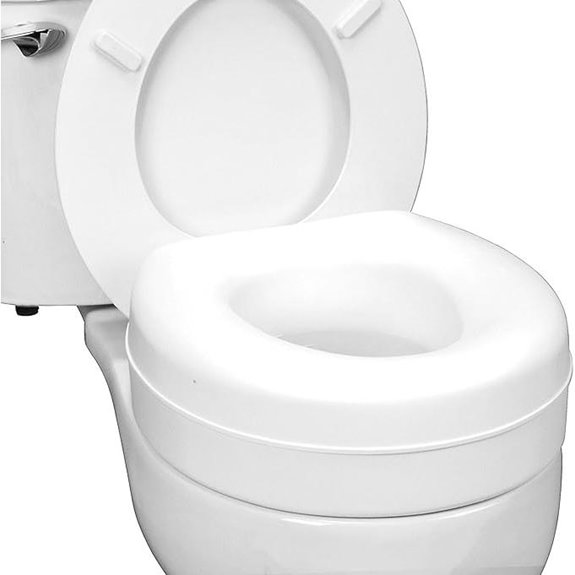 | Best Budget Pick | Seat Height: 5 in raised | Weight Capacity: 300 lbs | Toilet Fit: Round bowls only | VIEW LATEST PRICE | Read Our Analysis |
| Raised Toilet Seat with Handles Adjustable 400lbs Capacity | 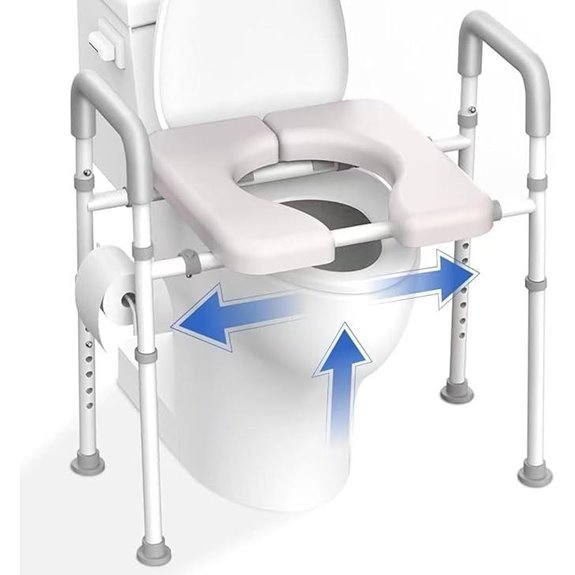 | Best for Support | Seat Height: Adjustable 25–35 in | Weight Capacity: 400 lbs | Toilet Fit: Standard and elongated toilets | VIEW LATEST PRICE | Read Our Analysis |
| Raised Toilet Seat for Elongated Toilets 3-Inch Elevated Design |  | Best for Elongated Toilets | Seat Height: 3 in raised | Weight Capacity: 772 lbs | Toilet Fit: Elongated toilets | VIEW LATEST PRICE | Read Our Analysis |
| Raised Toilet Seat with Adjustable Padded Arms | 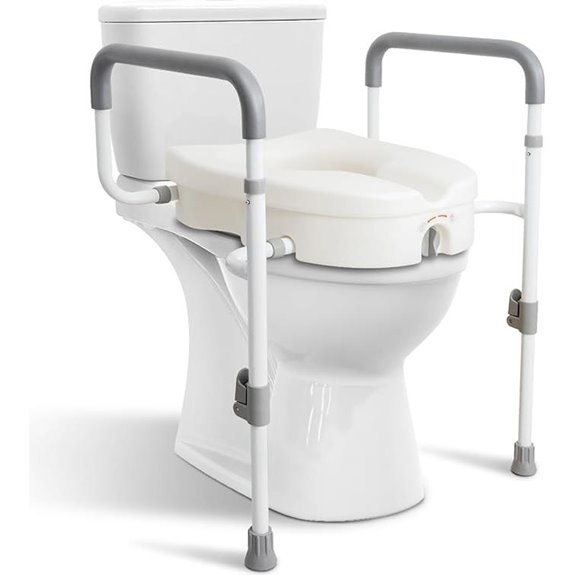 | Best Adjustable Option | Seat Height: 5 in raised | Weight Capacity: 350 lbs | Toilet Fit: Round and elongated toilets | VIEW LATEST PRICE | Read Our Analysis |
| Drive Medical Raised Toilet Seat with Lock and Lid Standard Seat 4″ | 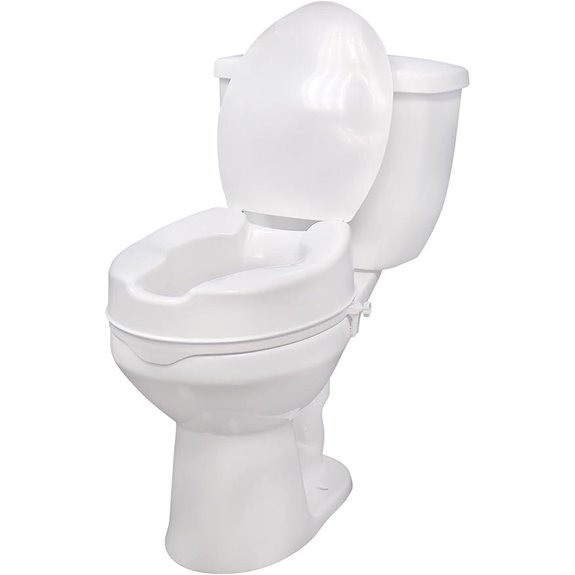 | Best Heavy-Duty Pick | Seat Height: 4 in raised | Weight Capacity: 400 lbs | Toilet Fit: Standard toilets | VIEW LATEST PRICE | Read Our Analysis |
More Details on Our Top Picks
Toilet Seat Riser with Handles for Seniors
The toilet seat riser with handles is the right fit when you need a stable, FSA/HSA-eligible transfer aid that can carry real load without flexing out of shape. Use it for senior care, post-surgery recovery, disability support, or pregnancy. Its welded aluminum frame, four outward-tilt legs, and non-slip rubber feet hold up to 400 lbs. Set the height from 27.17 to 33.07 inches and the width from 21.65 to 24.8 inches for a universal fit. Rely on the 16.1-inch padded seat, padded armrests, and waterproof cushion. Install it fast, disassemble it, move on.
- Seat Height:Adjustable 27.17–33.07 in
- Weight Capacity:400 lbs
- Toilet Fit:Universal fit for most standard toilets
- Handles:Padded armrests
- Installation:Quick disassembly
- Portability:Travel-friendly
- Additional Feature:Extra-wide padded seat
- Additional Feature:Waterproof easy-clean cushion
- Additional Feature:Welded aluminum frame
HealthSmart Raised Toilet Seat Riser for Round Bowls
HealthSmart’s Raised Toilet Seat Riser suits users who need a fast, no-assembly elevation for a standard round bowl: it adds 5 inches of height, supports up to 300 pounds, and installs with three large slip-resistant pads that grip the bowl for stability. Use it only on round toilets; elongated bowls won’t accept the fit. You get a lightweight, portable riser that helps reduce pressure points and makes transfers cleaner after injury, surgery, or amputation. Set it firmly, verify pad contact, then sit and rise with less strain. Ignore mismatched bowls; they compromise security.
- Seat Height:5 in raised
- Weight Capacity:300 lbs
- Toilet Fit:Round bowls only
- Handles:No handles
- Installation:No assembly required
- Portability:Portable
- Additional Feature:Three slip-resistant pads
- Additional Feature:Adds 5 inches
- Additional Feature:No assembly required
Raised Toilet Seat with Handles Adjustable 400lbs Capacity
Need a rigid, high-capacity seat? Choose this adjustable model. Set the width across 6 positions, 22″ to 26″, and the height through 7 positions, 25″ to 35″, until it fits your toilet—standard or elongated—without wobble. The reinforced iron tubing frame supports 400 lbs, and the padded arms give you mechanical advantage for controlled sit-to-stand transfers. Use the soft, cushioned surface to cut pressure. Textured handles, non-skid rubber feet, and a steady base reduce slips on wet floors. It works as a raised seat, commode chair, or over-toilet chair, and it’s FSA/HSA eligible.
- Seat Height:Adjustable 25–35 in
- Weight Capacity:400 lbs
- Toilet Fit:Standard and elongated toilets
- Handles:Padded textured handles
- Installation:Easy installation
- Portability:Portable
- Additional Feature:Seven height positions
- Additional Feature:Six width settings
- Additional Feature:Textured padded handles
Raised Toilet Seat for Elongated Toilets 3-Inch Elevated Design
Built for elongated toilets, this 3-inch raised-up raised seat is the right call when you need a stable transfer surface that cuts knee flexion and reduces the effort of sitting and standing—especially for seniors, post-surgery users, and above-knee amputees managing limited mobility. You get a 19-inch American elongated fit, white oval styling, and polypropylene construction that meets DIN 19516. Use the slow-close hinge; it stops pinch injuries. Lock the bottom clasps and double rubber anti-slip pads. No shifting. It supports roughly 772 lbs, installs DIY, and includes one seat. Manufacturer jamini, model JM-016, backs returns and warranty.
- Seat Height:3 in raised
- Weight Capacity:772 lbs
- Toilet Fit:Elongated toilets
- Handles:No handles
- Installation:Easy DIY installation
- Portability:Fixed seat
- Additional Feature:Slow-close hinge
- Additional Feature:Pinch-free design
- Additional Feature:772-lb capacity
Raised Toilet Seat with Adjustable Padded Arms
The raised toilet seat with adjustable padded arms is the right call when an above-knee amputee needs a higher transfer point, lateral support, and a stable frame that won’t flex under load. You get 5 inches of lift, fit for 11.4–14.6-inch bowls, with support-leg height set for 13.5–20.1-inch toilets. Set the arm width to 21.3 or 23.6 inches. Grip the padded foam rails; they resist slip. The anti-rollover leg stops tipping. Capacity reaches 350 lbs. Assemble it tool-free, then wipe clean with a damp cloth. Use it on standard or elongated commodes only.
- Seat Height:5 in raised
- Weight Capacity:350 lbs
- Toilet Fit:Round and elongated toilets
- Handles:Padded arm handles
- Installation:Tool-free assembly
- Portability:Portable
- Additional Feature:Anti-rollover support leg
- Additional Feature:Tool-free assembly
- Additional Feature:Wipe-clean surface
Drive Medical Raised Toilet Seat with Lock and Lid Standard Seat 4″
Drive Medical’s Raised Toilet Seat with Lock and Lid is a sound choice when you need a 4-inch elevation that makes toilet transfers less demanding for above-knee amputees and wheelchair users alike. Install it tool-free on a standard toilet. Tighten the heavy-duty worm screw and locking plate, then engage the two rear locks. Don’t gamble with a loose fit. The molded plastic shell is lightweight, yet it supports 400 lbs. Use the round 16 x 14-inch seat, and wipe the hygiene cutouts clean. Skip abrasive cleaners. The included lid adds coverage and the height improves control.
- Seat Height:4 in raised
- Weight Capacity:400 lbs
- Toilet Fit:Standard toilets
- Handles:No handles
- Installation:Tool-free installation
- Portability:Portable
- Additional Feature:Locking device
- Additional Feature:Heavy-duty molded plastic
- Additional Feature:Includes lid
Factors to Consider When Choosing Raised Toilet Seats for Above-Knee Amputees
You need a raised seat that matches your stump clearance and knee flexion demands—typically a 2-to-6-inch lift—because the wrong height forces unstable transfers and compensatory hip torque. Check stability and support next: verify a rigid frame, non-slip lock, armrests if you need push-off assistance, and a toilet-shape fit that doesn’t wobble or shift under load. Choose a model you can install and clean fast, with tool-free clamps or secure bolts and a smooth, sealed surface; anything more complicated becomes a failure point.
Seat Height Needs
Set the seat height to the person, not the toilet. You need enough elevation to clear the residual limb, keep hip flexion near 90–100 degrees, and reduce transfer strain. Don’t rely on standard 3–5 inch risers; for many above-knee amputees, they’re too low. Measure the preferred transfer height: pelvis level when the foot or prosthesis is supported. Then measure from the greater trochanter to the intended seat during wearing the prosthesis, or in the usual transfer setup. Adjust in small increments. Too low forces excess knee flexion; too high ruins sitting and standing mechanics. Match the final height to grab bars, commode chairs, or wheelchair cushions so the combined system stays level and supports safe lateral or front-to-back transfers with minimal trunk lean.
Stability And Support
Prioritize stability before comfort. Choose a raised seat with a reinforced frame and a 350–400 lb load rating; anything less invites flex, crack propagation, and transfer failure. Demand wide, outward-tilting legs or non-skid rubber feet, plus anti-rollover supports, so lateral torque doesn’t dump you when you load one side. Use padded, textured grab handles or armrests at adjustable heights and widths; mechanical advantage matters, and sloppy hand placement costs you control. Verify locking plates, rear locks, or adhesive non-slip pads so the seat can’t shift or rotate mid-transfer. Prefer an extra-wide seating surface with stable perimeter support; it spreads pressure across the stump and prosthesis, reducing point loads and wobble. Ignore flimsy models. They’re hazards, not equipment.
Toilet Shape Compatibility
Match the seat to the bowl shape before anything else. You need to confirm round or elongated, because many raised seats are built for one geometry only and won’t clamp correctly on the other. Measure the bowl’s internal front-to-back length: about 16.5–17 inches for round, 18–19 inches for elongated. That dimension tells you whether the contour and mounting points will line up. Inspect the clamping or pad attachment system next; it must match the rim profile, or you’ll create gaps, wobble, and load shifts. If you use a prosthesis or transfer device, demand full bowl clearance and no interference with leg position. Additionally check how the toilet shape changes armrest placement and usable width, because mounting positions differ.
Armrest Assistance
Stability decides the transfer. Choose armrests that anchor hard to the frame; they give you lateral support and leverage, so you stop loading the amputated side and cut fall risk. Demand padded, non-slip handgrips. If your residual limb hurts or your upper body’s weak, slick bars fail you. Set arm width and height to clear your prosthesis and socket; bad geometry blocks the push-off and can press on the limb. Verify a 300–400 lb rating, with reinforced tubing or solid mounts, since transfers generate sharp, forceful loads. Need lateral access to a wheelchair or transfer board? Use removable or swing-away arms. Want maximum support? Keep fixed arms. Don’t accept flimsy hardware; it folds when you need it most.
Easy Installation And Cleaning
For speed and sanitation, choose a raised toilet seat that installs with tool-free clamps, snap-on brackets, or simple locking tabs, since you or a caregiver may need to fit or remove it fast, without strength, wrenches, or guesswork. Demand lightweight, detachable units that break into a few pieces, as heavy assemblies slow transfers and complicate storage. Use non-porous plastic or vinyl surfaces, not fabric, foam, or textured composites; they wipe down fast and resist fluid absorption. Favor smooth contours, minimal crevices, and hygiene cutouts, or waste will collect in dead spaces. Check clips, locks, and legs for accessible placement and corrosion resistance, so mild disinfectants won’t seize hardware, distort fit, or wreck function. Ignore models that trap grime; they’re maintenance liabilities.
Frequently Asked Questions
Do Above-Knee Amputees Need a Toilet Seat Riser or Commode?
You might need a riser or commode if you struggle with transfers, balance, or knee bending. Your needs depend on your strength, stump length, and bathroom setup, so ask an occupational therapist.
Can Raised Toilet Seats Be Used With One Remaining Leg?
Yes, you can use one with one remaining leg if you’re stable and the seat fits securely. You’ll want extra support, like grab bars or armrests, to reduce strain and keep transfers safe.
How Do I Measure Toilet Height for Safe Transfers?
Measure from the floor to the toilet seat top, then compare it to your knee and hip height during seated. You’ll want your feet planted, knees comfortable, and transfers stable, safe, and easy.
Are Suction Cups Necessary for Added Toilet Seat Stability?
No, you don’t always need suction cups, but they can help if your seat shifts. You should prioritize a secure fit, weight limits, and sturdy brackets; if it still moves, add suction support or choose another model.
Can a Raised Toilet Seat Fit Over a Bidet Attachment?
Yes, you can sometimes fit a raised toilet seat over a bidet attachment, but you’ll need enough clearance and a compatible design. Measure carefully, and avoid forcing it, since that could damage both pieces.