Hi, I am Aria, welcome to my life!

Signs Your Prosthetic Alignment Is Off
Your Prosthetic Could Be Silently Hurting You: Spot These Warning Signs Now


Signs your prosthetic alignment is off often appear quietly, long before they turn into sore spots. A red mark that lingers after you take your prosthesis off, or a foot that rocks instead of resting flat, deserves attention.
This guide covers the warning signs that call for a prosthetist’s review, from new pain and recurring redness to blisters, rubbing, and steps that suddenly feel uneven. You’ll also learn how to track symptoms, including where they start and how long redness lasts, so you can give your prosthetist clear details. Start with the most common warning signs below, then see exactly what to check next.
Quick Answer
- Persistent pain, recurring redness, blisters, or rubbing in the same spot may signal pressure or alignment problems.
- New pistoning, a loose socket feel, or shifting pressure can indicate the limb is moving improperly.
- Uneven stance time, shortened steps, hip swinging, or suddenly different walking rhythm may be signs of imbalance.
- A prosthetic foot that rocks, tilts, or does not rest flat on a level floor warrants assessment.
- Contact your prosthetist about persistent or worsening symptoms, especially after an adjustment; do not make changes yourself.
Pain or Redness Can Signal Poor Prosthetic Alignment
As an amputee myself, I know that pain or redness that keeps coming back often means your prosthesis needs a closer look. Your body is telling you that something about the fit has changed.
Persistent pain in your residual limb, redness from rubbing, or sore spots over bony areas that can’t handle pressure all point to poor load distribution. In plain terms, the socket is pushing force onto the wrong places. Daily skin checks can be supported by moist therapy products that keep the limb slightly damp to encourage new-skin growth, but they do not address the source of the friction.
I check my skin every day after I take off my socket. Redness that fades within a few minutes is usually from brief pressure, but friction redness that returns in the same spot needs attention.
I check my skin after removing my socket: brief redness may fade, but recurring friction marks need attention.
Note where the marks show up and how long they last. That detail gives your prosthetist useful clues.
Tell your prosthetist what changed, when the discomfort starts, and which areas hurt. This information helps them check selective loading, which is how the socket spreads pressure across your residual limb.
Do not grind or add padding to the socket yourself, since small changes can cause bigger problems.
Schedule an assessment as soon as the pain or redness returns.
Gait Changes After Prosthetic Alignment Adjustments
I’d take a new walking rhythm seriously after an alignment adjustment, even when the change seems small. I noticed this after my prosthetist adjusted the angle of my prosthetic foot, and within a few days my steps came sooner on my sound side.
Check whether your steps come sooner on one side of your body. Also notice whether you spend equal time standing on your sound leg and your prosthetic leg, which is what limb symmetry means. Accurate alignment supports proper footplate angles and residual-limb positioning, which are key factors in transfer stability and safety.
Pay attention to how your residual limb feels inside the socket, too. A new pressure point, rubbing, or a feeling that the prosthesis sits differently can signal that the alignment has shifted.
I can’t judge alignment by eye alone, and your prosthetist can’t judge it from a description alone either. Tell your prosthetist what you have noticed and when it started, because that timeline helps them decide what to change.
Shifts in Step Timing
After my prosthetist changes the foot or socket angle, I pay close attention to how my steps arrive. I watch whether they keep a steady pace over the following days and weeks.
A little variation in timing is normal while my body adapts to the new setup. I expect some change as I learn to trust the prosthesis again.
Repeated starts, pauses, or a longer wait before I load the prosthesis deserve a closer look. I call this step timing predictability, meaning I can place each step at a familiar moment. Using a gait belt with handles can provide added security during this adaptation period.
Stance stability matters too, so I notice how secure the prosthesis feels when it supports me. When that feeling changes, I write down the date, what changed in my alignment, and whether pain or rubbing joins in.
Timing alone can’t prove the alignment is wrong. A pattern in my notes can guide a check.
I share those notes with my prosthetist so we can review the alignment together.
Changes in Limb Symmetry
Step timing tells me when my steps change. Limb symmetry shows whether I rely on one side more than the other.
After an adjustment, I watch for uneven stance time. Stance time is the part of each step when my foot bears weight.
If I linger on my sound side, shorten my prosthetic step, or swing my hips, my body may be making up for an imbalance. Those habits are a signal to check my setup first.
I check my residual limb for pain, rubbing, and changes in socket fit. Excessive pistoning, where the residual limb slides up and down inside the socket, can make my steps feel less steady. Gel liner patches can absorb shock and relieve friction at pressure points to reduce discomfort during this check.
I compare both sides on a familiar, level walk. I write down when the change began.
New asymmetry means I need a prosthetist’s review. When pain shows up, I stop and rest so I don’t force an even stride.
Before I change my walking habits, I ask my prosthetist to reassess alignment and fit. I mention any new rubbing or socket pressure right away.
How Prosthetic Alignment Affects Stance-Time Symmetry
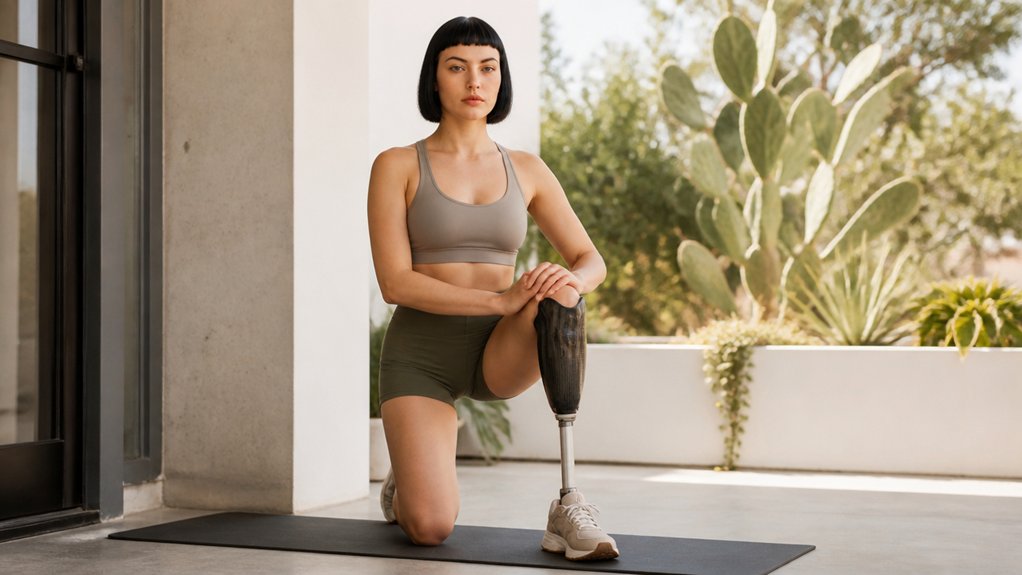
As an amputee, I pay close attention to how my walking changes. Stance time is how long each foot stays on the ground during a step, and symmetry means both legs spend about the same time doing that job.
I pay attention to how long each foot stays grounded, because balanced stance time helps me notice changes in my walking.
When my prosthetic side has a shorter stance, I put more weight on my sound leg. That extra load can leave me tired, and the uneven rhythm becomes easy to notice in my gait.
I write down when the difference shows up, such as after a long day on my feet or soon after a socket or alignment adjustment. I also watch for a longer single limb support phase on my sound side, which is the time I stand on that leg alone while my prosthetic limb swings forward.
Pain, rubbing, or socket discomfort matter too. I record them alongside the timing change so my prosthetist has the full picture. Redness or pressure marks on my residual limb need attention right away, so I mention them at once. Proper liner sizing should also be verified, since a poor fit can alter how force transfers through the socket and worsen these symptoms.
Phone videos and stopwatch timing help me describe a pattern to my prosthetist. They can point toward a problem, but they can’t confirm one on their own. My prosthetist checks alignment, socket fit, residual limb health, and strength, then decides what to adjust. I bring my notes to each appointment and leave alignment changes to my prosthetist.
Check Static Prosthetic Alignment and Foot Position
As an amputee who’s worn a prosthetic leg for years, I start with a simple standing check. On a flat floor, I stand on my prosthesis without holding onto anything and watch whether it stays upright.
If the prosthesis leans forward, backward, or to one side, the alignment may be off. Next, I look at the foot.
The foot should rest flat on the floor, with the heel and toe touching at the same time. If one side lifts, the floor is doing the balancing, and that puts extra load on my residual limb and socket. This poor fit can also increase friction and shear stress on the residual limb, which a gel liner helps reduce.
When I see either problem, I call my prosthetist before I change anything myself. Small adjustments to the socket or pylon can cause pain, rubbing, or sores if I make them wrong.
Unsupported Standing Check
As an amputee myself, I use a quick unsupported standing check as a first look at my prosthesis. It’s a helpful start, but it can’t confirm that the alignment is correct.
Place the prosthesis on a firm, level floor and stand with your weight through the device. Let go only if you feel safe doing so.
This test can reveal a prosthetic lean, but balance, socket fit, and confidence can fool the eye. Trust what your body feels along with what you see.
Watch for a lean while the device stands on its own. Note whether it tips forward or back. A proper setup often features a U-style base for stable placement under furniture, though that applies to over-bed tables rather than prosthetics.
Look at how the foot meets the floor. Notice the contact, but leave the foot shape alone and don’t try to correct it yourself.
Check the knee orientation next. The front of the knee should face along your direction of travel.
Do not use this check as a DIY adjustment guide. If you spot a tilt or feel unstable, ask your prosthetist to review the alignment.
Foot Flatness And Position
As an amputee, I check my prosthetic foot on a level floor. I stand relaxed with my weight settled evenly over both feet.
I look at the foot from the front and from the side. The sole should rest flat, with no side lifted and no rocking.
A tilted sole, repeated rocking, or a visible gap at the heel can point to alignment trouble. Uneven toe pressure or one edge lifting are also signs to watch for. Check that the foot sits flat within a shoe with a semi-rigid rocker sole, as such soles support gait and reduce plantar stress while also revealing uneven loading patterns.
Do not push the foot down to make it look neat. Forcing it hides the problem and can create pressure marks.
Then check whether my knee faces forward in my usual walking direction. Also check whether the prosthesis stands without leaning.
These checks give quick clues. They don’t replace a professional alignment fix.
Adjusting screws or changing parts belongs with my prosthetist. Contact my prosthetist about persistent tilt, rocking, pain, or new pressure marks on my skin.
A professional review beats guessing.
Socket Rubbing: Fit Issue or Alignment Problem?

When my socket rubs, it can be a fit problem, an alignment problem, or both. I never write it off as just breaking in, because my residual limb doesn’t work like a shoe.
Red skin over one specific spot often points to poor alignment or too little relief in that area. Changes in limb volume or an interior ridge inside the socket usually point to a fit problem.
Repeated red marks or blisters after I wear my prosthesis tell me something is wrong, so I track them. Excessive pistoning, which means the residual limb slides up and down inside the socket, also causes rubbing.
Shear forces are the sideways drag across the skin as the limb moves. Knowing where that drag happens helps my prosthetist tell movement or alignment trouble apart from a fit issue.
Each time I notice rubbing, I write down where it happens, when it happens, and whether my gait feels uneven. I bring those notes to every appointment.
I never sand or add padding to my socket myself. A quick DIY fix can turn a small problem into a much bigger one, so I leave adjustments to my prosthetist.
I call my prosthetist for a fit and alignment check if the pain lasts or the skin breaks. I don’t wait for a blister to form before I ask for help.
Comfort Changes After Prosthetic Alignment Shifts
Any new pain or pressure after an alignment adjustment deserves my attention. I treat it as feedback from my residual limb, and I don’t assume the socket has suddenly stopped fitting. A hot spot, friction redness, or soreness over an area that usually tolerates pressure can mean the load on my limb has shifted.
Load means the places where my body weight presses against the socket. When I notice a change, I write down when it starts and where I feel it. Discomfort right after an alignment change tells me something different than soreness that builds after a long day or a change in limb volume.
For example, if my limb feels fine at breakfast but a new pressure point develops during my walk, I note the time, the spot, and what I was doing. Pressure that appears only at certain steps can point to an alignment issue that needs another look.
Keeping a simple notebook beats guessing from memory. I describe each new pain pattern in plain terms, such as a dull ache, a sharp spot, or a burning feeling.
Friction redness looks and behaves differently from brief pressure that fades within minutes of taking the weight off. I write down how long any mark lasts so I can share the details with my prosthetist.
Comfort varies from person to person, so I compare every change with my usual feel. I keep track of each change so my prosthetist can see the pattern and adjust the fit.
I take these signals seriously and report them early. A small problem caught in the first few days is much easier to correct than a skin wound that takes weeks to heal.
When to Ask for a Prosthetic Alignment Recheck
I ask my prosthetist for an alignment recheck when a recent adjustment causes new pain, rubbing, extra socket movement, or a clear change in how I walk. I don’t wait for a limp to become my everyday walk.
After an adjustment, new pain, rubbing, socket movement, or a change in my walk means I ask for an alignment recheck.
I call sooner if symptoms persist, get worse, or show up during normal standing and walking. Redness that stays on my residual limb after I take off the prosthesis needs attention. A small pink mark can appear after a long day, but raw skin means I should call right away.
Watch for these signs:
- New or worsening pain, especially after an adjustment.
- Rubbing, redness, or extra pistoning, where the socket slides up and down on my residual limb.
- A foot that tilts, or walking that suddenly feels uneven.
When I notice any of these, I write down when the symptoms start and what I was doing. Then I bring those notes to my prosthetist.
At the visit, I ask my prosthetist to check my socket fit and alignment with alignment tools. We compare the settings from before and after the adjustment so we can see what changed.
Booking a recheck protects my comfort and extends the life of my prosthesis. I book the appointment and don’t guess alone.
Frequently Asked Questions
Which Instruments Can Objectively Measure Prosthetic Alignment?
Laser-based goniometry and dynamic pedobarography are two instruments that objectively measure prosthetic alignment, and socket-base moment sensors add useful load data.
As an amputee who has been through several realignments, I can tell you the numbers matter less than the comparison.
Record readings before and after each adjustment, using the same walking speed and footwear. Pedobarography shows how ground-reaction forces shift across the foot, so you can see whether weight loads the heel or forefoot.
No universal criterion exists for all users, so judge results against your own comfort, gait symmetry, and skin response.
Tip: film your gait for 60 seconds at each check, since side-by-side video often reveals drift that a single reading misses.
Can Ground Reaction Forces Help Guide Alignment Adjustments?
Yes, ground reaction forces help guide alignment adjustments by showing how loading shifts after each change.
As an amputee who wears prosthetics daily, I treat force data as one piece of the picture.
Force readings can reveal whether weight settles too far into the heel or pushes forward toward the toe. I still weigh those numbers against how the socket feels, how the stride looks, and what the wearer reports.
Try this today: after each adjustment, have the wearer walk the same hallway and note whether heel contact feels smoother.
Is There One Ideal Alignment for Every Prosthesis User?
No, there is not one ideal alignment for every prosthesis user, since comfort, gait, and activity all shape what works best. As a prosthesis user myself, I see alignment as a starting point rather than a fixed target.
Your residual limb changes over time, so adjustments with your prosthetist are normal. Note any pressure, rubbing, or uneven shoe wear after each week of walking.
Try this today: stand before a mirror and check whether your weight sits evenly on both legs. Bring those observations to your next visit so your prosthetist can refine your prosthetic alignment faster.
How Can Residual-Limb Volume Changes Affect Socket Fit?
Residual-limb volume changes affect socket fit by tightening or loosening the connection between your limb and prosthesis. Swelling often raises pressure and discomfort, while shrinkage can create looseness, friction, or pistoning.
As someone who wears a prosthesis every day, I check my limb at the same time each morning and evening. Try keeping a simple log with your sock-ply count: if you add a ply to feel secure, note the time and activity level.
Patterns like this give your prosthetist clear data for adjustments. Consult your prosthetist promptly if fit changes persist, since early liner or socket changes help prevent skin problems.
How Should Distal Socket Contact Be Checked With Plasticine?
Distal socket contact is checked with plasticine by pressing a soft layer against the end of your residual limb and reviewing the impression. Plasticine should compress without flattening, much like soft dough under a fingertip.
Apply about a quarter inch of plasticine to the end of the inner socket, then put on your usual liner and sock and load the limb for 30 seconds. Remove it carefully and compare the impression across the front, back, and sides.
Look for even thickness in every quadrant, since thin spots or sharp ridges signal pressure concentrations. Mark those areas so your prosthetist can relieve them at your next fitting.
Rounding Up
Don’t walk through a new ache, red spot, or limp; I’d ask your prosthetist to check alignment before trouble becomes routine. A useful measure is the six-minute walk test, which tracks how far you can walk in six minutes and reveals changes in endurance. Note when symptoms start, where rubbing occurs, and what changed. I can’t assess your fit from here, but I can say this: get a recheck, not a guess.