Hi, I am Aria, welcome to my life!

4 Best Compression Travel Socks for Residual Limbs: Comfort for Every Mile
Find the best compression sock for your residual limb. Our guide compares 4 top picks for 20-30 mmHg support that boosts circulation, prevents chafing, and fights odor. Find your fit and travel in comfort.

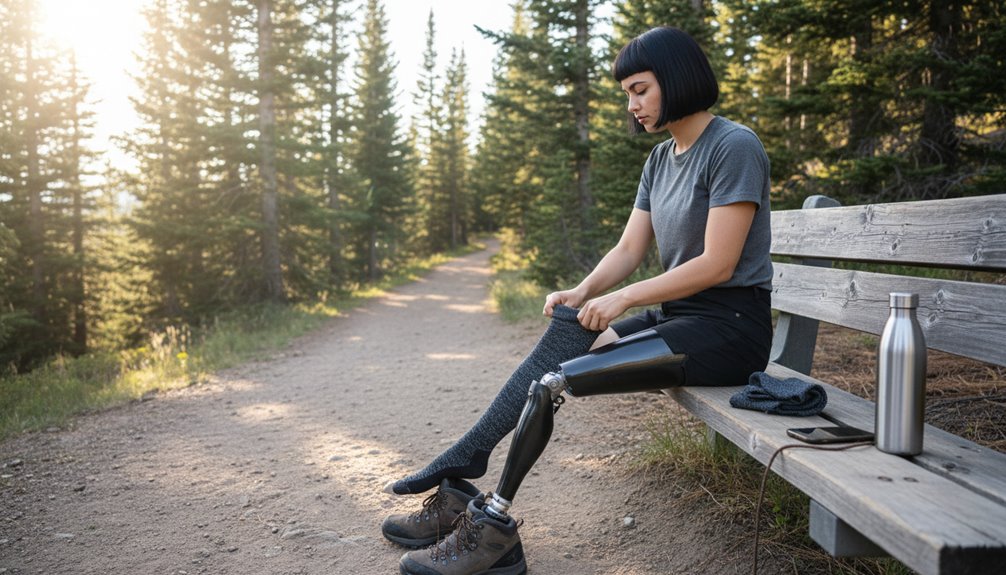
You feel that 20-30 mmHg hug slide over your residual limb, a familiar promise of support as you stare down another airport security line.
The journey is long, and your mind races with a dozen small worries—will the copper-infused fabric hold off odor after twelve hours? Will the seam sit just right, or will it become a hotspot inside your prosthesis by the third time zone?
We’ve all been there, calculating the risk versus the reward of every single mile. It’s a quiet kind of courage, packing for a trip where your sock choice is as critical as your ticket.
But what if the one detail that truly changes the game isn’t about the compression itself? It’s a hidden feature, woven right into the design, that we’ll unpack in a moment.
Scroll down, because the right sock doesn’t just protect your limb—it protects your freedom to go.
| Copper Compression Socks for Women & Men (6-Pack) | 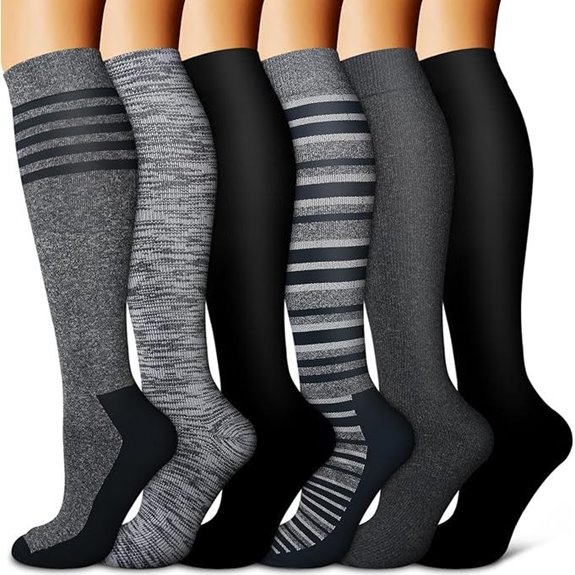 | Best Value | Compression Level: Moderate to extra-firm | Material Composition: 85% Nylon, 15% Polyester, copper-infused | Length Style: Knee-high, wide non-rolling cuff | VIEW LATEST PRICE | Read Our Analysis |
| Truform Travel Compression Socks Knee High Large | 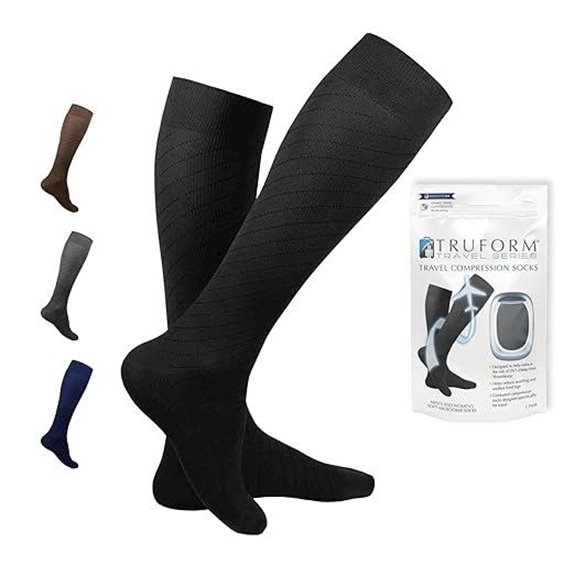 | Travel Essential | Compression Level: 15-20 mmHg graduated | Material Composition: 90% Nylon, 10% Spandex, latex-free | Length Style: Knee-high over calf | VIEW LATEST PRICE | Read Our Analysis |
| Mojo Compression Socks 20-30mmHg Knee High (AB201) | 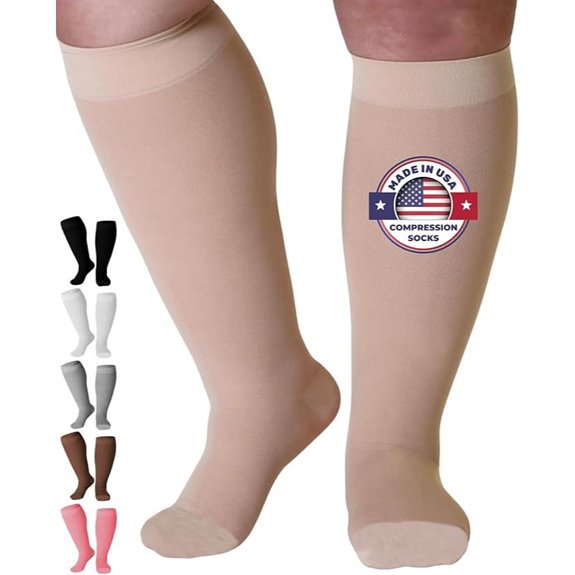 | Medical Grade | Compression Level: 20-30 mmHg | Material Composition: 80% Nylon, 20% Lycra Spandex | Length Style: Knee-high, non-slip cuff | VIEW LATEST PRICE | Read Our Analysis |
| ACTINPUT Compression Socks 15-20mmHg Knee High Support |  | Stylish Choice | Compression Level: 15-20 mmHg graduated | Material Composition: 85% Nylon, 15% Polyester, medical-grade | Length Style: Knee-high | VIEW LATEST PRICE | Read Our Analysis |
More Details on Our Top Picks
Copper Compression Socks for Women & Men (6-Pack)
You run your hand across six pairs of socks, each one threaded with copper that fights smell and germs. You’re holding BLUEENJOY’s compression pack, 85 percent nylon with copper ions woven through every fiber. These aren’t ordinary socks.
You pull them on, feeling the wide cuff grip your calf without rolling down. The fabric stretches 360 degrees, hugging your leg with moderate to extra-firm pressure where you need it most. Blood moves better this way, carrying oxygen to tired muscles.
You’re standing for twelve hours, or sitting through a flight, or pushing through a run. The copper pulls damp away, keeps you cool when you’re moving, warm when you’re still. Swelling fades. Your legs feel lighter, like someone lifted a small weight you’d stopped noticing.
You don’t look medical. The black and gray pattern resembles any work sock, quiet and ordinary. Nurses wear these, and teachers, and people whose bodies ask for help without wanting attention.
You get six pairs, enough for a week’s rotation, plus laundry day. And if they don’t fit right, you send them back. No argument, no fuss.
- Compression Level:Moderate to extra-firm
- Material Composition:85% Nylon, 15% Polyester, copper-infused
- Length Style:Knee-high, wide non-rolling cuff
- Primary Benefit:Improves circulation, reduces swelling, antimicrobial
- Target Use Case:Travel, long standing/sitting, endurance sports, pregnancy
- Quantity/Packaging:6 pairs
- Additional Feature:Copper-infused antimicrobial fabric
- Additional Feature:Perfect Fit Guarantee
- Additional Feature:Discreet ordinary sock design
Truform Travel Compression Socks Knee High Large
A black tube of nylon and spandex, ten percent stretchy fiber, wraps your limb from toes to knee.
You pull these Truform socks on, model 1923BL‑L, feeling the graduated squeeze—15 to 20 millimeters of mercury pressure, which means a gentle, measured hug that pushes blood upward.
The soft microfiber spreads evenly across your skin. Pilots have tested this knit pattern, trusting it through long hours. You can trust it too.
Wash them gently in lukewarm water, roll them in a towel, lay them flat to dry. They’ll last longer that way.
Priced accessibly, ranked 322nd in medical compression, they’ve earned 4.4 stars from people like you.
- Compression Level:15-20 mmHg graduated
- Material Composition:90% Nylon, 10% Spandex, latex-free
- Length Style:Knee-high over calf
- Primary Benefit:Improves circulation, prevents DVT/pulmonary embolism
- Target Use Case:Travel, flights, road trips, extended sitting
- Quantity/Packaging:1 pair
- Additional Feature:Made in USA
- Additional Feature:Pilot-tested for travel
- Additional Feature:Latex-free construction
Mojo Compression Socks 20-30mmHg Knee High (AB201)
The Mojo Compression Socks 20-30mmHg Knee High wrap a beige nylon-Lycra sleeve around your leg, snug and steady, like a firm handshake that doesn’t let go.
You feel the 80% nylon and 20% Lycra blend breathe against your skin, air moving through the weave like wind through a screen door, keeping you cool when the airplane cabin presses close.
The 20-30mmHg pressure—that’s millimeters of mercury, a measure of how hard the sock squeezes—pushes blood back up your limb, fighting the swelling that pools when you sit too long.
Your heel and toe meet reinforced fabric, built to last through miles of terminal walking.
The non-slip cuff stays put, no bunching, no sliding down to your ankle like a tired elastic band.
You move freely, unrestricted, through security lines and cramped seats.
These socks serve men and women alike, unisex in design, medical in purpose.
You wear them for circulation, for comfort, for the quiet confidence of a body supported through every mile of the journey.
- Compression Level:20-30 mmHg
- Material Composition:80% Nylon, 20% Lycra Spandex
- Length Style:Knee-high, non-slip cuff
- Primary Benefit:Alleviates varicose veins, swelling, improves circulation
- Target Use Case:Travel, flights, prolonged sitting or standing
- Quantity/Packaging:1 pair
- Additional Feature:Reinforced heel & toe
- Additional Feature:Non-slip cuff design
- Additional Feature:Breathable airflow fabric
ACTINPUT Compression Socks 15-20mmHg Knee High Support
Patterned nylon, eighty-five percent of it, wraps your residual limb in medical-grade support that matches your outfit for work or travel.
These knee-high socks deliver graduated compression at fifteen to twenty millimeters of mercury, which means gentle, steady pressure that helps your blood flow upward, like a slow, steady hand guiding water through a hose.
You wear them through long flights or twelve-hour shifts, and the moisture-wicking fabric keeps your skin dry, preventing that sticky, uncomfortable feeling that builds when you’re sitting too long or standing too hard.
They’re built for travelers, nurses, pregnant women, anyone whose legs carry weight through the day.
You feel supported, not squeezed. You feel ready to keep moving.
- Compression Level:15-20 mmHg graduated
- Material Composition:85% Nylon, 15% Polyester, medical-grade
- Length Style:Knee-high
- Primary Benefit:Improves circulation, reduces swelling, varicose veins
- Target Use Case:Long shifts, flights, standing work
- Quantity/Packaging:Not specified (assumed multi-pack based on context)
- Additional Feature:Patterned cute styling
- Additional Feature:Medical-grade imported fabric
- Additional Feature:Gender-neutral gift appeal
Factors to Consider When Choosing Compression Travel Socks for Residual Limbs
You’ll want to pick compression socks the way you’d pick a good hiking boot—carefully, with your specific body in mind. The right sock depends on five practical things: how tight the squeeze feels (that’s compression level, measured in mmHg), how far up your leg it reaches, what it’s made of, where the seams sit, and how it stays closed. Let’s walk through each one together so you can travel with comfort, not worry.
Compression Level Selection
What pressure should your compression sock squeeze with? You match it to your swelling, like picking the right bandage for a skinned knee.
For mild puffiness, you choose 15–20 mmHg, millimeters of mercury, a soft hug that keeps fluid moving without squeezing too hard. For bigger swelling, you step up to 20–30 mmHg, a firmer grip that pushes blood back toward your heart.
But listen to your body. If your limb feels tingly, numb, or sore, that pressure’s too much, like a handshake that lasts too long. Always check that compression graduates—tightest at the bottom, looser up top, so fluid climbs upward like water through a straw.
Before you buy, ask your doctor what’s safe. The right pressure brings comfort, not pain.
Sock Height Coverage
Since your residual limb needs steady support from end to end, you pick a sock tall enough to cover it completely, like a sleeve that hugs a whole arm, not just the wrist.
You choose knee-high or thigh-high socks so the compression zone stretches from tip to top, keeping blood from pooling at your stump.
A wide, soft cuff resting just above your limb’s upper edge holds steady without sliding when you move, which feels reassuring.
Thigh-high coverage reaches further, easing swelling in your upper leg during long standing or walking, like a gentle hug that travels upward.
You check that the elastic band spreads wide enough to avoid squeezing your skin’s edge while still pressing with purpose.
For tapered limbs, graduated compression narrows from stump upward, maintaining even pressure across changing widths.
Material Breathability Needs
Breathability in your sock’s fabric feels like a cool window breeze on a warm day, moving air where your skin needs it most.
Choose fabrics with high nylon or spandex content—eighty percent or more—for superior moisture-wicking and quick-dry properties that keep your residual limb from staying damp.
Look for breathable mesh panels or three-hundred-sixty-degree stretch zones; these features improve airflow, reducing heat buildup and skin irritation during long flights.
Seek materials infused with antimicrobial agents, such as copper, which help control odor and bacterial growth on your residual limb’s skin.
Avoid heavy polyester blends; they trap heat and limit ventilation, increasing your risk of skin breakdown.
Find socks with a smooth, seamless interior surface to minimize friction and promote skin health on your sensitive residual skin.
Seam and Cushioning
How do you think a single bump inside your sock would feel after hours in a cramped airplane seat? You’d feel sore, worried, and trapped.
You need seamless or flat-lock seams—these are special stitching that lies flat, like tape pressed smooth. They stop pressure points on your residual limb, that part of your body where your leg ends. No ridges means no angry red spots, even after eight hours.
Look for integrated cushioning zones, padded areas at the heel and forefoot, spreading squeeze evenly so one spot doesn’t ache. A 2-3 millimeter thick foam pad, about as thick as two nickels, absorbs each step’s jolt. Choose nylon-spandex blends that pull sweat away, keeping skin dry and safe from rub-burns.
Smooth seams plus smart padding maintain steady pressure, helping your blood flow home without painful “pinch” traps.
Closure System Type
You’ve got your sock smoothed over your limb, seams flat, padding set just right, but now you’re stuck wrestling with how it closes.
Pull-on elastic closures work best when your fingers feel stiff or your limb shape makes hooks tricky. You just stretch, slide, and go.
Velcro straps let you tighten or loosen the squeeze, but watch out—they can slide out of place or bunch up like a crooked belt if you don’t line them up carefully.
Zippers lock everything secure and adjust quick, yet that metal pull might rub your skin raw or snag on your prosthetic leg parts.
Some socks skip closures entirely, using tight-to-loose pressure zones to stay up. Check that the top cuff stretches wide enough to grip without slipping.
If you wear a prosthetic socket, pick a smooth elastic band—no bumps, no gaps—so your limb seal stays airtight and your leg keeps working right.
Moisture Management Properties
The elastic band sits snug against your skin, but that’s exactly where sweat starts to pool. You need fabrics that pull moisture away, like nylon-spandex blends, to keep your residual limb dry. Wet skin creates friction, and friction leads to sores you don’t want.
Breathable materials let heat escape, so you won’t overheat on long flights or drives. Look for copper-infused fibers too—these fight odor-causing bacteria when things get damp. A sock with 360° stretch moves sweat evenly as holding compression steady.
Wash your socks in cold water, then air-dry them. This care keeps the wicking power strong for miles ahead. Dry skin means comfortable travel, and you deserve that.
Frequently Asked Questions
Do These Socks Work With Prosthetic Liners?
Yes, you’ll find these compression socks work well with prosthetic liners. They’re designed to fit comfortably underneath without bunching or slipping, and you’ll appreciate how they reduce swelling during long travel days with your prosthesis.
How Do I Measure My Residual Limb Correctly?
You’ll wrap a soft measuring tape around your residual limb’s widest point, typically mid-calf or just above. Keep the tape snug but not tight, record the circumference, and compare it to the manufacturer’s sizing chart before ordering.
Can I Wear Compression Socks Through Airport Security?
Yes, you’ll wear compression socks through airport security without issues. They don’t contain metal, so they won’t trigger alarms. You’re keeping them on during screening, though you may remove shoes separately if asked.
How Often Should I Replace Travel Compression Socks?
You should replace travel compression socks every three to six months, depending on wear frequency. Check for stretched fabric, reduced compression, or thinning material, as these signs mean you’ll need new ones sooner.
Are These Socks Safe for Diabetic Amputees?
You’ll need to check with your doctor first, as diabetic amputees require careful monitoring. Compression levels must suit your condition, and you’ll want seamless designs that won’t irritate sensitive skin or restrict circulation.