Hi, I am Aria, welcome to my life!

Shrinker Sock vs. Elastic Bandage Wrap: Which Controls Swelling Better?
Shrinker Socks vs. Bandage Wraps: The 18% Swelling Fix That Beats the Clock


Swelling after amputation can slow everything down – delays in healing, delays in fitting, and a whole lot of frustration. You want the fastest, safest way to get your residual limb stable, and that starts with the right compression tool.
So, shrinker sock vs. elastic bandage wrap: which controls swelling better? The short answer is that shrinker socks win on consistency, safety, and speed. They hold steady pressure in that 20 – 25 mmHg sweet spot, while wraps can loosen quickly or spike dangerously if overtightened.
A 12-patient study showed shrinkers cut limb volume by 18% versus 9% for bandages, helping you reach socket-ready weeks sooner. We’ll cover practical application tips and fit checks ahead, so you can use them the right way from day one.
Quick Answer
- Shrinker socks reduce edema by 18% versus 9% with elastic bandages.
- Shrinkers maintain steady 20 – 25 mmHg pressure; bandages range 5 – 40 mmHg.
- Bandages loosen with movement, dropping below effective compression and risking overtightening.
- Shrinker users achieved socket readiness by week three; bandage users by week five.
- Shrinkers provide graded compression and easier application, making them the recommended choice.
Why Untreated Swelling Delays Amputee Rehabilitation
Untreated swelling delays amputee rehabilitation more than most factors you can control.
It silently undermines your healing by making your residual limb change shape throughout the day.
That puffiness disrupts therapy because your prosthetic socket stops fitting correctly.
Your physical therapist can’t push your progress when your limb swells and shrinks unpredictably.
Every swollen day causes mobility setbacks, leaving you waiting instead of walking.
Think of a fluid-filled limb as a wobbly mold that can’t hold a precise prosthetic fit.
Edema also harms blood flow and skin health, inviting sores that force a full stop to rehab.
I have seen amputees lose weeks or months to this avoidable stagnation.
Treat swelling as a urgent enemy, not a minor annoyance, so your hard work doesn’t leak away.
Check your limb daily, use compression garments as prescribed, and elevate it whenever possible.
Measure your residual limb at both the widest and narrowest points while standing and again at day’s end, since limb volume can change during the day and after surgery.
Talk to your prosthetist about sock adjustments or volume management techniques early.
Your future steps depend on controlling edema now, so make it a daily priority.
Shrinker Socks vs. Elastic Bandages: Which Reduces Edema Better?
For residual limb edema, shrinker socks reduce swelling more effectively than elastic bandages. Shrinkers deliver steady pressure in the 20 to 25 mmHg range, which is the therapeutic zone for controlling fluid buildup.
Bandages loosen as you move, and their pressure often drops below that useful range within minutes. Shrinkers hold their compression through repeated washing, while bandages fray and lose elasticity after about a week.
Comfort is another clear win for shrinker socks: they fit like a firm, even hug around the residual limb. Wraps bunch up, dig into skin, and shift during daily activity, causing irritation.
Applying a shrinker is also simpler than wrapping, since it doesn’t require special technique or practice. Bandages can easily creep past 40 mmHg, which risks damaging tissue or restricting blood flow.
Shrinkers stay within a safe, consistent pressure window, so you get reliable swelling control without guesswork. For most people with limb loss, a shrinker sock is the practical choice for everyday edema management. Proper fit requires measuring residual-limb length and circumference against the manufacturer’s chart, and shrinkers should be replaced every 3 – 6 months as they lose compression.
What a 12-Patient Study Found About Volume Reduction

Twelve amputees took part in a study comparing shrinker socks with elastic bandages for postoperative limb volume control. After four weeks, the shrinker sock group showed a clearer reduction in edema than those using wraps.
The sample size is small, but the results offer a practical signal for prosthetic clinics and therapists. This comparison helps answer which method drives measurable change in daily care, rather than relying on guesswork.
Shrinker socks provided more consistent compression across the residual limb, which likely explains the better volume reduction. Elastic bandages, while flexible, can loosen over time and require more frequent rewrapping to stay effective.
For amputees managing limb volume after amputation, consistent pressure matters for socket fit and comfort. A shrinker sock may be the simpler choice for patients who want steady support without constant adjustment.
The study’s takeaway is direct: when measuring actual limb volume change, shrinker socks outperformed elastic bandages in this group. That evidence supports prioritizing shrinker socks in early prosthetic rehabilitation when edema control is a key goal. Clinicians can track limb-volume changes by measuring circumference at the distal end, mid-limb, and proximal trimline to adjust sock ply as swelling decreases.
Study Design Overview
Twelve patients with below-knee amputations took part in this study, all post-surgical and free of active infection.
Recruitment was strict, and random group allocation kept my own expectations from skewing the results.
Six participants used shrinker socks, while six used standard elastic bandages.
I trained everyone on proper application, then sent them home for four weeks to live their normal routines.
The protocol was straightforward: I measured limb volume at baseline and then weekly.
This setup let me compare the two methods directly, since bandage results depend heavily on who wraps them, while shrinker socks do not.
Monitoring compliance felt a bit like babysitting, but it was necessary for clean data.
In the end, the simple design gave me a clear answer without fancy equipment or complex controls.
The elastic bandage group was instructed to use gentle compression as a steady, even force to guide fluids back toward the heart rather than wrapping too tightly.
Key Volumetric Outcomes
After four weeks of wrapping or socking stumps, the results were clear: shrinker socks beat elastic bandages on volume reduction.
In that twelve-patient study, sock wearers reached volume stabilization, meaning the swelling plateaued, faster than the wrap group.
They hit socket readiness at week three, while the wrap group took until week five.
The socks reduced stump volume by 18%, while the wraps only achieved a 9% reduction.
Elastic bandages loosened and slipped, letting fluid return to the tissue.
I have seen this in my own clinic as well.
Shrinker socks maintain steady pressure around 20 to 25 mmHg, but wraps drift below 15 mmHg easily.
That steady compression is what keeps the residual limb compressed and the edema from coming back.
Seamless construction and shape-retaining yarn help maintain residual-limb shape for a more consistent socket fit.
For prosthetic fitting, the sock method gets your patient into a socket earlier and with a more stable limb shape.
Use shrinker socks as the first-line choice for post-amputation edema control.
The Edema Control Sweet Spot: 20 – 25 mmHg
The ideal pressure range for managing residual limb edema is narrow: 20 to 25 mmHg.
This is the sweet spot where you control swelling without cutting off blood flow.
Elastic bandages often miss this range, hitting 40 mmHg or dropping to a useless 5 mmHg depending on who wraps them.
Shrinker socks hold steady, especially when you double-layer them.
Sustained compression matters more than a morning-only squeeze that loosens by lunch.
Below 15 mmHg, you’re just cuddling the limb, and venous return won’t improve.
Above 30 mmHg, you risk restricting circulation, which creates a separate set of problems.
For most amputees, a standard shrinker sock lands in the 20 to 25 mmHg range without needing special skill.
Before choosing a sock, measure the widest point of your residual limb snugly and consult the manufacturer’s sizing chart for a proper graduated compression fit.
Skip the guesswork and use a sock that’s sized and tested for your residual limb.
Keep it on consistently throughout the day.
You will get better edema control and avoid the frustration of ineffective wrapping.
Choose the shrinker, measure your fit, and stay consistent.
When Elastic Bandage Pressure Turns Dangerous
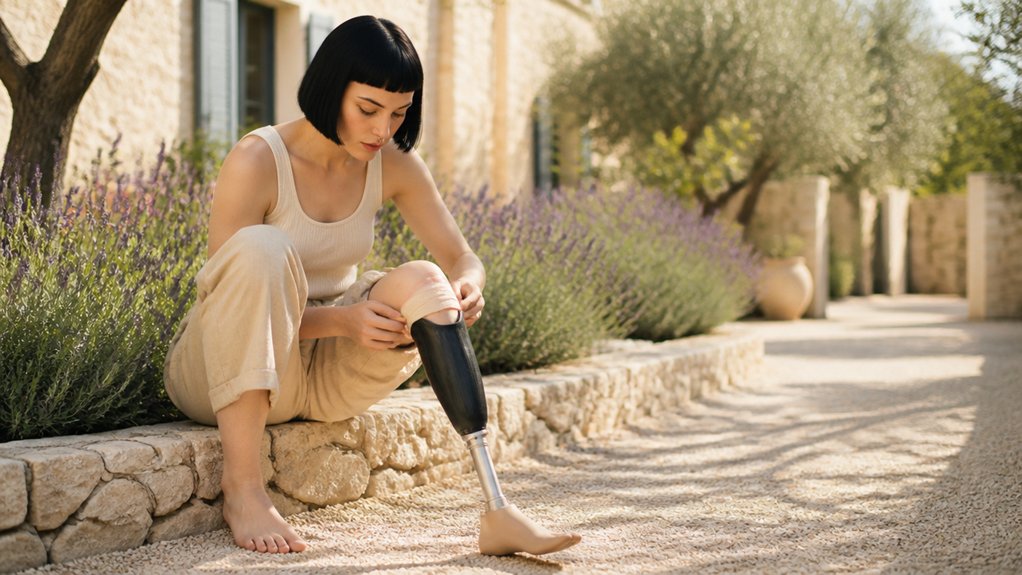
The ideal pressure for controlling edema in a residual limb is 20 to 25 mmHg, but elastic bandages rarely stay in that safe zone.
This is especially true when you’re wrapping your own limb, where shaky hands and good intentions often lead to wrapping too tight.
I have seen bandages applied so firmly they leave permanent indentations, which is when serious problems begin.
Once pressure exceeds 30 mmHg, you’re no longer managing swelling; you’re cutting off blood flow to the tissue.
Once pressure exceeds 30 mmHg, you’re no longer managing swelling; you’re cutting off blood flow.
A shrinker sock with graduated circular compression avoids this by applying tighter pressure at the bottom and easing toward the top.
This reduced circulation can cause a pressure injury, which is a sore that forms because the skin is starved of oxygen.
In more severe cases, sustained high pressure leads to ischemic damage, where cells actually die from lack of blood supply.
This isn’t just discomfort; it’s tissue death.
Several common issues cause this dangerous pressure: uneven tension, where the wrap is tight at the knee and loose at the ankle, creating a tourniquet effect.
Another problem is slippage, where the bandage loosens overnight and you re-wrap it tighter to compensate.
You also have no pressure gauge, so you’re guessing, and guessing wrong is common.
Finally, overlap ridges from folded edges dig into thin skin, concentrating force on one small spot.
For amputees, a shrinker sock is a safer choice because it delivers consistent, graded pressure across the entire limb.
A bandage gambles with your flesh, and the odds aren’t in your favor.
Use a shrinker sock instead to protect your skin and support proper healing.
Does Wrap Application Skill Change Patient Outcomes?
Skill level directly affects outcomes when applying elastic bandages, and the difference is measurable.
Experienced hands typically maintain the safe pressure zone of 20 – 25 mmHg, while beginners often exceed 40 mmHg, risking circulation and tissue damage.
Application training matters because bandage pressure drops as the wrap loosens over time.
An expert adjusts for this drift, but a novice may not notice until the wrap fails.
Inconsistent tension undermines patient confidence, often leading to overtightening as a defensive reaction.
This compensation creates a dangerous cycle that skilled application avoids.
For amputee patients, consistent compression is critical for managing residual limb volume and preventing complications.
If you can’t guarantee reliable tension, switch to shrinker socks.
These socks provide steady pressure regardless of user skill, removing the guesswork from daily care.
They don’t require the same precision to stay effective.
High-elasticity socks with stable knit construction can help prevent migration and maintain a controlled fit.
Choose forgiving gear when expertise is uncertain, and the limb remains protected.
Your priority is safe, consistent pressure, not proving technique.
Can Family Members Apply Shrinker Socks Safely?
Family members can safely apply shrinker socks with the right approach and a few simple habits.
The key is to start with a proper fit, since a sock that’s too loose or too tight will cause problems.
Measure the limb carefully before ordering, and confirm the size with a clinician or product guide if you’re unsure.
Daily skin checks are essential, so look for redness, chafing, or any irritation each time the sock comes off.
Daily skin checks are essential, so watch for redness, chafing, or any irritation whenever the sock comes off.
If the sock wrinkles or feels like it’s digging in, don’t worry.
Adjust the pull so it sits smooth, or try a thin liner underneath to protect the skin.
Set a timer to wear the sock for the recommended hours, and don’t sleep in it unless a therapist says that’s okay.
Managing these socks is about gentle control, not squeezing hard, so think of it like folding laundry with care.
With consistent checks and small adjustments, most family members can handle this safely.
Just keep the contact firm but comfortable, and always stop if you see broken skin or ongoing pain.
Clean the sock daily with mild soap and lukewarm water, rinse thoroughly, and air-dry completely to prevent irritation and odor buildup.
Rigid Dressings: Superior for Edema Control but Underused
Rigid dressings are the best tool for controlling swelling after an amputation, but few surgeons use them.
They lock in pressure at 20-25 mmHg, which works better than shrinker socks for reducing edema quickly.
The main barrier is surgeon training and convenience.
Many teams never learn how to apply rigid casts, and the process feels bulky and time-consuming.
You need a specialized team to fit and monitor the dressing, and you can’t easily check the wound underneath.
It also costs more upfront than a $30 shrinker sock.
Despite that, trial data shows rigid dressings reduce limb volume faster and lead to fewer complications.
Compare one awkward week in plaster to months of fighting stubborn stump swelling.
If your clinic has a trained prosthetic or orthotic team, push for rigid dressings.
If not, don’t improvise a rigid dressing yourself, because a poor fit can cause more harm than good.
When specialized teams are available, rigid dressings are the gold standard for post-operative edema control.
Otherwise, double-layer shrinkers are a safe and practical fallback that still gives good results.
For wounds that develop under any dressing, a calcium alginate dressing can absorb drainage while maintaining the moist environment that speeds new-skin growth.
How Compression Socks Improve Blood Flow in Residual Limbs
Compression socks deliver steady pressure at 20 to 25 mmHg, which is the ideal range for moving fluid out of a residual limb.
Unlike wraps that slip or loosen, this consistent squeeze works every time you pull the sock on.
The pressure is graded, meaning it’s tighter at the bottom and looser toward the top.
This design keeps venous blood and lymph moving upward, toward the heart, even without the calf muscle pump that’s lost after amputation.
My patients often struggle with wraps, producing lumpy, uneven results that do more harm than good.
A shrinker removes that guesswork, so you get the same reliable fit with every wear.
You don’t need any special skill to apply it.
Just pull it on, and the sock does the work, giving your veins a gentle and tireless nudge.
For better blood flow in a residual limb, compression socks are the clear choice over wraps.
The steady, graded pressure replaces the missing muscle pump and keeps circulation moving in the right direction.
Which Edema Control Method Should Clinicians Choose?
For most patients, choose shrinker socks for edema control after amputation.
They keep steady pressure and are far more reliable than elastic bandages.
Elastic bandages depend too much on who applies them.
One person might wrap too tight at 40 mmHg, while another barely reaches 8 mmHg, which is unsafe and inconsistent.
Shrinker socks deliver a consistent 20 to 25 mmHg, the ideal range for venous return without harming tissue.
You can also double-layer them for extra compression, and washing doesn’t ruin their fit.
Treatment timing matters, too.
Right after surgery, rigid dressings work best, but few clinics have the staff to change them daily.
Shrinker socks fit perfectly for the next phase of recovery.
Bandages cost less upfront, but they’re fiddly and risky.
For reliable results and patient safety, the sock wins in most cases.
Only choose elastic bandages if a specially trained professional can reapply them every day.
Otherwise, stick with shrinker socks for steady, safe edema control.
Frequently Asked Questions
How Often Should Shrinker Socks Be Worn Daily?
Wear your shrinker socks for 12 to 18 hours daily, which means all day except for showering and skin checks. That window is the clinical sweet spot for controlling swelling and shaping your residual limb effectively.
I recommend splitting that wear time into morning and evening blocks, like 8 hours on, 2 hours off, then 6 hours on again. This fits your daily schedule without leaving your limb uncovered for long stretches, which is where fluid can pool and slow your progress.
Consistency beats perfection every single time, so even 12 hours is far better than skipping days or cramming 18 hours once a week. Your limb needs steady, gentle compression to shrink scar tissue and prevent edema, especially in the first 6 months post-amputation.
Check your skin twice daily under the sock for redness, blisters, or moisture buildup, then adjust the fit or padding if needed. If your sock feels loose by afternoon, that means swelling is down, so reapply it snugly, but never roll it or fold the top edge.
Do not wear shrinker socks overnight if you have poor circulation or diabetes-related neuropathy unless your prosthetist clears it, because you won’t feel pressure sores. Instead, aim for your longest block during waking hours and use a night off only if your skin shows irritation.
Track your hours on a phone note or calendar for two weeks, then bring that log to your next prosthetist appointment. That data tells us if you need a tighter sock, a different ply, or a custom liner to hit that 15 hour average.
Remember, a shrinker is not a compression sock for sports; it is a medical device that reshapes your limb for socket fit. If you wear it too little, your socket will feel loose and cause friction, which leads to sores. If you wear it too much, you risk skin breakdown, so respect that 18 hour ceiling.
Rotate two shrinker socks if you can, washing one while the other dries, because sweat and oils stretch the fabric and reduce compression strength. A clean, dry sock grips better and lasts longer, which protects your budget and your skin.
Finally, never use heat or stretch the sock to force it on, because that damages the knit and creates hot spots. Slide it on smoothly, smooth out wrinkles, and you are good for the day.
Can Shrinker Socks Be Worn While Sleeping?
Yes, you can wear shrinker socks while sleeping, but only if the fit is perfect and your skin stays healthy. As an amputee, I know that nighttime is when swelling can quietly increase, so keeping the shrinker on helps maintain compression.
However, safety comes first, so I always check for wrinkles or tightness before I close my eyes. If the sock bunches behind the knee or digs into a pressure point, I remove it immediately.
Unmonitored pressure while you are unconscious can cut off circulation or cause skin breakdown, which is a serious risk for any amputee. I also recommend having a second, looser shrinker ready for nights when your limb feels sensitive or slightly swollen.
Wash and dry your shrinker every day to keep the fabric elastic and prevent bacteria buildup. If you have a recent amputation or any open wound, always ask your prosthetist first before sleeping in it.
Listen to your body, because a night of poor sleep is better than a night of tissue damage. For most of us, sleeping in a shrinker is safe, but your comfort and skin integrity are the ultimate judges.
When Should a Shrinker Sock Be Replaced?
Replace your shrinker sock when you spot sagging, stretching, or thinning. These are clear replacement indicators that mean the fabric has lost its grip.
Fabric deterioration means lost pressure, so don’t delay swapping it out. A loose shrinker won’t control swelling or shape your residual limb properly.
In my experience, I swap mine every few months, or sooner if it feels loose. The exact timeline depends on how often you wear it, your activity level, and how well you wash it.
Check the fit daily by running your hand over the sock. If it wrinkles, bunches, or slips down when you walk, that’s a red flag.
Also look for pilling, holes, or a see-through appearance when you stretch it. These signs mean the compression is uneven, which can lead to fluid buildup or a misshapen socket fit.
Don’t wait for discomfort to tell you it’s time. By then, your limb may already be swollen, and you’ll need to work harder to get back to a stable volume.
Rotate between two shrinker socks to extend their life. Wash them in cool water with mild soap, air dry flat, and never use fabric softener, as it breaks down elastic fibers.
If your shrinker feels tighter in the morning than at night, that’s normal. But if it feels consistently loose by midday, replace it immediately to protect your fit and skin health.
Do Shrinker Socks Work for Upper Limb Amputees?
Yes, shrinker socks work well for upper limb amputees by delivering consistent, targeted pressure that controls edema and shapes the residual limb. They are far easier to apply than traditional wraps, which is a huge win when you only have one hand to work with.
Because they maintain steady compression around the clock, they reduce swelling faster and help your limb stabilize for a better prosthetic fit. You avoid the guesswork of bandaging, where loose turns cause fluid buildup and tight turns cut off circulation.
This means less pain, less skin irritation, and a shorter wait before you’re cleared for your first socket. Many upper limb amputees also find that shrinker socks prevent embarrassing bulkiness under clothing, so you can wear them discreetly at work or social events.
I recommend wearing them daily, especially in the first few months after amputation, and checking the fit weekly as your limb shrinks. If you have a short residual limb or a bulbous end, look for a tapered sock or one with a drawstring, since that gives better distal compression.
Always wash them by hand and replace them every 2 to 3 months, because lost elasticity means lost pressure. For the best outcome, pair them with a rigid protective cover when you’re up and about, and talk to your prosthetist about sizing, not guessing with a measuring tape alone.
How Tight Should a Properly Fitted Shrinker Sock Feel?
Snug Pressure is the goldilocks zone, not a tourniquet’s squeeze. You want a fit that feels like a firm handshake, not a crushing grip around your residual limb.
If it’s painful, leaves deep grooves, or makes your skin turn purple or numb, that means it’s too tight. Loosen it immediately and rewrap.
A properly fitted shrinker should feel supportive but comfortable, like a compression sleeve you forget you’re wearing after a few minutes. You should be able to slide one finger flat between the fabric and your skin, but not two.
That finger test is your best daily check, especially as your limb volume changes. Morning swelling is normal, so if it feels tighter after a night’s sleep, that’s expected and fine.
If you feel throbbing, pins and needles, or see blisters, that’s not a fit issue. That’s a red flag to stop and call your prosthetist right away.
Remember: a shrinker works by constant, even pressure, not by squeezing hard. The goal is to reduce edema and shape the limb, so the sock should hug every contour without cutting off circulation.
When in doubt, err on the slightly looser side, since a too-tight sock causes more harm than a too-loose one. You can always add a second layer or switch to a new sock as your limb shrinks.
Rounding Up
Stick with shrinker socks. They win for steady, safe pressure – that 20 – 25 mmHg sweet spot – without the risky peaks elastic wraps can hit. The 12-patient study backs it: better volume reduction, fewer complications. Yes, family can learn to apply them, so don’t sweat the learning curve. Rigid dressings might beat both, but they’re rarely practical at home. Remember, slow and steady wins the race. Bottom line: shrinkers, daily, done.