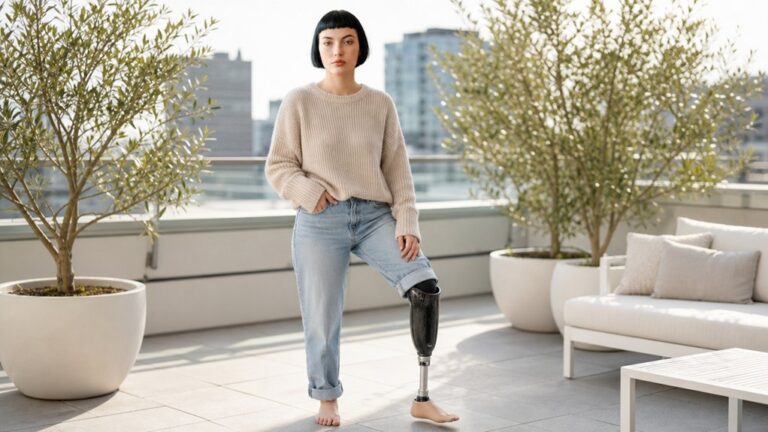
Hi, I am Aria, welcome to my life!

How to Make a Prosthetic Leg Look Natural: Covers, Skins, and Cosmetic Options
Make Your Prosthetic Leg Look Real: Covers, Skins & Cosmetic Options That Actually Work


Making a prosthetic leg look natural is easier than most people expect, and it doesn’t have to cost a fortune. Covers, skins, and cosmetic options each solve a different problem, so the best choice depends on your daily routine as much as on appearance.
Whether you’re walking, sitting, or climbing stairs, a natural look should never come at the cost of comfort or socket fit. This guide covers the main cover types, how to match skin tone and texture, and which silicone or clip-on options hold up best. You’ll also find practical checks for knee clearance, weight, and costs so you can decide with confidence. Let’s start with the cover style that fits your life best.
Quick Answer
- A shaped foam cover fills trouser legs naturally; a silicone skin can add realistic color, texture, nails, and fine details.
- Compare foam, silicone, nylon, and removable clip-on covers for appearance, weight, durability, cleaning, and repair access.
- Match colors using clear photos and samples viewed in daylight; bring your usual clothes to prosthetist appointments.
- Consider custom finishes, patterns, or metallic designs, while remembering that subtle details may be hidden under trousers.
- Test the cover while walking, sitting, and bending; have your prosthetist check fit, knee clearance, weight, and movement.
Choose a Prosthetic Leg Cover for Your Needs
As an amputee, I choose a prosthetic leg cover based on how I actually use my prosthesis, not just how it looks on a shelf. My cover needs to match my usual clothes, my daily activities, and how often I need to reach the parts inside.
A neat outline matters to me, but so does getting to my prosthetist without turning a small adjustment into a headache. I ask myself three things before I buy. The cover must stay secure during my normal movement, fit after my prosthetist changes the alignment, and come off easily for cleaning or repair.
Alignment is the setup of the knee, foot, and socket that lets my prosthesis work comfortably. When my prosthetist adjusts alignment, the cover can shift or pinch if it wasn’t designed to flex with the change. I check that the cover leaves enough room for the components to move.
Insurance coverage deserves a call before I order. Many plans treat cosmetic items differently from functional ones, and some need a note from my clinician before they approve the purchase.
Cost goes beyond the sticker price. I add up the fitting fees, cleaning supplies, repairs, and the cost of a new cover if my residual limb changes shape or my device gets upgraded. Closed-cell neoprene about 1/8 inch thick offers abrasion and impact resistance that can extend the life of my cover.
I ask my provider for a written quote and confirm exactly which services are included. Surprise bills are never welcome, so I want every charge spelled out before I say yes.
Choosing a cover that supports my routine makes daily life easier. I start with my habits, then pick the cover that fits them.
Compare Foam, Silicone, Clip-On, Nylon, and Spray-On Covers
As an amputee, I’ve found there’s no single best cover for a prosthetic leg. I match the material to the look and feel I want.
Foam covers shape the leg and give my residual limb a solid base. Silicone covers add lifelike detail, such as skin texture and veins.
Clip on covers give a sleek finish and attach to my socket with little effort. Nylon covers slip on and off easily, which helps me on busy mornings.
Spray on skins look smooth, but they can crack or tear with daily wear. I weigh that fragility against the look I want before I choose one.
I also check the fit, access for repairs, and durability before I buy. A cover should never turn a simple adjustment into a wrestling match.
For a lighter, more flexible option, some covers feature deep-molded fingerprint lines for realistic detail without adding bulk.
Material And Appearance
For the most natural looking limb, I’d start with a shaped foam cover and a silicone skin over it. The foam gives the leg its shape, while the silicone adds skin color, nails, and fine hair like details.
This combination gives the most realistic appearance. Color matching takes a good photo and a patient prosthetist, so expect a few rounds of adjustments. Silicone skins made from medical-grade silicone resist heat and moisture better than low-grade elastomers that can trap dampness.
Clip on covers fit over the pylon, the metal tube between the knee and the foot. They come in finishes from brushed steel to bright patterns, which suits anyone who wants a metallic look.
Nylon stockings are a low cost way to soften the look. They work well as a temporary cover while you wait for a custom piece.
Spray on skins let you pick any color you like. They cost more and chip or tear more easily, so they need careful handling.
Match your choice to your priorities and budget. Choose foam and silicone for lifelike detail.
Choose clip on covers for a metallic style. Choose nylon stockings for a simple, temporary cover, and choose spray on skins for custom color and a delicate finish.
If natural looks matter most, I’d go with foam and silicone. That choice gives you the best mix of realism and durability for everyday use.
Fit, Access, And Durability
As an amputee who wears a prosthetic leg every day, I rely on a foam cover with a silicone skin as my best overall choice. It fills out my pants the way a natural leg does, and it holds up well over time.
The main drawback is access. This cover isn’t the easiest to remove when my prosthetist needs to adjust my leg during an alignment visit.
Fit matters most in daily life. Foam fills clothing naturally, while silicone adds a realistic color but can snag on fabric and slow access to the socket.
Clip on 3D printed shells come off quickly for alignment checks. Nylon stockings are light, cheap, and easy to pull aside, though they offer little protection from impact. For those prioritizing quick access, tool-free attachment is a key feature shared by many accessory hooks.
Sprayed on skins look seamless, but they’re fragile, expensive, and hard to patch. I suggest matching the cover to your needs:
- Choose a foam and silicone cover for everyday wear and natural clothing shape.
- Pick a clip on shell or a nylon stocking when repairs matter most.
- Try a sprayed on skin only if you can afford the upkeep.
Climate affects each material differently. Ask your prosthetist about water exposure, heat, and the repair skill level of your local clinic before you choose.
In my experience, foam holds up best, so it’s the cover I’d pick.
Shape Foam and Silicone for a Natural Look

I started with shaped foam and a silicone skin because I wanted a natural outline above all else. Foam fills the space around my prosthetic leg so it matches my other leg’s general shape.
My prosthetist trimmed the foam so it works with trousers, shorts, and days when I go bare legged. Silicone skin slips over the foam and can copy skin tone, toenails, and fine hair.
Getting a close color match takes patience, so we compared samples in daylight. Clinic lights make every shade look off, so daylight gives the truest picture.
Ask your prosthetist to check that the foam keeps my biomechanical alignment. That means my knee, ankle, and socket stay in position for a safe, natural walk.
Ask too whether the silicone suits your climate, since full coverage affects how your body manages heat. In hot weather, I switch to a lighter cover and keep a spare nearby.
For everyday wear, pick a tone that’s close and contours that look realistic. Small details barely show under jeans, so focus on the basics.
Bring photos and the clothes you wear most. Your prosthetist can match the look to your daily life, and that makes the final choice much easier. For days spent near water, consider how a gentle buoyancy from gel panels in amphibious socks can spread weight and add comfort.
Weigh Cover Protection Against Added Weight
I only choose a protective cover when it earns its weight on my prosthesis. A tough cover keeps dirt, water, and knocks away from the pylon and foot, but extra material can slow me down with every step.
Before I buy one, I wear it through a full day of walking and climbing stairs. I pay attention to how the leg swings and whether the added mass tires my residual limb or changes how the socket feels.
I start with a light option, such as a clip on cover for the pylon, because my leg already carries enough weight. It guards the part that takes the most knocks without adding much load.
For wet conditions, I check that the seal creates continuous 360° skin contact so no gaps form leak channels that could soak my liner or socket.
Protection Versus Added Weight
As an amputee who’s worn a prosthesis for years, I’ve learned that the right cover depends on how you plan to use your leg. My advice is simple: choose a cover when protection and a natural look matter more to you than keeping your prosthesis as light as possible.
A cover shields the components from dirt and softens everyday knocks against doorframes and furniture. Every layer adds weight, though, and even a small increase can feel heavy after several hours on your feet. For example, a mannequin head sized for display purposes offers a 22-inch circumference that can accommodate most facial devices, but that same logic of sizing and material choice applies to leg covers as well.
Think about what you’ll actually use each day. A foam shell fills out your trouser leg and protects the pylon and joints, but it feels bulkier. A thin nylon stocking adds very little weight, keeps dust off, and slides away easily when your prosthetist needs to make adjustments. A silicone skin looks lifelike, but the extra material means more cleaning and a higher cost over time.
Pay attention to heat as well. Covers that trap warmth can make your residual limb sweat, which may affect how the socket and liner fit. Choose the lightest cover that blocks the dirt and knocks you meet most often. That’s the option I pick for most days.
Balance Durability And Mobility
As a prosthetic leg user, I think durability matters, but I only add a heavy cover when it protects parts I bump often or use outdoors. I match coverage to real risks, so a knock against a doorframe or a walk over a gravel path can justify guarding exposed components.
Desk work rarely needs armor. Before I buy any new cover, I ask my prosthetist to compare the weight of the covered leg with my current setup.
I also ask them to check my gait, which is the way I walk, because even a small weight change can affect my swing phase, comfort, or fatigue. A slight shift can also change how my residual limb sits in the socket.
I test the setup on stairs, from seated positions, and during quick turns. A cover that snags near my knee unit can turn a simple errand into a stumbling mess. For outdoor adventures, I look for features like airless wheels and disc brakes that provide stable, low-maintenance performance on uneven terrain.
For changing environments, I prefer a cover I can remove for adjustments and cleaning. Removable panels let me check my liner, pylon connections, and foot alignment without a struggle.
I cover the vulnerable areas. I keep access simple, and I never trade easy movement for looks alone.
Choose Lightweight Materials
I choose the lightest cover that protects the parts I’m most likely to bump. Extra weight makes a prosthetic leg feel tiring by the end of the day.
I also balance comfort with access and cost. A lightweight foam core can protect the pylon and the metal connector without turning each step into a workout.
For daily walks, I use a hollow foam cover. It adds a natural shape, and my prosthetist can trim it after fitting so it clears the socket and the knee unit.
For a sleek look, I compare a 3D printed clip on cover. It weighs very little, and I can pop it off for repairs without a trip to the clinic.
I skip thick silicone when weight matters. Realistic color and fine detail cost more, and the material can snag on clothing and furniture.
I protect the likely impact points and keep access easy. That approach leaves the rest of my leg light enough to wear comfortably from morning to night.
Check Prosthetic Leg Cover Fit and Easy Access
I choose a prosthetic leg cover that fits snugly and comes off easily. Looks matter to me, but I don’t want every adjustment to turn into a wrestling match.
I check the fit while I stand, sit, and bend my knee. A cover can look smooth in the clinic and then bunch up at home once I start my day.
A snug cover should never press on my socket or rub my skin. I look closely at the seams, since a rough seam can cause chafing over a long walk.
A snug cover should never press on the socket or rub the skin, and smooth seams help prevent chafing.
I test the cover while I walk, climb stairs, and sit down in my usual trousers. Then I check the fabric for chafing and feel for thermal buildup, which is the heat that gets trapped under the cover.
I also need quick access to the knee unit, the foot, and the alignment bolts. That way I can handle a routine check without peeling off half my prosthesis.
I ask my prosthetist to show me how to remove and reattach the cover. This matters most if any clips could snag moving parts on the knee or foot.
Before I buy, I confirm the cover still fits after any alignment changes. Then I choose a cover I can take off without tools and fasten back on securely.
Customize Prosthetic Leg Covers to Match Your Style
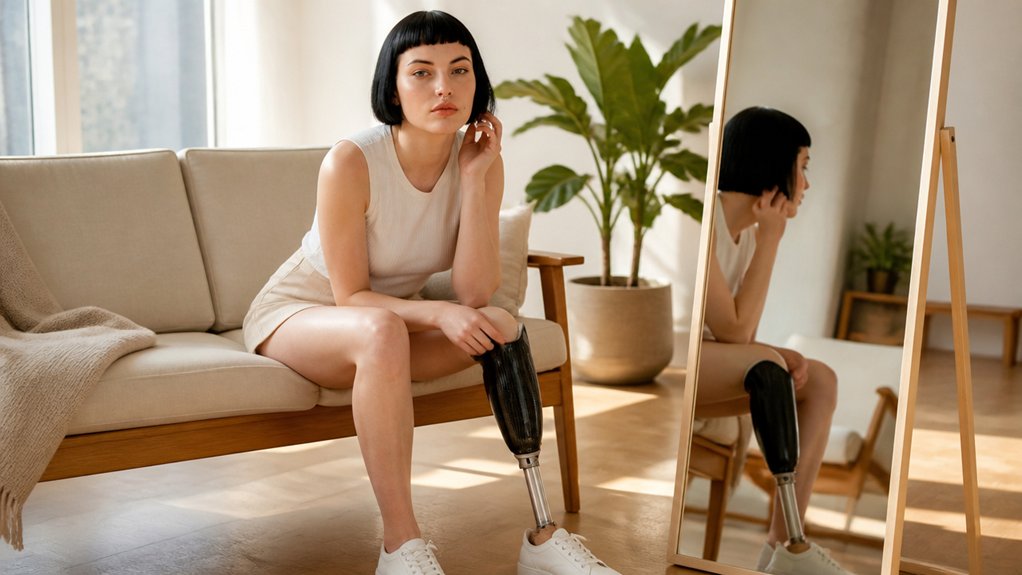
Once the fit and easy access are sorted, I choose a cover that feels like me.
A cover that tries too hard to look like a natural limb can feel forced, so I prefer a simple style that fits who I am.
I start with appearance, then I match the cover to my daily routine.
Foam adds shape to my residual limb area, and silicone copies my skin tone and texture.
A 3D printed cover that snaps onto my pylon, the lower support tube, can give it a metallic finish.
Custom prices vary, so I compare quotes and ask what each one includes.
For a quick mood board, I compare three looks:
- Matte charcoal with a subtle silver stripe, which works well with work clothes.
- Seasonal colors such as rust or deep green, which add a warmer touch.
- A logo or bold pattern, which helps my leg start conversations.
Style trends give me ideas, but I stick to what suits my taste.
I ask my prosthetist whether the cover allows adjustments and fits under my clothes.
I choose a finish I enjoy wearing every day.
Protect Your Prosthetic Leg Cover From Snags
As a leg amputee, I’ve learned that a snug fit matters more than a flawless finish. A cover caught near a moving knee unit can turn a normal walk into an awkward repair stop.
I choose a cover that fits close to my residual limb and doesn’t rub the knee, ankle, or fasteners. Loose material can catch when I sit down, kneel, or pass a chair, and chairs seem to find loose edges every time.
After any adjustment, I check the gaps around the moving joints. I ask my prosthetist to trim the foam rather than fold it under the edge.
After adjustments, check joint clearance and ask your prosthetist to trim the foam rather than fold it under the edge.
I pick smooth attachments. I avoid loose straps, exposed hook and loop tabs, and dangling fabric near the knee.
A nylon stocking can protect a delicate finish from grit when I’m outdoors. If it shifts toward the moving parts, I take it off.
I inspect the seams once a week. A small snag repair costs far less than replacing a custom cover, which can run hundreds of dollars.
I clear burrs and rough hardware edges, and I keep tools away from my prosthetic leg. This habit prevents tears in the cover.
If a snag starts, I stop walking and check the joint closely, especially around the knee unit. My advice is simple: choose a close fit, smooth edges, and easy access for repairs.
Understand How Covers Support Comfort and Confidence
A good cover makes my prosthesis feel more comfortable, and it helps me feel more at ease in public. It won’t fix every awkward moment, but it does a lot for my daily life.
A cover cushions light knocks against furniture and doorframes. It keeps dirt and dust away from the moving parts, and it lets my trouser leg hang more naturally.
It may also ease my worries about body image and soften the stigma I sometimes feel from others. When I choose a cover, I look for three things.
First, I look for a snug foam shape that fills the trouser leg without rubbing. Second, I choose a light silicone skin when I want realistic color and fine detail.
Third, I value easy access, because quick adjustments matter more to me than a perfect paint job. I check the fit every time I put it on.
Some covers add extra weight or snag near a moving knee, so I watch for both problems. Custom skins can be costly, and they’re often hard to reuse after a new socket fitting.
Before I wear a new cover out, I ask my prosthetist to check the clearance around the knee and how the cover attaches. Then I test it while walking, not just in front of a mirror.
Comfort and upkeep come first for me, and I add the personal look after that.
Frequently Asked Questions
Are Women More Likely Than Men to Receive Cosmetic Prosthetic Covers?
Women are not clearly more likely than men to receive cosmetic prosthetic covers, since reliable data showing a significant gap is limited. Appearance goals, clothing choices, and body image often shape the decision for people of any gender.
As someone who wears a prosthesis myself, I have seen men and women choose cosmetic covers for hands, arms, and legs, and their reasons vary widely. A practical tip: before ordering, ask your prosthetist to bring a sample cover to your fitting so you can check skin tone, texture, and how it looks in your usual clothing.
Many people also ask for a second shade for seasonal changes in skin tone, which keeps the match looking natural.
Which Insurer Reimburses More Pull-Up Skin Covers?
No single insurer reimburses more pull-up skin covers across the board, because each insurer sets its own coverage rules for each plan. Medicare, private insurers, and Medicare Advantage plans all differ, and many treat cosmetic covers as non-essential, so the same cover can be paid under one policy and denied under another.
Before you pick a prosthetic cover, call the member services line and ask whether the item is listed as covered, what your plan tier limit is for the year, and whether it requires a prescription or prior authorization. Write down the representative’s name and reference number, since that record is your best tool if a claim is denied, and your prosthetist can often resubmit with supporting medical necessity notes.
What Percentage of Covered Transtibial Amputees Receive Pull-Up Skin Covers?
Approximately 64% of covered transtibial amputees receive pull-up skin covers, which makes this style the majority choice among them. As an amputee myself, I know a natural-looking cover helps the prosthesis blend in under clothing.
If realism matters most, weigh durability, maintenance needs, and how easily your prosthetist can access the cover for adjustments. Ask how often it should be inspected, since a loose fit can trap moisture and irritate the skin.
Practical tip: keep a spare cover on hand so a tear does not leave you without a cosmetic option. Searching for “cosmetic prosthetic covers” will also surface alternative styles to compare.
Does Insurance Type Affect Whether Someone Uses a Cosmetic Cover?
Insurance type does not usually decide whether you use a cosmetic cover, but it strongly shapes which covers you can get. Private plans, Medicare, Medicaid, and workers’ compensation each set different rules for cosmetic prostheses, so the specific policy matters more than the label.
Before you order, call your insurer and ask for the exact wording in your benefits summary under “cosmetic prosthesis” or “cosmetic restoration.” Ask whether a skin-tone cover is covered, how often it can be replaced, and whether a prior authorization from your prosthetist is required. Keep a copy of your prosthetist’s letter of medical necessity with the request, since many denials come from missing paperwork.
Can Climate and Local Attitudes Influence Cosmetic Cover Use?
Yes, climate and local attitudes can influence cosmetic cover use, affecting the material you choose, the design you wear, and how confident you feel in public. I have worn a cosmetic cover through hot summers and damp winters, so I know how much these factors matter.
In hot, humid regions, I recommend a breathable silicone liner with a ventilated shell, since trapped sweat can cause skin irritation within a few hours. In rainy or cold areas, look for a waterproof cover with a sealed edge that resists moisture and stiffening.
Local style also plays a role. Ask your prosthetist to match skin tone and fabric to local clothing so your cover blends in naturally.
Rounding Up
Verdict: a cover should look natural without making your leg heavier or harder to use. It’s a frame, not the picture. I favor shaped foam or silicone when matching your limb’s outline matters most; a clip-on or nylon sleeve may suit quick changes and lower fuss. Check access to joints and charging points, then test fit with your usual clothes. Covers may snag, so don’t yank them. Bottom line: prioritize comfort and function, then style.