Hi, I am Aria, welcome to my life!

6 Best Prosthetic Socks for Reliable Volume Management
Reliable prosthetic volume management starts with the right socks. Compare top options like SockShop, Soft Elastic, Regal, Knit Rite, and SPS Cool Blue for better fit, comfort, and fewer fit issues.

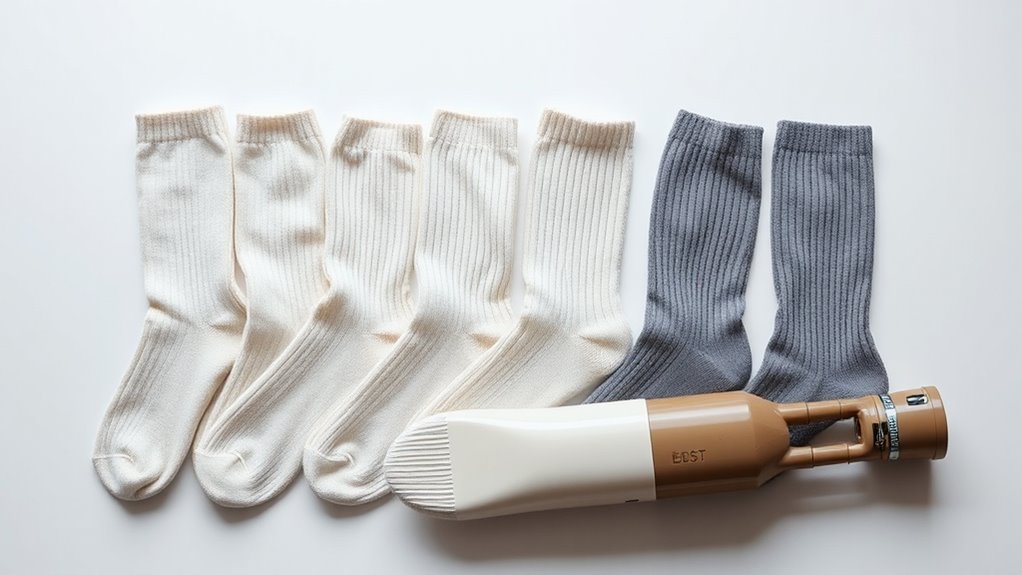
For reliable volume control, pick socks that match clearance, not guesswork: SockShop IOMI 6-pack, 40 cm cotton terry; Soft Elastic Protective Stump Socks, 5-piece, seamless cotton; Regal PSRMDSH33, 3-ply acrylic/Lycra, hole; Knit Rite 1SP3SWSH, 3-ply non-roll; light 1-ply cotton compression; and SPS Cool Blue CB5MDSH2, 5-ply Coolmax. Use 1 – 2 ply for trim corrections, 3 – 5 ply for fill, and replace flattened socks before pistoning, rotation, or distal pressure starts.



More Details on Our Top Picks
SockShop IOMI Prosthetic Socks for Below-Knee Amputees
SockShop IOMI Prosthetic Socks are the proper choice if you need a controlled fit for a below-the-knee residual limb: a 6-pack of blue, 40 cm (16-inch) socks built specifically for prosthesis wear, not generic cushioning. Use them to manage volume, spread pressure, and cut friction at the socket interface. Their soft-touch cotton, terry towel cushioning, and high-stretch construction adapt to limb shape without collapse. They’re a first-class medical device, designed by experts, made in Britain. Don’t improvise with ordinary socks; they won’t control fit, and they’ll worsen discomfort.
- Ply:Terry-cushion sock
- Hole Design:No hole
- Material:Cotton
- Length:40 cm
- Moisture Control:Comfort-focused
- Pack Size:6-pack
- Additional Feature:Terry towel cushioning
- Additional Feature:Expert-designed medical range
- Additional Feature:Made in Britain
Soft Elastic Protective Stump Socks for Amputees
For below-knee amputees who need volume-management without abrasion, these 5-piece soft elastic protective stump socks are the correct baseline: high-quality cotton construction, thickened stump coverage, and high-density knitting give you a breathable interface that absorbs perspiration, stays odorless, and won’t collapse into the kind of damp, irritating mess that ruins prosthetic fit. Use them daily. Their seamless stitching, anti-hemming opening, and high elasticity support easy donning and doffing, whereas the thickened stump zone adds warmth and protection. Keep five on hand for rotation, home use, or rehab.
- Ply:Thickened cotton
- Hole Design:No hole
- Material:Cotton
- Length:Not specified
- Moisture Control:Breathable
- Pack Size:5-pack
- Additional Feature:Seamless construction
- Additional Feature:Thickened stump area
- Additional Feature:Anti-hemming opening
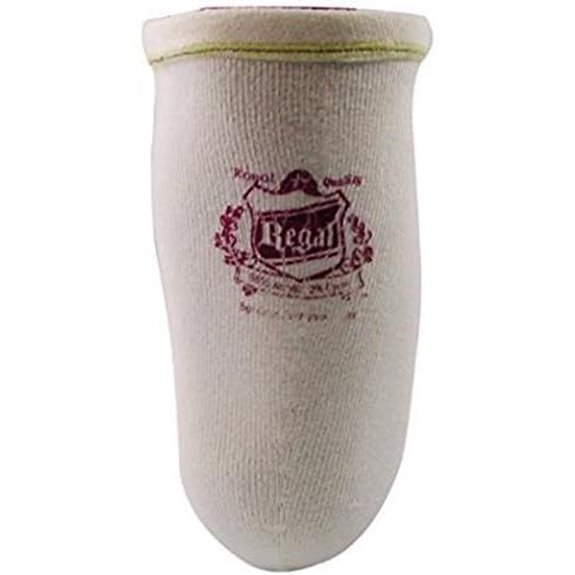
Regal Prosthetic Sock – 3 Ply with Hole – Medium Short – PSRMDSH33
Regal Prosthetic Sock – 3 Ply with Hole, model PSRMDSH33, is the correct choice when you need controlled volume accommodation in a medium short profile that fits sizes 1 and 2. Use the acrylic/Lycra 3-ply knit: it stretches, conforms, and wicks dampness, so your limb stays dry and stable. The fleeced interior adds cushion; the rounded toe blocks distal bunching. The 10 – 12 inch length and 7 – 8 inch top width support predictable coverage. Wear a clean sock daily. Wash delicate, mild detergent only, no bleach; machine dry delicate. Ignore worn, damp socks – they destabilize fit.
- Ply:3-ply
- Hole Design:With hole
- Material:Acrylic/Lycra
- Length:10 – 12 in
- Moisture Control:Moisture-wicking
- Pack Size:Single pair
- Additional Feature:Rounded toe design
- Additional Feature:Fleeced interior
- Additional Feature:Delicate-cycle washable
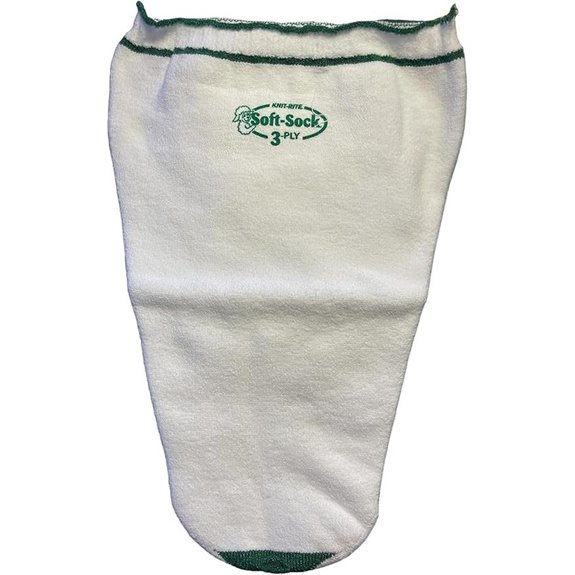
Generic Knit Rite Prosthetic Sock 3-Ply White
Generic Knit Rite Non-Roll Prosthetic Sock 3-Ply White suits the user who needs stable volume management without extra bulk, especially when distal padding must stay consistent and the top edge can’t migrate. You get the 3-ply White 1SP3SWSH wide-short sock with a knit-in eye-hole, reinforced, minimal-stretch, and no added thickness. The non-roll top stops bunching; the soft-Sock fleeced side stays skin-friendly. Use it for prosthetic wear, not improvisation. It wicks dampness, helps inhibit odor, and preserves fit. Wash fleeced side in, skip bleach, skip liquid softeners, and tumble dry cool.
- Ply:3-ply
- Hole Design:With hole
- Material:Knit fabric
- Length:Wide short
- Moisture Control:Moisture-wicking
- Pack Size:Single sock
- Additional Feature:Non-roll top
- Additional Feature:Reinforced eye-hole
- Additional Feature:Odor-inhibiting fabric
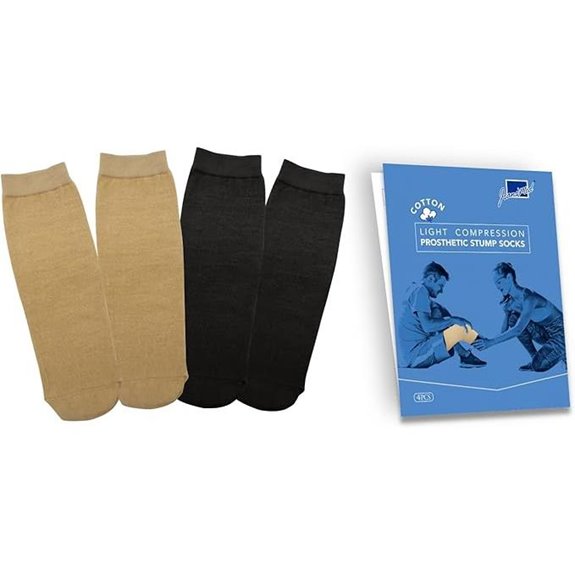
Cotton Prosthetic Stump Socks Light Compression 4 Pack
Cotton Prosthetic Stump Socks – AK, in a 4-pack, give you light compression and a thin, 1-ply profile when socket volume control has to stay precise. Choose XL, 2XL, or 3XL as needed. The Lycra-imported blend – 47% cotton, 28% Lycra, 25% nylon – delivers breathable knit support without bulk. Use the non-binding construction; it cuts bunching and keeps the sock seated. The soft cotton yarn adds warmth and limb protection for daily wear. Taiwan Excellence recognition backs the build. Don’t stuff a socket with thick, shifting fabric when stable fit matters.
- Ply:1-ply
- Hole Design:No hole
- Material:Cotton/Lycra/Nylon
- Length:Not specified
- Moisture Control:Breathable
- Pack Size:4-pack
- Additional Feature:Light compression fit
- Additional Feature:Non-binding design
- Additional Feature:Taiwan Excellence
SPS Cool Blue Prosthetic Sock 5 Ply No Hole (Medium/Short) (CB5MDSH2)
SPS Cool Blue Prosthetic Sock 5 Ply No Hole (CB5MDSH2) is the right choice when you need a Medium/Short sock for size 1 – 2 limbs and you need volume control without sacrificing skin management. You get 5-ply construction, 98% Coolmax fibers, and 2% Lycra, so the sock keeps its shape whilst resisting collapse. Use it to pull dampness off your skin; Coolmax drives evaporation fast. The no-hole design preserves uniform contact. Its 10 – 14 inch length, 3.5 inch toe width, and 6 – 6.5 inch top width fit cleanly. Stop using stretched-out socks that ruin fit.
- Ply:5-ply
- Hole Design:No hole
- Material:Coolmax/Lycra
- Length:10 – 14 in
- Moisture Control:Coolmax moisture-wicking
- Pack Size:Single sock
- Additional Feature:Proprietary thickness control
- Additional Feature:Shape-retaining build
- Additional Feature:Coolmax fiber blend
Factors to Consider When Choosing Prosthetic Socks for Volume Management
Choose the sock ply count first, since one ply won’t correct persistent looseness and too many plies will choke circulation and distort socket fit. Check material breathability, moisture control, and cushioning level next – synthetic blends that wick sweat and buffer shear reduce skin maceration, whereas dense padding can trap heat and mask a bad limb volume match. Fit the limb volume exactly; if the sock bunches, wrinkles, or forces your prosthesis to float, you’ve set up pistoning, pressure spikes, and a failure you can feel by the end of the day.
Sock Ply Count
Ply count is your primary volume-control variable: 1-ply socks add the least thickness, 3 – 5 ply add progressively more material, and each additional ply measurably increases the limb-to-socket interface volume, which directly changes fit, suspension, and alignment. Use 1 – 2 ply when you need only a minor volume correction; move to 3 – 5 ply when gaps demand real fill. Stack socks deliberately, since your total ply determines the target fit clinicians prescribe. Don’t improvise. A 4-ply under a 2-ply isn’t “extra support”; it’s a defined volume shift. Monitor compression, too – plies flatten with wear, losing effective thickness and undermining the fit you set. Replace degraded socks before your socket starts rotating, pistoning, or forcing alignment errors.
Material Breathability
Breathability matters every day, since trapped sweat changes the residual limb as surely as extra ply does. Choose moisture-wicking synthetics, cotton blends, or Coolmax-type yarns; they pull perspiration off the skin, speed evaporation, and keep circumference changes in check. Demand high-porosity knit structures, not dense, sweat-holding fabric. Why? Poor airflow drives maceration, raises interstitial fluid, and can force extra sock layers or repeated socket tweaks. Don’t accept slow-drying material: heat buildup triggers vasodilation, and that fluid shift will distort limb volume. Inspect the label for proven moisture transport and drying performance, then trust those numbers, not marketing noise. When you’re managing daily fluctuation, breathable socks stabilize the limb without needless bulk, preserving consistent wear time and limiting the ugly cycle of dampness, swelling, and compensatory layering.
Limb Volume Fit
When residual limb volume shifts, fit the sock to the limb, not the other way around. Measure circumference at the distal end, mid-limb, and proximal trimline in millimeters or centimeters, and log every change. Use ply to tune interface volume: one added layer can offset meaningful loss, depending on socket geometry. If your limb changes often, choose high-stretch knits or elastic fibers; they conform, distribute pressure, and resist bunching. Track activity, temperature, time of day, and weight changes, then adjust layering immediately. Inspect the fit every time: no distal gaps, no proximal pressure ridges, no blanching, no hotspots. Don’t force donning or doffing. If the socket fights you, the sock’s wrong. Recheck ply, then size. Precision prevents skin breakdown and unstable suspension.
Cushioning Level
Cushioning level controls how the sock manages load, and you need to treat it as a pressure-distribution tool, not just a comfort feature. Use higher-ply socks when you need thicker padding; they spread force, reduce peak pressure, and blunt friction on a vulnerable residual limb. But don’t overstack thickness. Excess ply can overfill the socket, distort fit, and force adjustment. Use low-ply socks when you need exact volume control and minimal bulk. Place cushioning where it matters: terry or fleeced interiors can shield discrete pressure points without changing total limb volume much. If the sock blends cushioning with humidity-managing fibers, better. That construction supports comfort and lowers skin-breakdown risk during keeping protective padding in play.
Moisture Control
After you’ve matched cushioning to load, control dampness with the same discipline. Choose moisture-wicking prosthetic socks built from high-performance synthetics; they pull sweat off skin and drive rapid evaporation, so fluid doesn’t pool and shift limb volume during the day. Prioritize breathable, high-porosity knits. They move air, cut socket humidity, and suppress sweat retention. Demand quick-drying, multi-ply constructions that transport moisture between layers; they keep the limb-sock interface stable and fit predictable. Higher moisture-management performance furthermore limits maceration and friction, which otherwise trigger swelling and transient volume changes. Don’t tolerate a damp sock. Change to a clean, dry one immediately, and use fabrics with documented moisture control, since persistent perspiration degrades comfort, suspension, and volume stability.
Seam Construction
Inspect the seams before you trust the sock. Place seams away from the distal end and bony prominences; pressure there triggers irritation, shifts soft tissue, and defeats volume control. Choose flat, bonded, or low-profile construction. Raised seams add friction and shear, and that nonsense destabilizes compression during wear. Demand seam strength that matches the fabric’s stretch; if the seam gapes or clamps during limb motion, pressure migrates and fit degrades. Seamless or circular-knit designs give you more uniform compression and fewer stress points than multiple stitched lines. If you need a distal opening, insist on a reinforced, flush seam or knit-in hole. Anything bulky creates edge pressure, localized edema, and tissue displacement. Count the seams. Fewer means better control, cleaner mechanics, and less trouble.
Socket Compatibility
Socket compatibility decides whether the sock helps or sabotages the fit, so match the ply to the clearance in the socket before you add anything. Use thin, single-ply socks in tight, low-volume interfaces; thicker multi-ply options can add bulk, block full seating, and drive distal end pressure. Check length and toe design too: short, long, hole, or no-hole profiles must mirror socket geometry or you’ll get bunching and pressure shifts. Choose blends with controlled stretch – nylon, polyester, or similar elastic fibers – to conform without creating hot spots. Inspect seams, fleeced interiors, and reinforced openings; any ridge can irritate the liner or trim line. When you add or remove socks, the fit should change predictably, or your alignment, suspension, and gait are already compromised.
Wear Durability
Durability matters every time you don, doff, and load the limb: choose higher-ply socks and thicker knit constructions when you need resistance to thinning, hole formation, and compression loss under repeated friction. Favor nylon or polyester blends, plus terry or fleeced reinforcement at the heel, toe, and tibial crest; those zones take the abrasion, not your volume control. Demand tight, high-density knitting, seamless cuffs, and reinforced openings – seam failure and fraying are preventable defects, not bad luck. Wash on gentle cycles with mild detergent, then dry on low heat; heat and aggressive agitation break fibers and kill elasticity. Inspect each sock before use. If you see thinning, holes, or slack stretch, replace it immediately. Delayed replacement invites sudden volume shifts, unstable socket fit, and compromised skin integrity.
Frequently Asked Questions
How Often Should Prosthetic Socks Be Replaced?
You should replace your prosthetic socks when they stretch, thin, fray, or lose fit, usually every few months. You’ll notice changes in comfort and volume control, so check them regularly and swap them sooner if needed.
Can Prosthetic Socks Be Washed in a Machine?
Yes, you can machine-wash most prosthetic socks, but you should check the label first. Use cold water, mild detergent, and gentle cycle. You’ll preserve elasticity and fit better if you air-dry them.
Do Prosthetic Socks Reduce Skin Irritation?
Yes, they can reduce skin irritation by cushioning your residuum and managing dampness, but you’ll still need proper fit, clean liners, and regular checks. If irritation persists, you should contact your prosthetist immediately.
Should Sock Ply Change With Daily Limb Swelling?
Yes, you should adjust sock ply as your limb swells or shrinks during the day. You’ll need fewer socks when swelling increases and more when it decreases, so your socket stays snug, comfortable, and secure.
Are There Socks for Sensitive or Diabetic Skin?
Yes – you can choose prosthetic socks made from soft, seamless, perspiration-wicking materials to reduce rubbing and irritation. You’ll want diabetic-friendly options, but you should still check your skin daily and ask your prosthetist.


[…] over bony areas, but liner choice depends on the person’s residual limb, socket fit, and comfort. Sock ply can also help manage changes in limb volume and maintain a stable socket fit. Adding or removing […]
[…] limb-volume changes by measuring circumference at the distal end, mid-limb, and proximal trimline, and log each change. […]
[…] mid-limb, and proximal trimline, and log each reading so you can adjust sock ply to compensate for volume loss. If the wobble returns within days, the socket may no longer match your […]
[…] limb-volume changes by measuring circumference at the distal end, mid-limb, and proximal trimline so you can adjust […]