Hi, I am Aria, welcome to my life!

The Complete Guide to Prosthetic Sock Ply: When to Add or Remove a Sock
Stop Suffering with Loose or Tight Sockets: The $3 Fix That Changes Everything


Understanding prosthetic sock ply is one of the simplest ways to keep your socket comfortable as your limb changes. Ply is a measure of sock thickness, and adding or removing a ply helps fine-tune the fit between your residual limb and the socket. If the socket feels loose, a thicker sock total may restore contact. If it feels tight, a thinner total may help.
Limb volume changes with movement, hydration, temperature, and the time of day, so a socket that fits well in the morning can feel different by afternoon. Socks are relatively inexpensive, easy to maintain, and can be added or removed as needed, which is why they are a common volume-management tool.
Recommended Products

Cool Blue 3-Ply Prosthetic Sock Medium Short With Hole - CB3HMSH2
Light to medium cushioning for fine-tuning socket fit during normal volume shifts.

Cool Blue 5-Ply Prosthetic Sock Wide Short Without Hole - CB5WDSH2
Adds more cushion when socket feels loose and helps maintain comfortable contact.
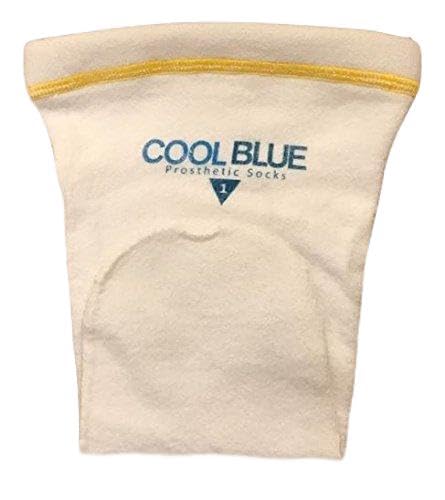
SPS Cool Blue Prosthetic Sock 1 Ply with Sewn Distal Hole (Medium/Short) (CB1HMSH2)
Extra-thick cushion for maximum volume adjustment and pressure relief on sensitive limbs.
Check discounted items inProsthetic Socks
In this guide, you will learn what ply means, how to add or remove a sock step by step, how many ply is too many, how to protect your skin, and when to call your prosthetist. The goal is to help you stay ahead of fit problems instead of reacting to pain.
Quick Answer
- Ply describes sock thickness, not the number of socks. Add up your total ply.
- Loose socket: add one ply, walk a few minutes, and reassess. Tight socket: remove one ply.
- Change one ply at a time and never force the limb into a socket that feels too tight.
- In a study of 23 below-knee users, ply rose from an average of 4.8 at donning to 5.5 at doffing, and socks were changed less than once per day on average.
- Many clinics suggest a check-in at about 8–10 total ply. Some suggest reassessing sooner if you consistently need more than 5–7 ply or adjust socks several times a day.
- Pain, wounds, blisters, or lasting skin marks need your prosthetist, not more socks.
What Is Prosthetic Sock Ply? (Ply Chart)
Prosthetic socks, often called stump socks, are shaped fabric layers worn over the residual limb or liner depending on your system. Ply describes how thick a sock is. A higher ply is thicker, and the label does not tell you how many socks you are wearing. Standard thicknesses are commonly 1-, 3-, and 5-ply, and some brands also make 2-ply and 6-ply options.
| Ply | Thickness | Typical role |
|---|---|---|
| 1-ply | Thin | Small, fine-tuning adjustments |
| 2-ply | Thin–medium (some brands only) | An in-between step |
| 3-ply | Medium | Moderate changes in volume |
| 5-ply | Thick | Larger changes in volume |
A few details matter:
- Ply is not an exact measurement. In lab testing, 1-, 3-, and 5-ply socks averaged about 0.7, 1.2, and 1.5 mm under load, and plies did not add up in a simple way. The University of Washington researchers also note that thickness can vary across products with the same ply.
- Material changes the feel. One manufacturer chart says its 2-ply synthetic sock approximates the thickness of a 3-ply wool sock.
- Color codes are not standardized. Check the package instead of guessing from the band or stitching color.
- Socks, liners, and shrinkers are different items. A liner is part of your suspension system, and a shrinker is a compression garment used as prescribed, usually when the prosthesis is off. See our prosthetic liner guide for more.
Is Your Prosthetic Socket Too Loose? Add a Sock Ply
A loose socket often shows up as a wobble, a rotating or sinking feeling, a gap at the brim, or your limb moving up and down when you lift your leg. It can also appear as new hip or low-back aches and rubbing that wasn’t there before.
To add a ply safely:
- Check your total. Note the ply you are wearing now so you can record the change.
- Add one ply. Use the thinnest option that matches your system.
- Smooth it out. Pull the sock on without wrinkles or folds. A crease inside a close-fitting socket can cause rubbing.
- Walk a few minutes. Look for a snug, even hold, not squeezing or pinching.
- Reassess. If it still feels loose, add one more ply and repeat. Don’t add several at once.
Track limb-volume changes by measuring circumference at the distal end, mid-limb, and proximal trimline, and log each change. If your total is rising week after week, see the section on 8+ ply below.
Morning vs. Evening Volume Changes: How to Adjust Sock Plies
Daily limb volume changes are normal, even after the limb has stabilized. The most substantial changes in size and shape occur in the first 4–6 months after amputation, and small changes can continue for up to 12–18 months. After that, movement, hydration, temperature, and activity can still shift your fit.
In the University of Washington study, most people added socks over the day, some did not change socks at all, and a few removed socks. That means the typical pattern is a socket that feels looser later in the day, but your own pattern may differ. A sock log helps you find it.
Morning Fit Check
Check the fit when you first put the prosthesis on and again after a short walk. If the limb feels swollen or the socket is hard to seat, don’t force it. Try one ply less, and contact your clinic if the swelling is new, painful, or doesn’t settle.
Daily Fluid Shifts
You don’t need to measure your limb hourly. Check the fit after waking, mid-morning, after lunch, and before long walks. On average, participants in the study changed socks about 2.4 hours after putting the prosthesis on, but needs vary. If you are adjusting several times a day, that is useful information for your prosthetist.
Evening Checks
In the evening, take a moment to check your skin and note how the day went. If you were prescribed a shrinker sock or compression garment, use it as directed rather than wearing extra socks inside the socket. Write down your starting and ending ply so you can spot trends. Re-measuring your limb at the widest and narrowest points can also help, since limb volume can change during the day and after surgery.
Add a Sock for Gapping, Rotation, and Hip Pain
If a small gap or rotation appears because your limb has lost a little volume, adding one ply can restore contact. This is the situation socks are designed for.
A sock can fix a small gap. It can’t fix a socket that no longer matches your limb.
Watch what happens next:
- The wobble improves and stays improved: you likely just needed a small adjustment.
- The wobble returns within days: your volume is still changing, so log your ply and mention it at your next visit.
- Rotation or pistoning continues after a ply or two: the socket, liner, or suspension may need adjustment.
- New or sudden hip or back pain: contact your prosthetist. Extra socks may hide the cause.
Socket Feels Tight? Signs You Should Remove a Sock

A tight socket means the current sock total is too much for your limb right now. Common signs include:
- The limb feels squeezed, especially late in the day.
- The liner or sock bunches or digs into the skin.
- Putting the prosthesis on takes real effort. Don’t force it.
- Shifting your weight causes pinching or sharp pressure points.
Remove one ply, walk a few minutes, and check your skin afterward. Red marks should fade, and a common rule of thumb is about 30 minutes, but ask your prosthetist what is normal for you. If tightness comes with new swelling, warmth, numbness, or color changes, take the prosthesis off and call your clinic.
Sock-Induced Skin Risks: Redness and Throbbing Signs
Skin is the first place fit problems appear. Check it every day after you take the prosthesis off, and use a mirror for areas you can’t see.
Redness Warning Signs
Pink marks that fade quickly can be normal. Redness that lingers, marks that follow the edge of a folded sock, shiny or tight skin, tiny blisters, or warmth are signs of too much pressure or friction. Inspect your sock and liner for wrinkles or debris, and don’t wear a damaged or badly bunched sock.
Throbbing Socket Signals
Throbbing, tingling, or numbness can mean the socket is too tight. Remove one ply and see whether it settles. If it doesn’t, or if it comes back, contact your prosthetist. Deep aching or sharp pressure spots while walking are also signals to stop and recheck the fit, not to push through.
Preventative Skin Checks
Look for dark red or purple patches, warm spots, shiny areas over bony prominences, and any broken skin. Remove the prosthesis and seek advice for pain, blisters, or open skin. A clean sock does not make it safe to keep wearing a socket that is damaging the skin.
Prosthetic Sock Fit Checks for Below-Knee vs. Above-Knee
Most published research on sock use focuses on below-knee (transtibial) users, so the numbers in this guide may not apply directly to above-knee sockets. In both cases, the right sock arrangement depends on your socket design, liner, and suspension.
Ask your prosthetist two questions at your next visit: where should I feel contact and pressure in my socket, and what changes am I allowed to make myself? Their answers give you landmarks that fit your own limb. If you wear a below-knee prosthesis, our transtibial sock guide and below-knee liner guide can help you choose products.
When 8+ Ply Is Too Many: Call Your Prosthetist

Socks are meant to be fine-tuning tools, not a permanent fix. There is no single number that applies to everyone, but clinics and research give useful checkpoints:
| Source | What it says |
|---|---|
| Hanger Clinic | See your prosthetist once you reach about 8–10 ply. |
| Vessl Prosthetics | Consistently using more than 5–7 ply, or adjusting socks multiple times a day, may mean the fit needs reassessing. |
| University of Washington study | Users wore from under 1 to 13 ply. The authors say more than 5 ply, especially on top of a 3–9 mm liner, may be considered clinically unacceptable, and about 10 ply is associated with socket replacement. |
| Align Prosthetics | An increasing need for socks may mean the socket needs review, but no fixed ply total means replacement. |
More layers can weaken the connection between limb and socket, which may cause shifting, uneven pressure, and skin irritation. Call your prosthetist if you are near these ranges, if your total keeps rising, or if you are changing socks several times a day. Before the visit, write down your ply totals and times, and bring your socks, liner, and usual shoes. Depending on what they find, options may include a liner change, socket adjustment, refit, or an adjustable-volume socket.
Wash and Replace Socks: Lifespan Tips
Clean, smooth socks fit better and are kinder to your skin. Follow the care label on your product, because materials differ.
Wash Routine Basics
Many suppliers recommend washing prosthetic socks daily. Use clean socks each day, follow the washing instructions, and rinse out soap residue. If the label is missing, ask your supplier or prosthetist.
Dry Completely First
Let socks dry fully before wearing them, and don’t use heat that the label doesn’t allow. A damp sock can irritate skin and fit differently than a dry one.
Replace When Worn
Check socks for holes, thinning, loss of shape, and fabric that bunches. Don’t patch a worn sock or sew a thick repair where it touches your limb. One prosthetics supplier suggests keeping at least 7–10 socks of each ply you commonly use, so you can swap daily and rotate worn ones out.
Daily Sock Routine for Volume Shifts
A simple routine keeps small changes from becoming big problems:
- Morning: put on the same arrangement your prosthetist taught you, smooth out any wrinkles, and walk a few minutes.
- Midday: check the fit and skin comfort. Add or remove one ply only if needed.
- Before long walks or travel: pack spare socks in the ply sizes you use, such as a 1-ply and a 3-ply.
- Evening: inspect your skin and write down your ply changes.
The University of Washington researchers recommend sock logs because people often misremember their sock habits. Try this simple log:
| Time | Total ply | Fit (loose / good / tight) | Notes (skin, pain, activity) |
|---|---|---|---|
| Put on | |||
| Midday | |||
| Evening |
Ply vs. Thickness: What the Numbers Really Mean
Ply is a convenient label, but it is not a precise measurement. Research shows that thickness varies across products with the same ply, and that ply changes can understate how much thickness you actually added when you wear several socks. The practical takeaway is to be consistent: use the same brand and sock type where you can, and record the product name as well as the ply. When you talk to your prosthetist, say what you changed, for example “I added a 3-ply around lunchtime,” instead of guessing at thickness.
Frequently Asked Questions
How Many Ply Sock Should I Wear?
There is no universal number. In the University of Washington study, below-knee users wore anywhere from under 1 to 13 ply. The right total depends on your socket, liner, limb, and suspension, so follow the arrangement your prosthetist taught you.
Can I Wear Two 2-Ply Socks Instead of One Thicker Sock?
Sometimes, but ply isn’t perfectly additive because thickness varies across products. Extra layers can also add seams and wrinkles. Ask your prosthetist which combinations they prefer for your system.
How Quickly Should I Recheck My Fit After Adding a Ply?
Walk for a few minutes right after you add a ply, then check the fit again later in the day. If it feels loose, tight, or painful, make one more small change or call your clinic. Don’t make several changes at once.
How Often Should I Change Socks During the Day?
In the study, users changed socks less than once a day on average, and the first change usually came about 2.4 hours after putting the prosthesis on. Needs vary, but adjusting multiple times a day is a sign to ask for a fit review.
Can I Use a Liner Instead of Adding a Sock for Volume Loss?
Liners and socks do different jobs. A liner is part of your suspension system, so changing it is a structural change that your prosthetist should guide.
Will a Tighter Sock Stop My Residual Limb From Swelling More?
No. Swelling is managed with the approach your care team prescribes, which may include a shrinker or compression garment. New, painful, or sudden swelling needs medical attention, not extra socks.
Is It Normal to Wear More Than 5 Ply?
It is common. In the study, 10 of 23 users started the day with more than 5 ply. The authors note that more than 5 ply, especially with a 3–9 mm liner, may be considered clinically unacceptable, so ask for a review.
Rounding Up
Prosthetic sock ply is a practical, low-cost way to manage small changes in limb volume. Add or remove one ply at a time, keep a short log, check your skin daily, and treat rising totals or frequent changes as a signal. When you reach about 8–10 ply, or sooner if you are adjusting often, ask your prosthetist to review the whole fit. This article is general information, not medical advice.
Sources
- D’Silva et al., Self-reported prosthetic sock use among persons with transtibial amputation (Prosthet Orthot Int, 2014)
- Amputee socks: how does sock ply relate to sock thickness? (PMC)
- Vessl Prosthetics: How Many Prosthetic Sock Layers Is Too Many?
- Hanger Clinic: Below-Knee Prosthesis Wear & Care Guide
- Align Prosthetics: Prosthetic Socks Guide
- Gillette Children’s: Prosthetic Socks
- Orthopedic Appliance Company: Complete Guide to Prosthetic Socks